
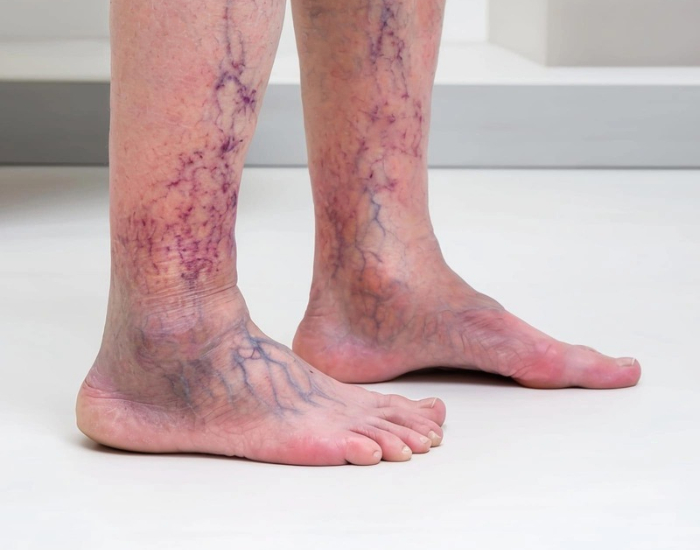
Seeing your feet turn purple or blue can be alarming, especially when you are not sure why the color has changed. Sometimes foot discoloration is temporary and occurs because of cold temperatures or changes in blood flow. In other cases, purple or blue feet may be associated with a circulation disorder that deserves medical evaluation.
The appearance of the discoloration matters, but so do the circumstances surrounding it. Does it happen only when your feet are cold? Does the color return to normal after warming them or changing position? Is one foot affected or both? Are there other symptoms such as pain, numbness, swelling, cold skin, sores, or weakness?
These details can help distinguish a temporary change from a potential vascular problem.

Quick Answer: Purple or blue feet can result from cold exposure, temporary blood-flow changes, venous pooling, Raynaud’s phenomenon, peripheral artery disease, and other circulation or medical conditions. A foot that suddenly becomes blue or purple and remains cold, painful, numb, weak, or difficult to move requires urgent medical attention because severely reduced blood flow can threaten the limb.
Table of Contents
- What Does It Mean When Your Feet Turn Purple or Blue?
- What Causes Purple or Blue Feet?
- 1. Cold Temperatures
- 2. Venous Pooling and Chronic Venous Insufficiency
- 3. Peripheral Artery Disease
- 4. Raynaud’s Phenomenon
- 5. Acrocyanosis
- 6. Deep Vein Thrombosis
- 7. Heart and Circulation Conditions
- 8. Other Possible Causes
- Purple Feet vs. Blue Feet: Does the Color Matter?
- Symptoms That May Occur With Foot Discoloration
- How Can You Tell if Purple Feet Are From Poor Circulation?
- How Is Foot Discoloration Diagnosed?
- How Are Purple or Blue Feet Treated?
- What Can You Do if Your Feet Turn Purple or Blue?
- When Are Purple or Blue Feet an Emergency?
- When to See a Vascular Specialist in Houston
- Frequently Asked Questions
What Does It Mean When Your Feet Turn Purple or Blue?
Blue or purple discoloration of the feet generally means there has been a change in how blood is reaching or leaving the tissues, or that the skin and blood vessels are responding to temperature or another stimulus.
Not every episode indicates a serious circulation problem.
For example, feet may temporarily look bluish or purplish after exposure to cold temperatures. The color may return to normal after the feet warm up.
However, persistent or recurrent discoloration deserves more attention, particularly when it occurs with pain, numbness, swelling, cold skin, sores, or other changes.
The following questions can help you describe the problem:
- Are both feet affected?
- Is only one foot or several toes affected?
- Did the color change suddenly or gradually?
- Are your feet cold to the touch?
- Does warming them restore their normal color?
- Does the discoloration occur after standing?
- Do you have swelling?
- Are you experiencing pain, numbness, or weakness?
- Do you have wounds or sores on your feet?
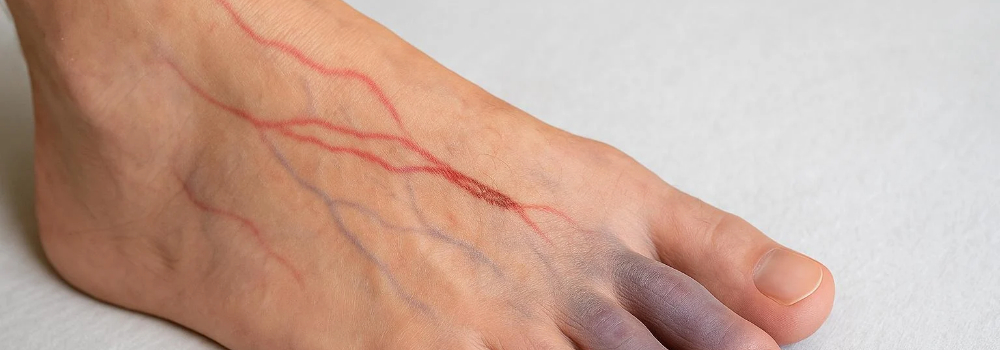
What Causes Purple or Blue Feet?
There are several possible explanations for foot discoloration.
Common causes include:
- Cold exposure
- Temporary changes in circulation
- Venous pooling
- Chronic venous insufficiency
- Peripheral artery disease
- Raynaud’s phenomenon
- Acrocyanosis
- Deep vein thrombosis
- Heart or circulation disorders
- Injury or inflammation
- Other conditions affecting blood vessels or oxygen delivery
The timing and accompanying symptoms are important because different circulation disorders can produce very different patterns of discoloration.
1. Cold Temperatures
One of the simplest explanations for blue or purple feet is exposure to cold.
When the body is exposed to cold, blood vessels in the skin can narrow to conserve heat for the body’s core. This can make the skin of the toes and feet look pale, bluish, or purplish.
In a healthy person, the color generally returns toward normal as the feet warm.
If discoloration happens only in cold conditions and resolves after warming, it is less likely to represent a persistent circulation disorder. However, unusually strong or frequent color changes may warrant evaluation for conditions such as Raynaud’s phenomenon or other vascular problems.
This is different from persistent discoloration that remains even when your feet are warm.
2. Venous Pooling and Chronic Venous Insufficiency
Chronic venous insufficiency (CVI) occurs when blood has difficulty returning from the legs to the heart.
When the valves inside leg veins do not work effectively, blood can move backward and pool in the lower extremities. Increased venous pressure can contribute to swelling and changes in the appearance of the skin.
Venous disease may be associated with:
- Swollen feet and ankles
- Aching or heaviness
- Varicose veins
- Itching
- Skin discoloration
- Brownish or reddish skin around the ankles
- Symptoms that worsen after prolonged standing
Venous pooling can sometimes make the feet or lower legs appear darker, reddish-purple, or bluish, particularly when the legs are dependent for long periods.
If the discoloration improves when you elevate your legs and is accompanied by swelling or varicose veins, venous disease may be contributing.
Learn more about venous insufficiency and venous reflux symptoms.
3. Peripheral Artery Disease
Peripheral artery disease (PAD) develops when arteries supplying the legs become narrowed or blocked, reducing blood flow.
PAD can affect the feet as well as the legs. In more significant cases, reduced arterial blood flow can contribute to changes in skin color, including pale, bluish, or reddish-purple discoloration.
Other possible signs include:
- Cold feet
- Leg pain or cramping with walking
- Foot pain at rest in more advanced disease
- Slow-growing toenails
- Reduced hair growth on the legs
- Weak or difficult-to-detect pulses
- Wounds that heal slowly
A particularly important pattern is discomfort that develops during walking or exercise and improves after resting. This can be a sign of intermittent claudication associated with PAD.
Learn more about peripheral artery disease and intermittent claudication.
4. Raynaud’s Phenomenon
Raynaud’s phenomenon is a condition in which small blood vessels in the fingers or toes overreact to cold or stress.
During an episode, the affected area may change color as blood flow changes. The toes can become white or pale, then blue or purple, and eventually return toward their normal color as circulation improves.
Episodes may also cause:
- Numbness
- Tingling
- Pain
- Cold sensations
Raynaud’s can affect otherwise healthy people, but it can also occur in association with other medical conditions.
If your toes repeatedly change color in response to cold or emotional stress, discuss the pattern with a healthcare professional.
5. Acrocyanosis
Acrocyanosis can cause persistent bluish or purple discoloration of the hands or feet due to changes in small-vessel blood flow.
It often affects both sides and may become more noticeable with cold exposure.
Unlike some acute vascular emergencies, acrocyanosis is typically not associated with severe pain or tissue loss. However, new or unexplained persistent blue discoloration should still be medically evaluated rather than self-diagnosed.
6. Deep Vein Thrombosis
Deep vein thrombosis (DVT) occurs when a blood clot forms in a deep vein, usually in the leg.
DVT more commonly causes swelling, pain, tenderness, warmth, and redness or discoloration in the affected limb. In some cases, the leg or foot may appear darker or bluish.
A particularly important warning sign is sudden swelling or discoloration affecting one leg.
DVT requires prompt medical assessment because a clot can potentially travel to the lungs and cause a pulmonary embolism.
Learn more about recognizing DVT symptoms and early symptoms of a blood clot in the leg.
7. Heart and Circulation Conditions
Some conditions affecting the heart or overall circulation can contribute to swelling and changes in the appearance of the lower extremities.
When fluid accumulates in the legs, the feet and ankles may become swollen and the skin may look different.
If purple or blue feet occur alongside significant swelling in both legs, shortness of breath, unusual fatigue, or difficulty breathing when lying down, broader medical evaluation may be necessary.
Foot discoloration should therefore be considered alongside your overall health rather than viewed as an isolated symptom.
8. Other Possible Causes
Other conditions may also change the appearance of the feet.
Injury
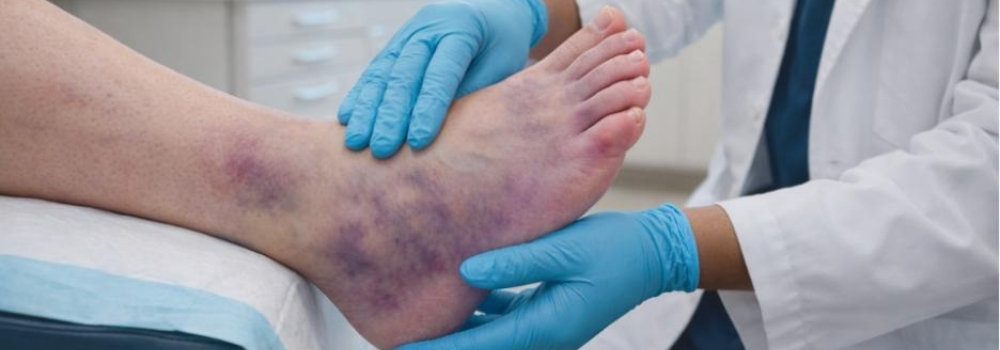
Bruising after an injury can cause blue, purple, or dark discoloration. The color typically changes over time as the bruise heals.
Skin and Soft-Tissue Problems
Inflammation, infection, or other skin conditions can change the color and temperature of the foot.
Medication Effects
Some medications can affect blood vessels, fluid balance, or circulation. If discoloration began after starting a new medication, discuss the timing with your healthcare professional.
Other Vascular Conditions
Less common vascular disorders can also cause changes in skin color. Persistent unexplained discoloration is one reason a proper vascular assessment can be useful.
Purple Feet vs. Blue Feet: Does the Color Matter?
People often use “purple” and “blue” interchangeably when describing foot discoloration.
The exact shade alone usually cannot determine the cause.
Instead, healthcare professionals consider:
- Whether the color affects one or both feet
- Whether the skin is warm or cold
- Whether there is pain
- Whether there is swelling
- Whether there is numbness
- Whether the discoloration is constant or intermittent
- Whether the color changes with temperature
- Whether elevation changes the appearance
- Whether there are wounds or other skin changes
For example, purple feet that occur after standing may have a different explanation from a foot that suddenly becomes blue, cold, painful, and numb.
Symptoms That May Occur With Foot Discoloration
Pay attention to other symptoms that develop at the same time.
Purple Feet With Swelling
Swelling and discoloration may occur with venous disease or other conditions that affect fluid and blood flow. Sudden swelling in one leg should be evaluated promptly.
Purple Feet With Cold Skin
Cold feet can occur because of environmental temperature, vasospasm, or reduced arterial blood flow. Persistent coldness accompanied by color changes should be evaluated.
Purple Feet With Pain
Painful discoloration requires more attention than a temporary color change without discomfort. Sudden severe pain with blue or purple discoloration can indicate a serious vascular problem.
Purple Feet With Numbness
Numbness may occur when nerves are affected, but numbness combined with sudden color and temperature changes can also be a warning sign of severely reduced blood flow.
Purple Feet With Sores
Foot or toe wounds that do not heal normally may indicate inadequate arterial circulation, particularly when accompanied by other PAD symptoms.
How Can You Tell if Purple Feet Are From Poor Circulation?
There is no reliable way to determine the cause based on color alone.
However, certain patterns can suggest a vascular problem.
Possible Venous Pattern
Discoloration accompanied by swelling, heaviness, aching, varicose veins, or symptoms that worsen after standing can point toward venous circulation problems.
Possible Arterial Pattern
Discoloration accompanied by cold feet, activity-related leg pain, weak pulses, slow-healing wounds, or other signs of reduced arterial blood flow can suggest PAD.
Possible Acute Circulation Problem
A sudden change affecting one foot, especially when the foot becomes cold, pale, blue, purple, painful, numb, or weak, is more concerning and requires urgent assessment.
Learn more about circulation problems and ways to support healthy blood circulation.
Important: A blue or purple foot should not automatically be labeled as “poor circulation.” The same color change can have very different causes. A vascular evaluation is particularly important when discoloration is persistent, repeatedly returns without an obvious trigger, affects only one foot, or occurs with pain, swelling, numbness, coldness, weakness, or a non-healing wound.
How Is Foot Discoloration Diagnosed?
Diagnosis begins with a detailed history and examination.
Your healthcare professional may ask:
- When the discoloration began
- Whether it happens suddenly or gradually
- Whether one or both feet are affected
- Whether cold temperatures trigger it
- Whether warming changes the color
- Whether standing or sitting makes it worse
- Whether elevation improves it
- Whether there is pain, swelling, numbness, or weakness
- Whether you have diabetes, high blood pressure, high cholesterol, or other vascular risk factors
- Whether you smoke or have previously smoked
- Whether you have experienced a recent injury, surgery, or prolonged period of immobility
Checking Arterial Circulation
If PAD is suspected, an ankle-brachial index (ABI) may be performed. ABI compares blood pressure at the ankle with blood pressure in the arm and can help identify reduced arterial blood flow.
Additional vascular testing may be recommended depending on the findings.
Evaluating the Veins
If swelling, varicose veins, or other findings suggest a venous condition, a duplex ultrasound can assess blood flow through the leg veins and help identify venous reflux, obstruction, or a blood clot.
Other Testing
Depending on the suspected cause, additional laboratory tests, imaging, or evaluation by another medical specialist may be appropriate.
How Are Purple or Blue Feet Treated?
Treatment depends on what is causing the discoloration.
Cold-Related Color Changes
If cold is responsible, gradually warming the feet and avoiding prolonged cold exposure may help.
Venous Disease
When venous insufficiency contributes to symptoms, treatment may include movement, leg elevation, compression therapy when appropriate, and treatment of abnormal veins when clinically indicated.
Learn more about venous insufficiency treatment.
Peripheral Artery Disease
PAD treatment focuses on improving cardiovascular health, managing risk factors, improving walking ability, and restoring blood flow when necessary. Depending on the severity of disease, treatment may include exercise, smoking cessation, medications, and vascular procedures.
Learn more about minimally invasive PAD treatments.
Blood Clots
DVT requires medical treatment designed to prevent the clot from growing and reduce the risk of complications. Treatment should be guided by a qualified healthcare professional.
Raynaud’s Phenomenon
Management may include avoiding cold exposure, keeping the extremities warm, and addressing underlying conditions when present. Some patients may require medication.
What Can You Do if Your Feet Turn Purple or Blue?
If the discoloration is mild, temporary, and clearly associated with cold exposure, warming the feet gradually may help restore normal color.
General habits that support vascular health include:
- Stay physically active within your abilities.
- Avoid prolonged sitting or standing in one position.
- Do not smoke.
- Manage blood pressure, cholesterol, and diabetes as recommended.
- Maintain a healthy body weight.
- Protect your feet from extreme cold.
- Inspect your feet regularly if you have diabetes or reduced sensation.
Do not apply extreme heat directly to numb or poorly perfused feet. Reduced sensation can make it difficult to recognize a burn.
Also, avoid assuming that compression socks are appropriate simply because your feet are discolored. Compression can be useful for certain venous conditions, but people with significant arterial disease may need medical guidance before using compression.
When Are Purple or Blue Feet an Emergency?
Some forms of foot discoloration require immediate medical attention.
Sudden Blue or Purple Foot
Seek emergency medical attention if one foot suddenly becomes blue or purple, particularly if it is also:
- Cold to the touch
- Severely painful
- Numb
- Weak
- Difficult to move
These symptoms can indicate a serious interruption of arterial blood flow and should not be monitored at home.
Sudden One-Sided Swelling
If one leg or foot suddenly becomes swollen, painful, warm, or discolored, prompt medical evaluation is important because DVT is one possible cause.
Chest Pain or Shortness of Breath
If leg discoloration or swelling is accompanied by sudden chest pain, severe shortness of breath, fainting, or coughing up blood, seek emergency medical attention.
Non-Healing Foot Wounds
A sore on the foot or toe that does not heal normally should be evaluated, especially if you have diabetes or known circulation problems.
PAD can reduce blood flow to the feet and interfere with normal wound healing.
When to See a Vascular Specialist in Houston
If your feet repeatedly turn purple or blue without an obvious explanation, a vascular evaluation can help determine whether an arterial or venous condition may be contributing.
Consider scheduling an evaluation if discoloration occurs with:
- Cold feet
- Leg pain or cramping during walking
- Foot or ankle swelling
- Varicose veins
- Leg heaviness
- Numbness or tingling
- Skin changes
- Slow-healing wounds
- Persistent or recurring color changes
Premier Vein & Vascular Center evaluates and treats venous and vascular conditions affecting the legs and feet, including peripheral artery disease, venous insufficiency, varicose veins, venous reflux, and other circulation disorders.
A vascular specialist can examine your feet, assess blood flow, and determine whether testing such as an ABI or vascular ultrasound is appropriate.
Learn more about when to see a vein doctor in Houston.
Concerned About Purple or Blue Feet?
Persistent or unexplained foot discoloration may sometimes be related to an underlying vascular condition. A professional evaluation can help determine whether your arteries or veins are contributing to the change in color.
Call (832) 321-5355 to schedule a consultation with Premier Vein & Vascular Center.
Frequently Asked Questions
Why are my feet purple?
Purple feet can have several causes, including cold exposure, venous pooling, chronic venous insufficiency, Raynaud’s phenomenon, acrocyanosis, peripheral artery disease, and other circulation or medical conditions. The cause cannot be determined from color alone.
Why do my feet turn blue?
Feet can turn blue because of cold temperatures, temporary changes in blood flow, vascular conditions, or other problems affecting circulation and oxygen delivery. Persistent or unexplained blue feet should be medically evaluated.
Are purple feet a sign of poor circulation?
They can be, but not always. Venous and arterial circulation problems can both cause changes in the appearance of the feet, while cold exposure and conditions such as Raynaud’s phenomenon can also cause temporary discoloration.
Why do my feet turn purple when I stand?
Standing allows gravity to influence blood distribution in the lower extremities. In some people, venous pooling can make the feet or lower legs look darker or purplish, particularly when venous insufficiency is present. Persistent discoloration should be evaluated.
Can varicose veins cause purple feet?
Varicose veins themselves do not necessarily make the feet purple, but underlying venous insufficiency can contribute to swelling and chronic skin color changes in the lower legs and ankles. Persistent discoloration should be assessed by a healthcare professional.
Can peripheral artery disease cause blue feet?
Yes. Significant arterial circulation problems can cause changes in skin color, including pale, bluish, or other abnormal discoloration. PAD may also cause cold feet, walking-related leg pain, and slow-healing wounds.
Should I worry if only one foot turns purple?
One-sided discoloration deserves particular attention, especially if it develops suddenly or occurs with pain, swelling, coldness, numbness, or weakness. These symptoms can indicate a vascular problem requiring prompt evaluation.
Can cold weather make your feet purple?
Yes. Cold temperatures can cause blood vessels in the skin to narrow, making the feet or toes temporarily appear pale, blue, or purple. The color should generally improve as the feet warm. Recurrent or unusually severe episodes should be evaluated.
When should I go to the emergency room for blue or purple feet?
Seek emergency medical attention if a foot suddenly becomes blue or purple and is cold, severely painful, numb, weak, or difficult to move. Also seek emergency care if foot or leg symptoms occur with chest pain, severe shortness of breath, fainting, or other serious symptoms.
How does a doctor check circulation in the feet?
A healthcare professional may examine pulses, skin temperature and color, and other physical findings. An ankle-brachial index can assess arterial circulation, while duplex ultrasound can evaluate blood flow through the veins and help identify venous disease or DVT.
Final Thoughts
Purple or blue feet can have a simple explanation, such as cold exposure, but persistent or recurrent discoloration can also be associated with venous or arterial circulation problems.
The most important clues are the timing of the color change and the symptoms that accompany it. Discoloration with swelling and heaviness may suggest a venous problem. Discoloration with cold feet, walking-related symptoms, or slow-healing wounds may warrant evaluation for an arterial circulation problem.
A sudden blue or purple foot that becomes cold, painful, numb, weak, or difficult to move is different. This can represent a medical emergency and should be assessed immediately.
If your feet repeatedly change color without a clear explanation, a vascular evaluation can help determine whether an underlying circulation problem is contributing.
Medical Disclaimer
This article is intended for educational and informational purposes only and does not constitute medical advice, diagnosis, or treatment. Purple or blue feet can have many possible causes, ranging from temporary temperature-related changes to vascular conditions requiring medical attention. Individual symptoms should be evaluated by a qualified healthcare professional. Seek emergency medical care for sudden severe discoloration accompanied by pain, coldness, numbness, weakness, or difficulty moving the foot, or for chest pain or severe shortness of breath.