"Dr. Gowd and his team were amazing. My leg pain and swelling improved significantly after treatment. The staff is kind, professional and truly cares."
HOUSTON'S SPECIALIZED VEIN CLINIC
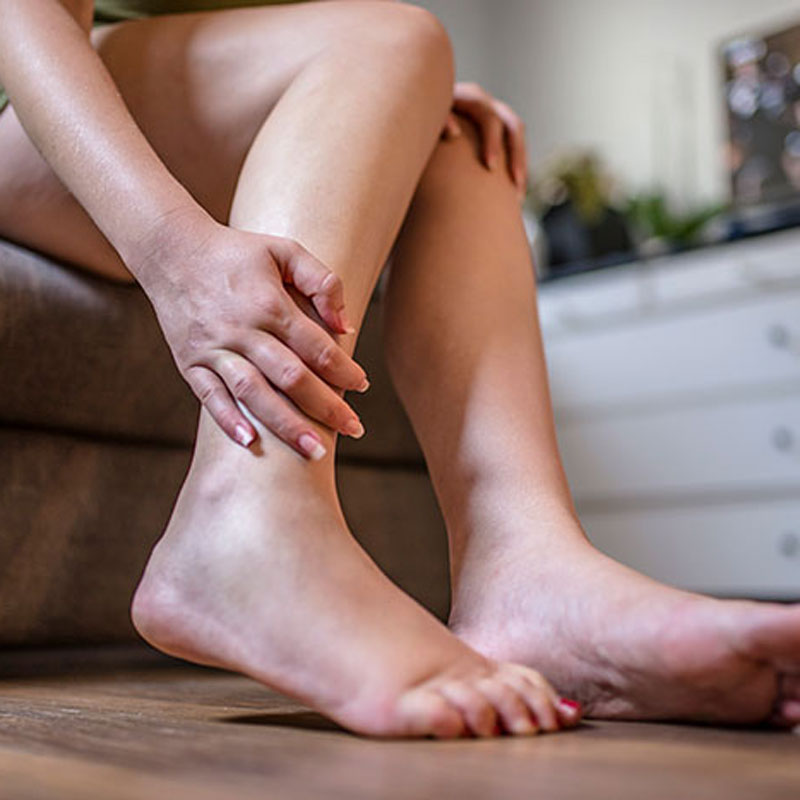
Do your legs feel heavy, swollen, achy, or tired? Are bulging or visible veins becoming more noticeable?
Premier Vein & Vascular Center provides expert evaluation and treatment for varicose veins, venous reflux, and chronic venous insufficiency in Houston, Texas.
Varicose veins can be more than a cosmetic concern. Poorly functioning vein valves may cause blood to pool, leading to pain, heaviness, swelling, and enlarged veins. Treatment options may include conservative care and minimally invasive procedures such as radiofrequency ablation, VenaSeal™, Varithena®, sclerotherapy, and ambulatory phlebectomy.
• Same-Week Appointments • Insurance Accepted • Minimally Invasive Treatments • Personalized Vein Care
Varicose Vein Treatment
Schedule Your FREE Consultation Today!
— Patient Experiences
Real patients. Real results. Trusted by hundreds across Houston and surrounding communities.
Read All Google Reviews"Dr. Gowd and his team were amazing. My leg pain and swelling improved significantly after treatment. The staff is kind, professional and truly cares."
"Excellent experience. The doctor took time to explain everything and made me feel comfortable. The procedure was quick and recovery was much easier than I expected."
"From the consultation to follow-up, everything was smooth. I highly recommend Premier Vein to anyone dealing with vein issues. Great results and wonderful staff!"
"I was nervous about vein treatment, but the team put me at ease from the first visit. Minimally invasive, barely any downtime, and my legs feel so much better."
"Professional, caring, and thorough. Dr. Gowd explained every option and never pushed unnecessary treatment. The results speak for themselves — highly recommend!"
"Booked a same-week appointment and was impressed from start to finish. Clean office, friendly staff, and real improvement in my leg swelling within weeks."
Understanding the Condition
Varicose veins are enlarged, twisted veins that most commonly develop in the legs. Healthy veins contain one-way valves that help move blood upward toward the heart. When these valves weaken or fail to close properly, some blood can move backward and collect inside the vein. Over time, increased pressure may cause the vein to enlarge and become visible beneath the skin.
Some people have visible veins without significant discomfort. Others develop symptoms related to abnormal venous circulation.
Common Vein Symptoms
Persistent symptoms should be properly evaluated rather than assumed to be cosmetic.
Understanding Your Symptoms
When you stand, the veins in your legs must move blood upward against gravity. Healthy valves help prevent blood from flowing backward. If those valves become weakened, blood may pool in the lower legs.
Increasing venous pressure can contribute to heaviness, swelling, aching, fatigue, throbbing and visible varicose veins. Symptoms may become worse toward the end of the day or after long periods of standing.
If this occurs repeatedly, particularly along with visible veins or ankle swelling, a vein evaluation can help determine whether venous reflux is involved.
Understanding Your Symptoms
A superficial vein can become enlarged when pressure builds inside it. If valves within the vein are not functioning efficiently, blood may collect rather than moving normally toward the heart. The affected vein can gradually become enlarged, twisted and more visible.
Bulging veins do not always indicate serious disease. However, veins associated with pain, swelling, heaviness, skin changes or recurring discomfort should be evaluated.
Risk Factors
Family History
Increasing Age
Pregnancy
Hormonal Changes
Prolonged Standing
Prolonged Sitting
Limited Activity
Excess Body Weight
Previous Vein Damage
Previous Blood Clots
Having one or more risk factors does not necessarily mean you have significant venous disease.
Chronic Venous Insufficiency
Chronic venous insufficiency, or CVI, occurs when veins in the legs have difficulty returning blood efficiently toward the heart. Venous reflux may contribute to increased pressure inside the veins.
Not everyone with varicose veins has chronic venous insufficiency. Proper evaluation is needed to determine the cause of symptoms. If you would like to learn more, read about venous insufficiency and how it is treated.
Evaluation
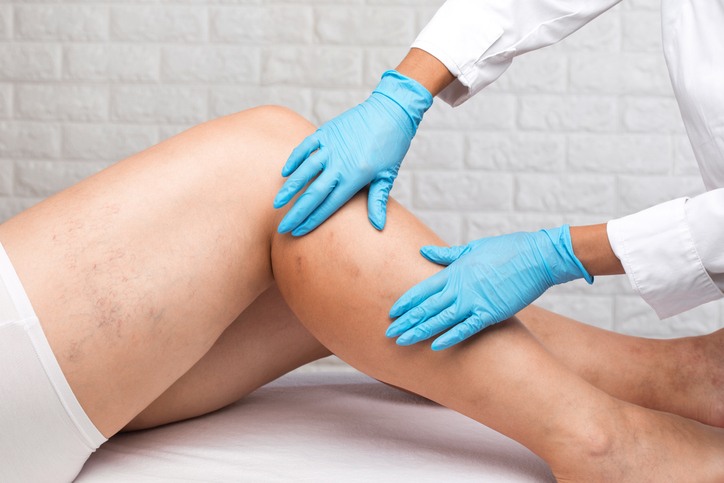
Your evaluation typically begins with a review of your symptoms, medical history and a physical examination. The specialist may ask whether:
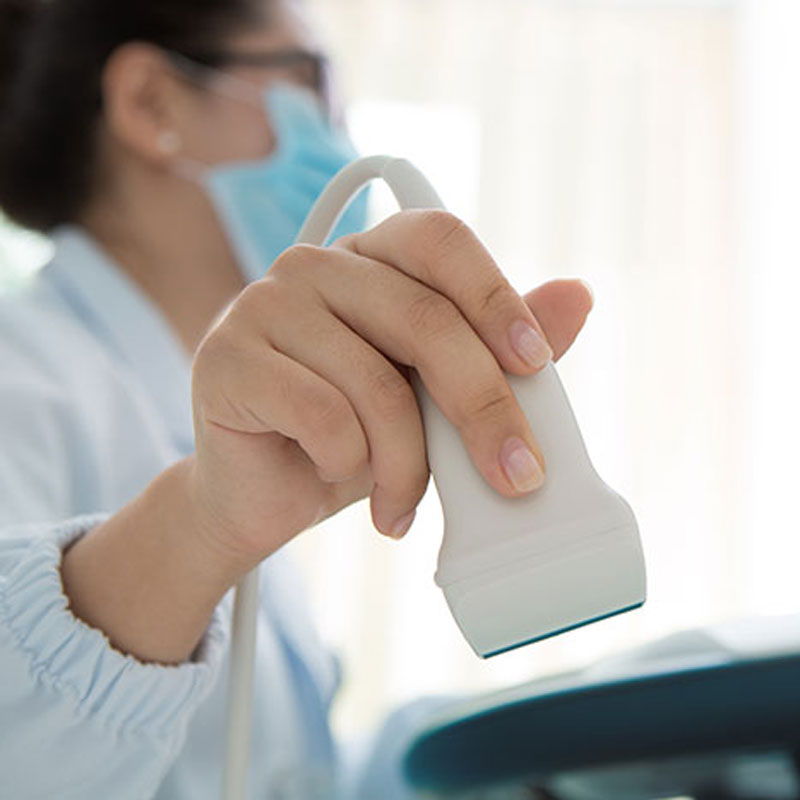
When appropriate, a duplex venous ultrasound may be performed.
A duplex ultrasound is a noninvasive imaging test used to evaluate blood flow and vein function. It can help identify:
Ultrasound lets physicians evaluate what is happening beneath the skin rather than treating only the visible vein. Learn more about venous ultrasound.
Treatment Options
There is no single treatment that is best for every patient. Treatment depends on which veins are affected, whether venous reflux is present, the size and location of the veins, symptom severity, previous treatments, overall health and individual goals. Premier Vein & Vascular Center offers several minimally invasive options.
Minimally Invasive Care
At a Glance
| Treatment | Often Used For | How It Works |
|---|---|---|
| Radiofrequency Ablation | Larger superficial refluxing veins | Thermal energy closes the vein |
| VenaSeal™ | Selected refluxing veins | Medical adhesive seals the vein |
| Varithena® | Selected symptomatic or tortuous veins | Microfoam closes the vein |
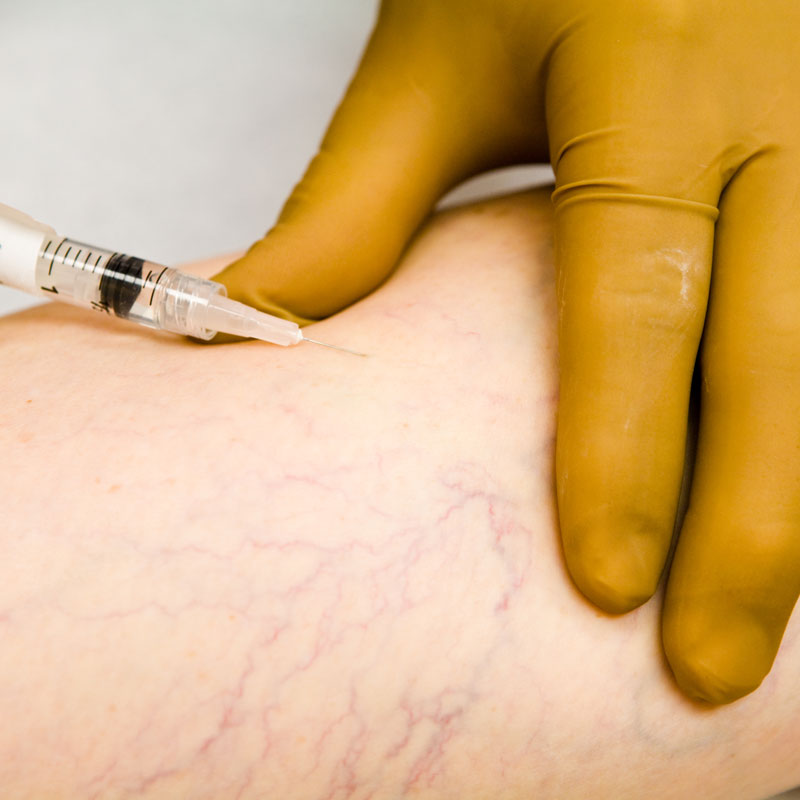
| Sclerotherapy | Smaller abnormal veins | Injectable solution closes the vein |
| Phlebectomy | Bulging surface veins | Vein is removed through tiny openings |
Treatment selection depends on your examination, ultrasound findings, medical history and individual needs.
Minimally Invasive
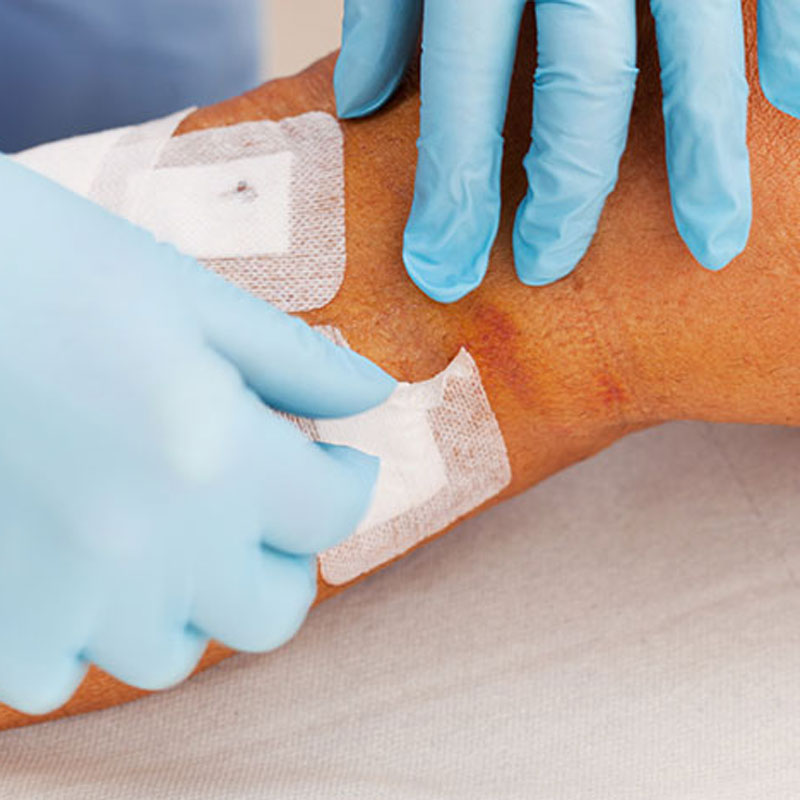
Yes. Many modern vein treatments are minimally invasive and do not require traditional vein-stripping surgery. Many procedures are performed on an outpatient basis. Treatment may use:
Common Question
Closing an abnormal superficial vein does not stop circulation through your leg. Your venous system contains many veins. When an unhealthy superficial vein is closed, blood is redirected through functioning veins that can more effectively return blood toward the heart.
Coverage
Insurance coverage depends on the patient\u2019s individual plan, diagnosis and whether treatment meets medical-necessity requirements. Treatment associated with documented symptoms such as persistent pain, swelling, skin changes or other evidence of venous disease may qualify for coverage depending on the individual policy.
Premier Vein & Vascular Center works with major insurance carriers and Medicare.
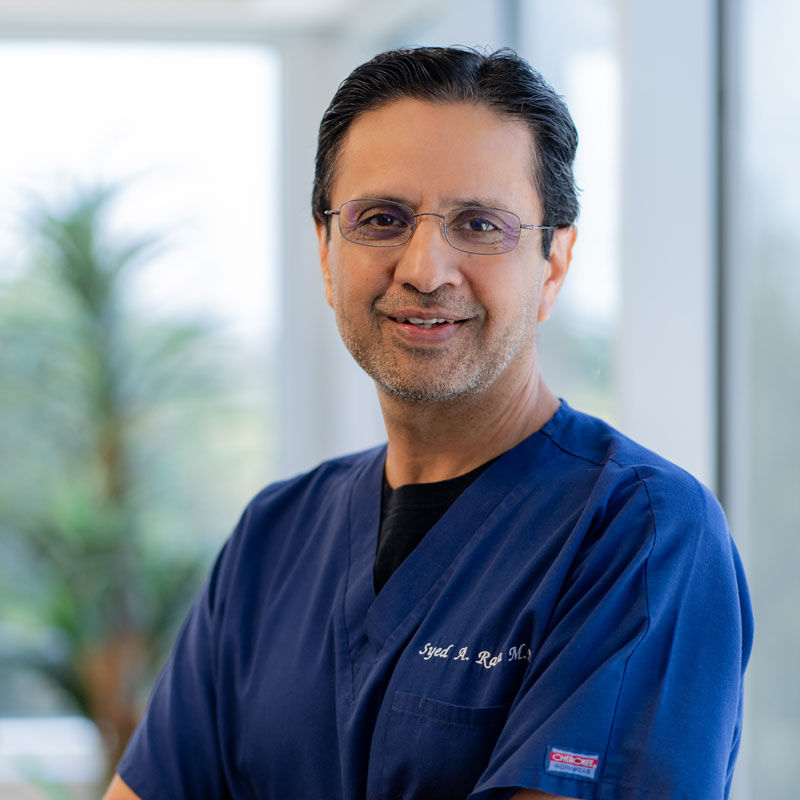
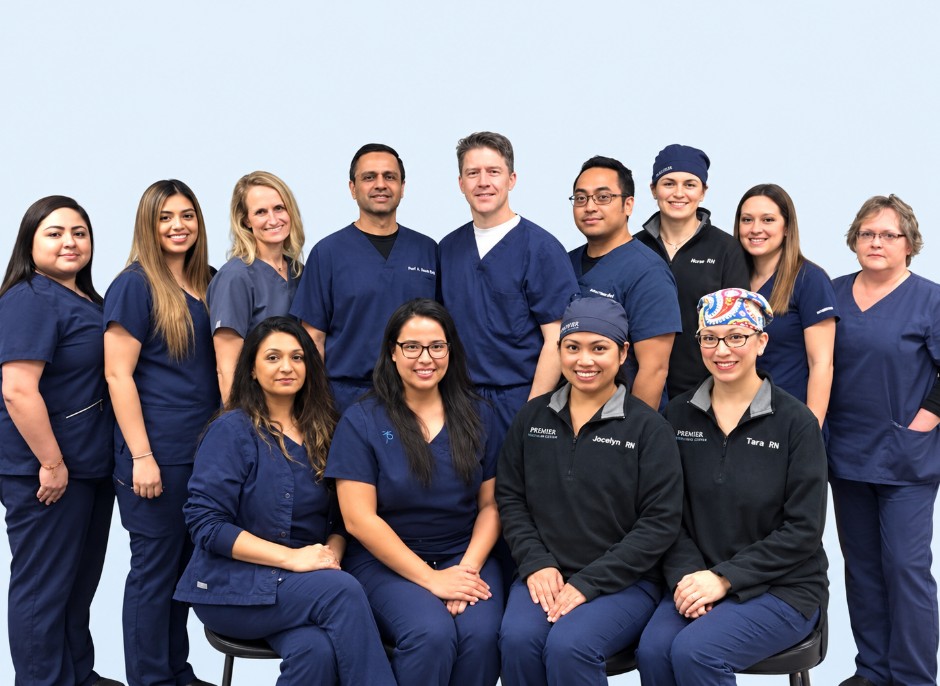
Meet Your Specialist
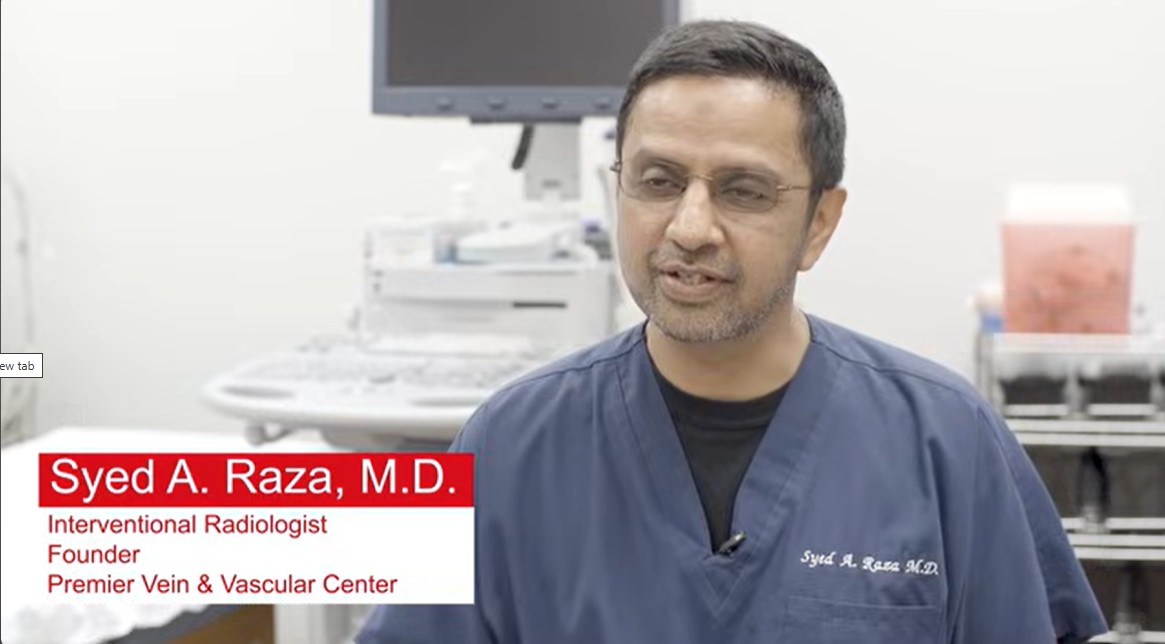
Board-Certified Interventional Radiologist & Vein Specialist
Dr. Syed A. Raza is a fellowship-trained interventional radiologist certified by the American Board of Radiology. He has extensive experience in image-guided and minimally invasive vascular procedures, including evaluation and treatment of venous disease.
His background includes academic and hospital leadership roles in interventional radiology. His expertise allows Premier Vein & Vascular Center to combine diagnostic imaging with minimally invasive treatment planning for patients with varicose veins and other vascular conditions.
Next Steps
Consider scheduling an evaluation if:
An evaluation can help determine whether the problem is primarily cosmetic or associated with underlying venous disease.
Not all swelling is caused by varicose veins. Seek prompt medical attention for sudden or unexplained swelling, especially in one leg, when accompanied by:
These symptoms should not automatically be assumed to be routine varicose vein symptoms.
Serving Greater Houston
Premier Vein & Vascular Center is located at 19255 Park Row Dr, Suite 201, Houston, TX 77084.
Answers
Yes. Symptomatic varicose veins may cause aching, heaviness, throbbing or discomfort, particularly after prolonged standing.
Venous reflux can contribute to swelling around the ankles and lower legs, although swelling may have many other causes.
If vein valves are not working efficiently, blood may collect in the lower legs and contribute to heaviness, swelling and fatigue.
Yes. Some people experience itching or irritation around affected veins.
Some patients with venous disease report nighttime leg cramps, but cramping can have many causes.
Common symptoms can include swelling, heaviness, aching, varicose veins and skin changes. Diagnosis may include physical examination and duplex ultrasound.
Compression stockings may help manage symptoms but generally do not eliminate established varicose veins.
Established varicose veins typically do not simply disappear. Conservative measures may improve symptoms, while procedures may treat problematic veins when appropriate.
Doctors with expertise in vascular disease, venous disorders and image-guided procedures can diagnose and treat varicose veins.
Premier Vein & Vascular Center is located at 19255 Park Row Dr, Suite 201, Houston, TX 77084, serving West Houston, Katy and surrounding communities.
If you\u2019re experiencing bulging veins, painful veins, heavy legs, aching, swelling, burning, itching, cramping or skin changes, Premier Vein & Vascular Center can evaluate your symptoms and determine whether venous disease may be involved. Our specialists provide individualized evaluation and minimally invasive treatment options based on each patient\u2019s condition.
Premier Vein & Vascular Center
19255 Park Row Dr, Suite 201, Houston, TX 77084
Call: (832) 321-5355
This information is provided for general educational purposes and is not a substitute for professional medical advice, diagnosis or treatment. Treatment recommendations, insurance coverage and recovery vary by patient.