Houston’s Specialized Vein Clinic | 20+ Years’ Experience
8:30am to 4:30pmOpening Hour Mon - Fri
(832) 321-5355Call For Appointment
Houston’s Specialized Vein Clinic | 20+ Years’ Experience

Comprehensive Vein Care in Houston, TX

Venous Disease Treatment in Houston, TX

Expert Diagnosis and Minimally Invasive Care for the Full Spectrum of Vein Conditions

Venous disease is an umbrella term for a range of conditions that develop when the valves or walls of your veins are damaged, allowing blood to pool or flow backward instead of moving efficiently toward the heart. Left untreated, venous disease can progress and affect the legs, feet, and other parts of the body.
At Premier Vein & Vascular Center, our board-certified physicians specialize in advanced vein care, offering precise diagnosis and minimally invasive treatment for varicose veins, venous insufficiency, blood clots, and other vascular conditions. Our goal is to help you understand your diagnosis, relieve your symptoms, and reduce your risk of complications.

Understanding the Venous Disease Spectrum

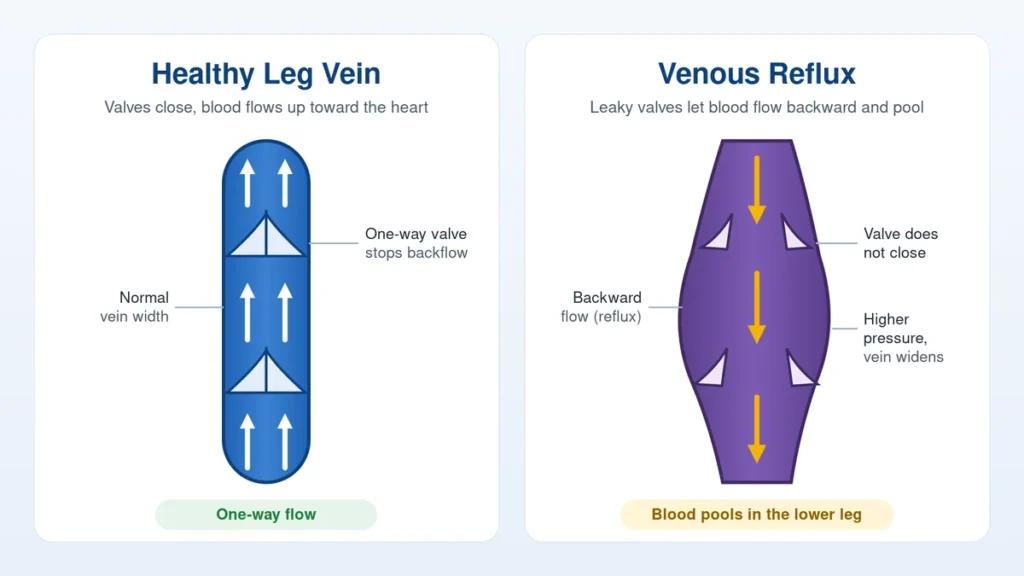
Venous disease describes a group of related conditions caused by damaged or malfunctioning veins. Healthy veins contain one-way valves that keep blood moving toward the heart. When those valves weaken or fail, blood can leak backward or pool in the lower legs — a process called venous reflux.
This single underlying problem can show up in several different ways, from cosmetic spider veins to bulging varicose veins, chronic swelling, skin changes, and in more serious cases, blood clots. Because these conditions often overlap and can worsen over time, an accurate diagnosis is the first step toward the right treatment plan.
Illustration comparing healthy leg vein valves with venous reflux

— Patient Experiences

One of Houston's Highest-Rated Vein Care Practices

Real patients. Real results. Trusted by hundreds across Houston and surrounding communities.

Read All Google Reviews
Google ★★★★★ 5.0 (930+ reviews) Trusted. Respected. Highly Rated.
★★★★★

"Dr. Gowd and his team were amazing. My leg pain and swelling improved significantly after treatment. The staff is kind, professional and truly cares."

S
Sarah M.Google Review
G
★★★★★

"Excellent experience. The doctor took time to explain everything and made me feel comfortable. The procedure was quick and recovery was much easier than I expected."

J
James T.Google Review
G
★★★★★

"From the consultation to follow-up, everything was smooth. I highly recommend Premier Vein to anyone dealing with vein issues. Great results and wonderful staff!"

M
Melissa R.Google Review
G
★★★★★

"I was nervous about vein treatment, but the team put me at ease from the first visit. Minimally invasive, barely any downtime, and my legs feel so much better."

R
Robert K.Google Review
G
★★★★★

"Professional, caring, and thorough. Dr. Gowd explained every option and never pushed unnecessary treatment. The results speak for themselves — highly recommend!"

A
Angela P.Google Review
G
★★★★★

"Booked a same-week appointment and was impressed from start to finish. Clean office, friendly staff, and real improvement in my leg swelling within weeks."

D
David L.Google Review
G

The Basics

What Is Venous Disease?

Venous disease is a general term for any condition that affects the health or function of your veins. It most often develops when the small one-way valves inside your veins become damaged and no longer close correctly.
These valves are designed to keep blood flowing in a single direction — toward your heart. When a valve fails, blood can leak backward or flow in both directions, causing it to pool in the lower legs. Over time, this increased pressure stretches vein walls, damages surrounding tissue, and can lead to visible, uncomfortable, and sometimes serious symptoms.

The Spectrum of Conditions

Types of Venous Disease

Venous disease can take several forms, and it is common for more than one type to occur together. Below is an overview of the most common conditions we diagnose and treat.

Blood Clots

A mass of blood cells and proteins that stick together, sometimes forming inside veins in the legs, arms, or lungs. Clots can partially or fully block blood flow, and in some cases break loose and travel to the lungs or heart.

Varicose Veins

Enlarged, twisted, bulging veins that develop when vessel walls weaken and valves fail, most often visible on the legs.

Chronic Venous Insufficiency

Blood pools around the ankles and lower legs, raising venous pressure and causing swelling, skin discoloration, and heaviness.

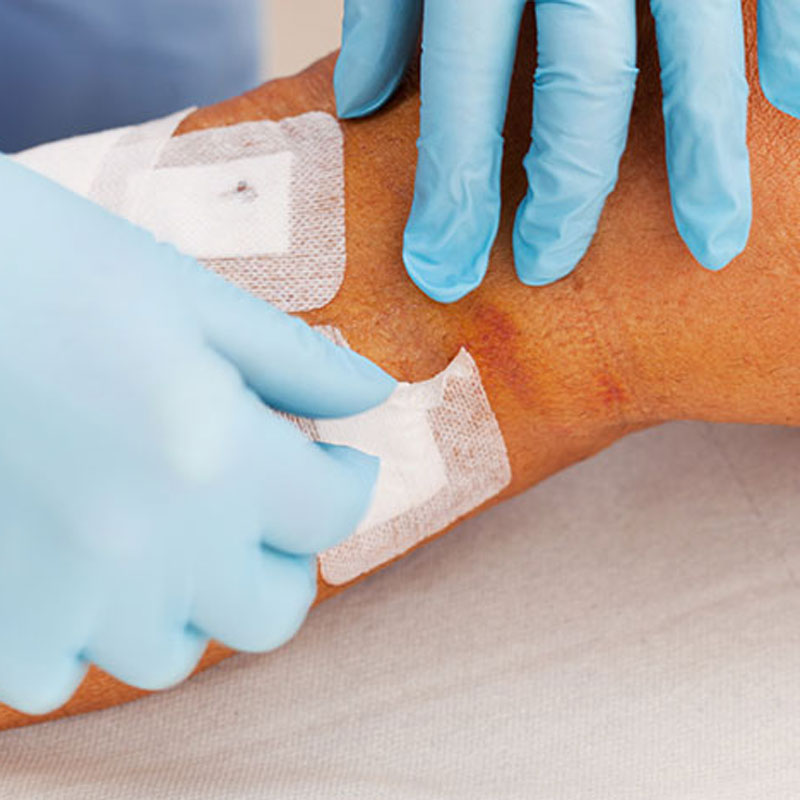
Venous Ulcers

Open sores that recur or never fully heal, typically forming below the knee and above the ankle in longstanding venous disease.

Superficial Thrombophlebitis

A blood clot that forms in a vein near the surface of the skin, causing pain, redness, and warmth. It is less dangerous than a deep vein clot but still needs evaluation.

Deep Vein Thrombosis (DVT)

A blood clot that forms in a deep vein, most often in the leg. If a clot breaks free, it can travel to the lungs and cause a pulmonary embolism — a medical emergency.

Why It Happens

Causes & Risk Factors

Venous disease develops when vein walls or valves are weakened. Several underlying causes and risk factors can make this more likely.

High Blood Pressure

Elevated pressure in the veins can weaken vessel walls over time.

Weak Vessel Walls

Naturally weaker vein walls are more prone to stretching and valve failure.

Congenital Factors

Some people are born with vein or valve formation differences.

Traumatic Injury

Injury to a leg or vein can damage valves and vessel walls.

Additional Risk Factors

What to Watch For

Recognizing the Symptoms

Symptoms of venous disease vary depending on the type and severity of the condition, and they often develop gradually.

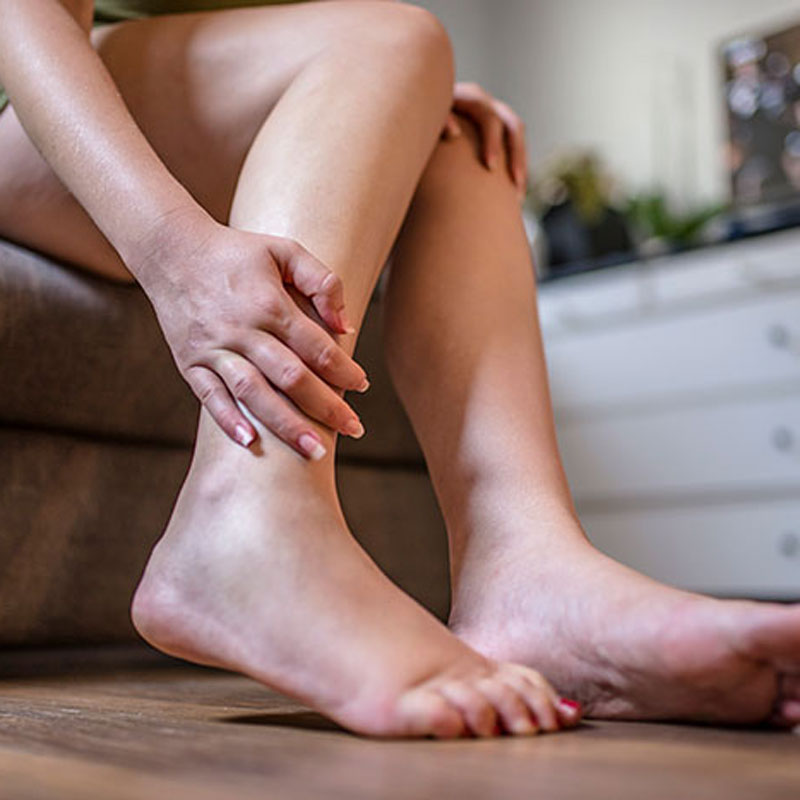
Pain

Localized pain, or pain that migrates or moves within the affected area.

Cramping

Muscle cramping, especially in the calves, often worse at night.

Heaviness & Discomfort

A tired, achy, or heavy feeling in the legs that builds through the day.

Redness & Warmth

Redness, warmth to the touch, or visible inflammation over a vein.

Swelling

Swelling in the ankles, feet, or lower legs, often worse by evening.

Skin Changes

Discoloration, dryness, itching, or thickened skin near the ankles.

Visible Veins

Bulging, twisted, or spider-like veins visible under the skin.

Slow-Healing Sores

Open wounds near the ankle that heal slowly or recur.

DVT Alert — When to Seek Emergency Care

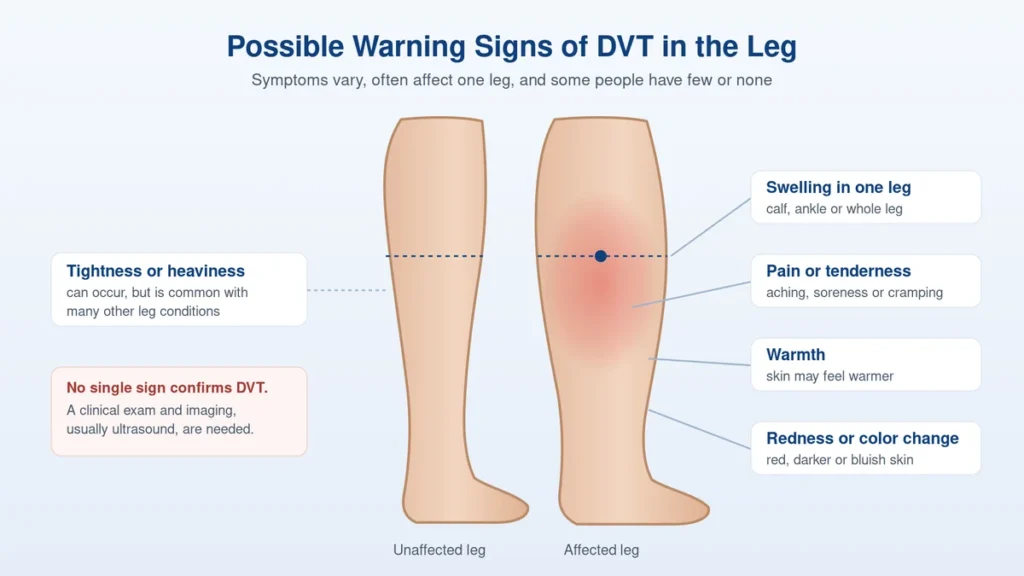
Deep vein thrombosis (DVT) is a genuine medical emergency risk. If a clot in a deep leg vein breaks loose, it can travel to the lungs and cause a pulmonary embolism, which can be life-threatening.

Seek immediate medical attention if you experience:

These can be signs of DVT or a pulmonary embolism. Do not wait to see if symptoms improve — go to an emergency room or call 911.
For a more detailed look at early warning signs, see our guide to warning signs of a blood clot in the leg.
Common warning signs of deep vein thrombosis in the leg

How Venous Disease Is Diagnosed

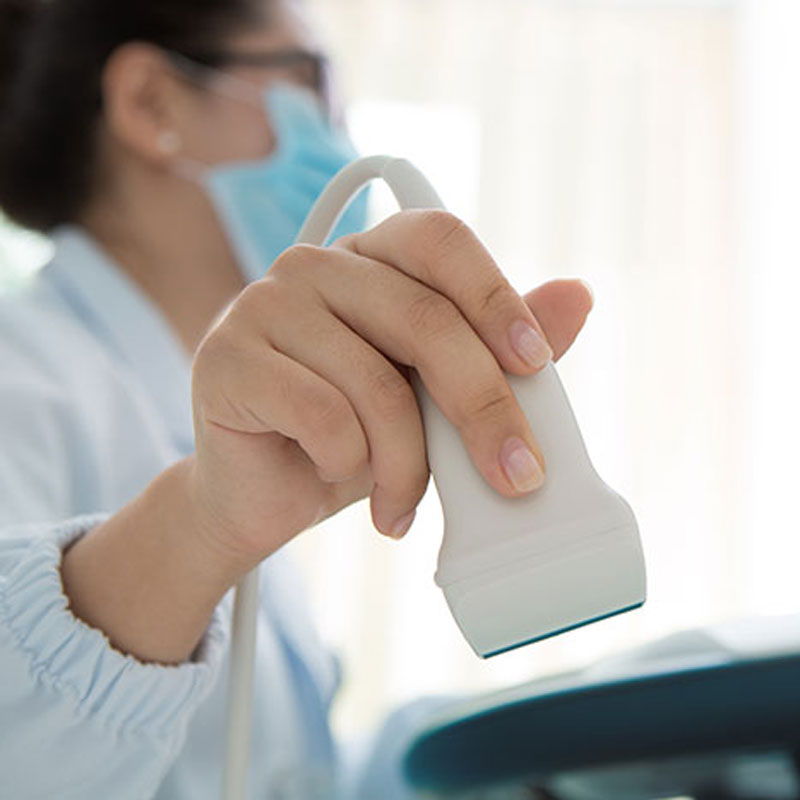
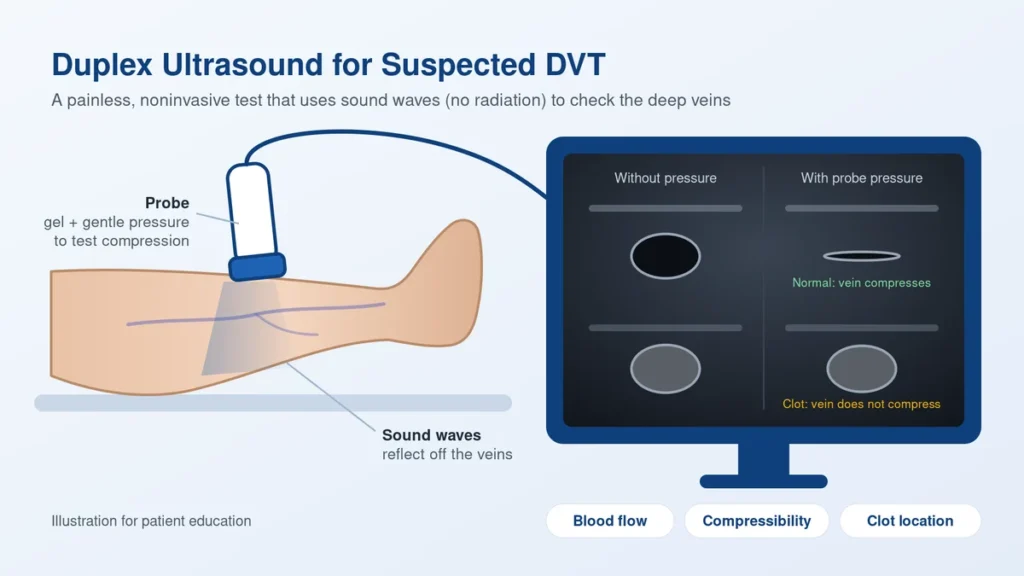
Venous duplex ultrasound examination for suspected deep vein thrombosis

History & Physical Exam

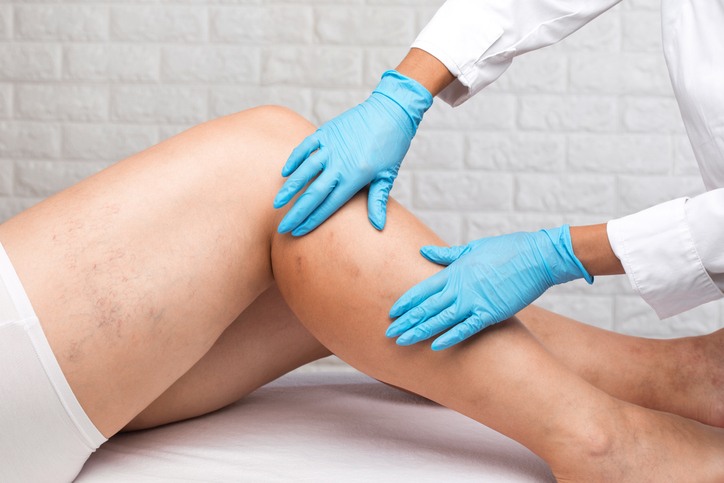
Diagnosis typically begins with a review of your symptoms, medical history, and risk factors, followed by a physical exam of the affected area to check for swelling, skin changes, and visible vein abnormalities.

Imaging & Ultrasound

In most cases, we confirm the diagnosis and evaluate blood flow with a venous ultrasound. This painless, non-invasive imaging test lets us see valve function directly and rule out blood clots, guiding the most appropriate treatment plan.

Common Questions

Quick Answers

Is Venous Disease Serious?

It depends on the type and stage. Cosmetic conditions like spider veins are usually not medically serious, while conditions like chronic venous insufficiency, venous ulcers, and especially deep vein thrombosis can lead to significant complications if left untreated. Getting an accurate diagnosis is the best way to know your risk.

Can Venous Disease Be Prevented?

You cannot fully eliminate your risk, especially with family history or congenital factors, but staying active, maintaining a healthy weight, avoiding prolonged sitting or standing, and wearing compression stockings when recommended can all help support healthy circulation and reduce risk.

How We Help

Treatment Overview

Treatment for venous disease is tailored to the specific condition and its severity. Most patients are candidates for minimally invasive, in-office procedures.

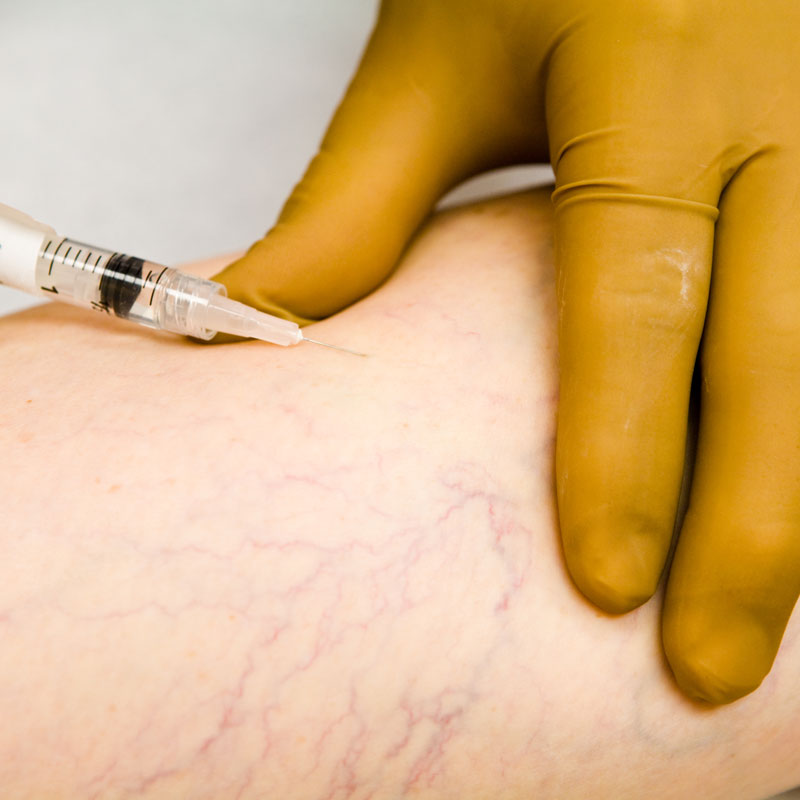
Sclerotherapy

An injectable solution closes smaller varicose and spider veins.

Radiofrequency Ablation

Heat energy closes larger, diseased veins to reroute blood flow.

Varithena

An FDA-approved foam treatment for varicose veins with minimal downtime.

Insurance Coverage

Venous disease treatment is often considered medically necessary rather than cosmetic, especially once symptoms like pain, swelling, or skin changes are present. Premier Vein & Vascular Center works with most major insurance plans, including Medicare, and our team can help verify your coverage before treatment begins.
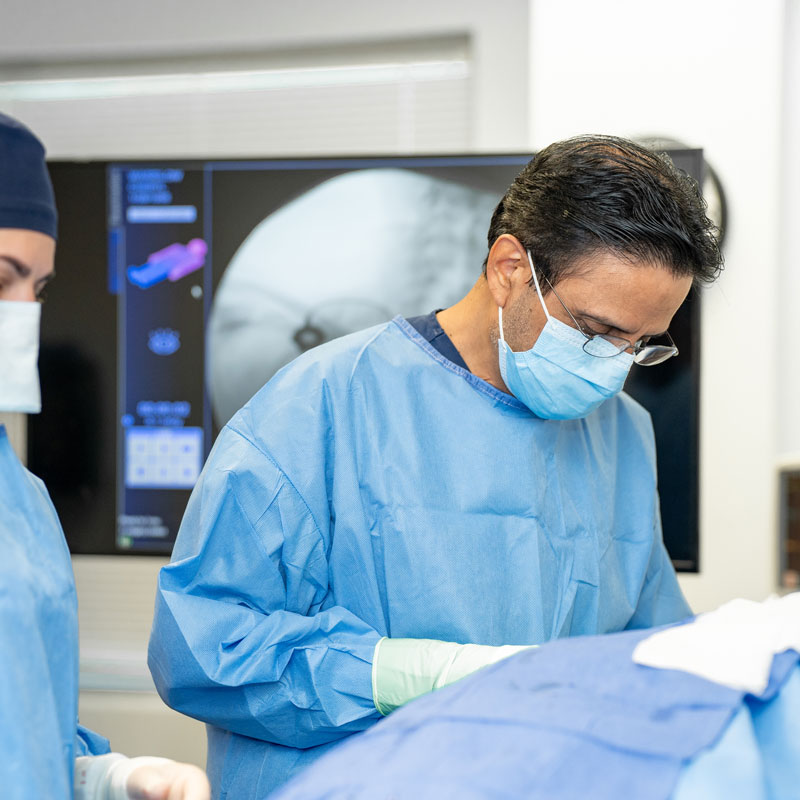
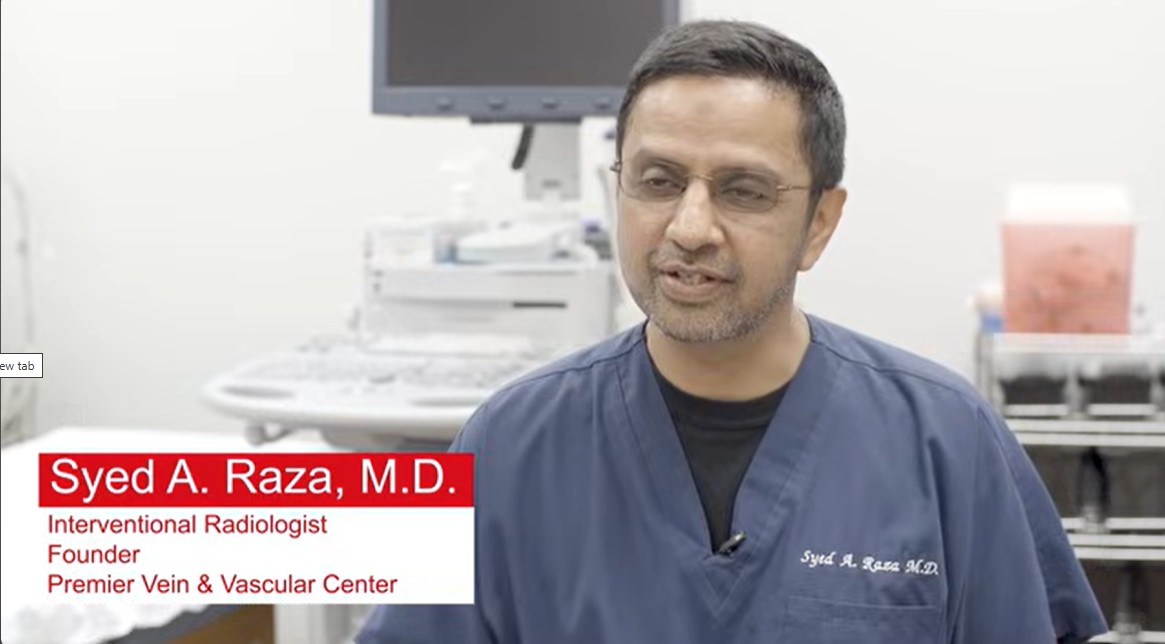
Dr. Syed Raza, board-certified interventional radiologist and vein specialist in Houston

Meet Your Specialist

Meet Your Houston Vein Specialist

Syed Raza, MD

Board-Certified Interventional Radiologist & Vein Specialist

Dr. Syed A. Raza is a fellowship-trained interventional radiologist certified by the American Board of Radiology. He has extensive experience in image-guided and minimally invasive vascular procedures, including evaluation and treatment of venous disease.

His background includes academic and hospital leadership roles in interventional radiology. His expertise allows Premier Vein & Vascular Center to combine diagnostic imaging with minimally invasive treatment planning for patients across the full spectrum of venous disease, from varicose veins to more complex vascular conditions.

Get Started

Next Steps

Serving Greater Houston

Serving West Houston, Katy & Surrounding Communities

Premier Vein & Vascular Center is located at 19255 Park Row Dr, Suite 201, Houston, TX 77084.

Communities We Serve

Frequently Asked Questions

Your Questions, Answered

What is venous disease?

Venous disease is an umbrella term for conditions caused by damaged or poorly functioning vein valves, including varicose veins, chronic venous insufficiency, venous ulcers, superficial thrombophlebitis, and deep vein thrombosis.

What causes venous disease?

Common causes include high blood pressure in the veins, naturally weak vessel walls, congenital vein formation issues, and traumatic injury. Risk factors include pregnancy, family history, obesity, a sedentary lifestyle, prolonged standing or sitting, hormonal birth control, hormone replacement therapy, and smoking.

What are the early symptoms of venous disease?

Early signs often include leg pain, cramping, a heavy or achy feeling, mild swelling, and visible veins. Symptoms may worsen throughout the day and improve with rest or leg elevation.

Is venous disease the same as varicose veins?

No. Varicose veins are one type of venous disease. The term venous disease also covers chronic venous insufficiency, venous ulcers, blood clots, and other vein-related conditions.

How serious can venous disease become?

Severity ranges widely. Some forms are primarily cosmetic, while others, like chronic venous insufficiency and venous ulcers, can affect quality of life, and deep vein thrombosis can be life-threatening if a clot travels to the lungs.

What is the difference between DVT and superficial thrombophlebitis?

Deep vein thrombosis (DVT) is a clot in a deep vein and carries a risk of pulmonary embolism if it breaks loose. Superficial thrombophlebitis is a clot in a vein near the skin surface, which is typically less dangerous but should still be evaluated.

How is venous disease diagnosed?

Diagnosis usually starts with a review of your symptoms and medical history, a physical exam, and a venous ultrasound to evaluate valve function and rule out blood clots.

How is venous disease treated?

Treatment depends on the specific condition and can range from compression therapy and lifestyle changes to minimally invasive procedures such as sclerotherapy, radiofrequency ablation, or Varithena.

When should I seek emergency care for a possible blood clot?

Seek immediate medical attention if you notice sudden, severe swelling, warmth, or redness in one leg, especially if accompanied by chest pain or shortness of breath, as these can be signs of DVT or a pulmonary embolism.

Does insurance cover venous disease treatment?

Treatment is often considered medically necessary once symptoms are present, and most major insurance plans, including Medicare, provide coverage. Our team can help verify your specific benefits.
Take the First Step Toward Healthier Veins

Whatever type of venous disease you may be experiencing, our specialists are here to help you get an accurate diagnosis and a treatment plan built around you.

This information is provided for educational purposes only and is not a substitute for professional medical advice, diagnosis, or treatment. Always seek the advice of your physician with any questions you may have regarding a medical condition. If you are experiencing a medical emergency, call 911 immediately.