What are the earliest signs of vein disease?
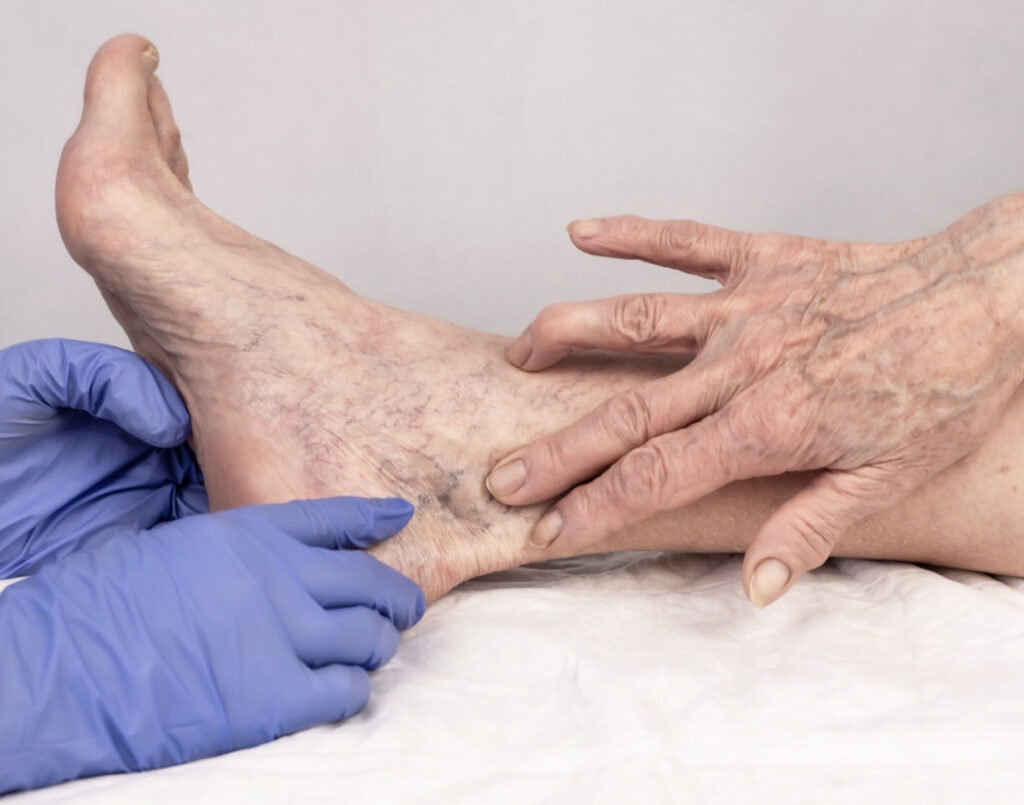
The earliest signs are often subtle: legs that feel heavy or tired by the end of the day, mild ankle swelling, or a few small visible veins. These symptoms typically worsen gradually over months or years if untreated.
Are varicose veins always a medical problem, or just cosmetic?
Varicose veins are a visible sign of underlying vein disease, not purely a cosmetic issue. While some patients have only mild discomfort, the same valve dysfunction that causes varicose veins can progress toward swelling, skin changes, and ulcers.
What is the difference between spider veins and varicose veins?
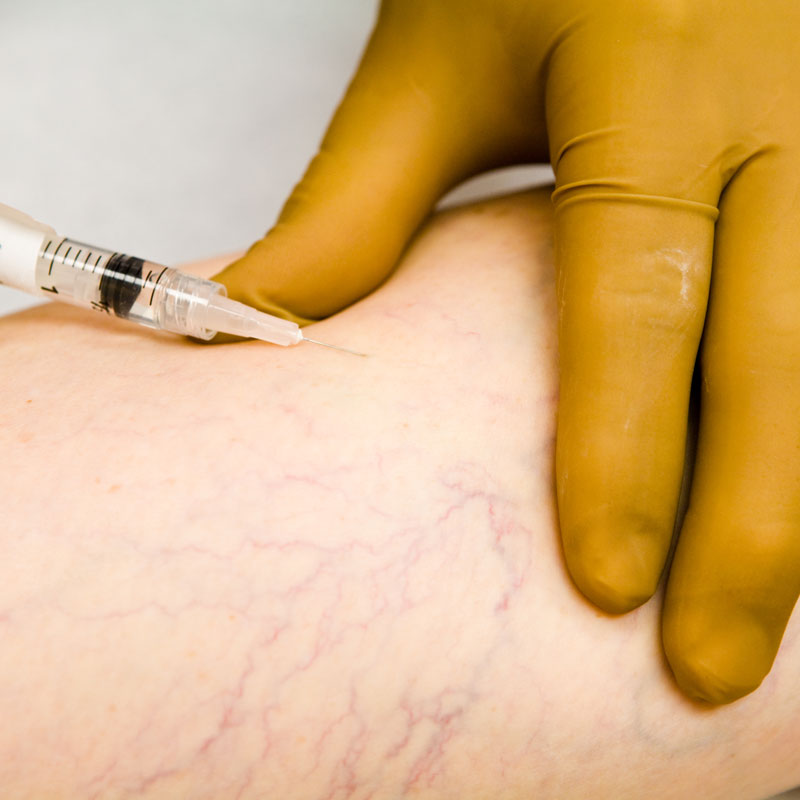
Spider veins are small, thin, web-like veins close to the skin’s surface and are mostly a cosmetic concern. Varicose veins are larger, raised, and rope-like, and are more often associated with pain, heaviness, and disease progression.
Why do my legs swell more by the end of the day?
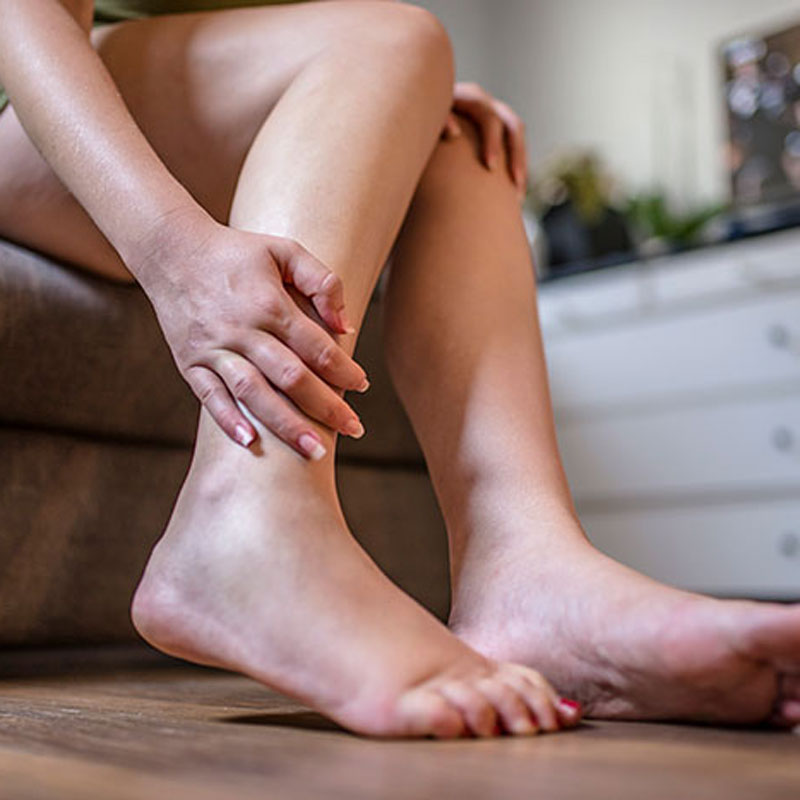
Swelling that builds throughout the day and improves overnight is a classic sign of venous insufficiency, where weakened vein valves allow blood to pool in the lower legs due to gravity while you are upright.
Can vein disease cause leg cramps or restless legs?
Yes. Poor venous circulation can trigger nighttime leg cramping and an uncomfortable urge to move the legs, sometimes diagnosed as restless leg syndrome. Treating the underlying vein disease often improves both.
When does vein disease become an emergency?
Sudden, severe swelling or pain in one leg, especially with warmth, redness, or shortness of breath, can indicate a blood clot and requires immediate medical attention rather than a routine vein consultation.
How is vein disease diagnosed?
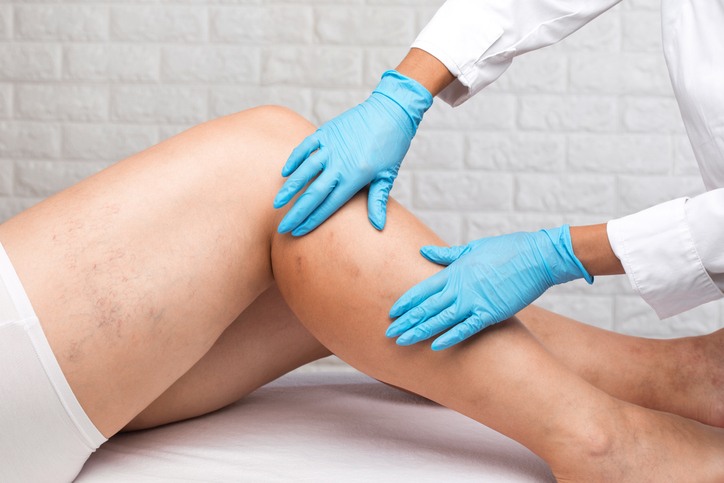
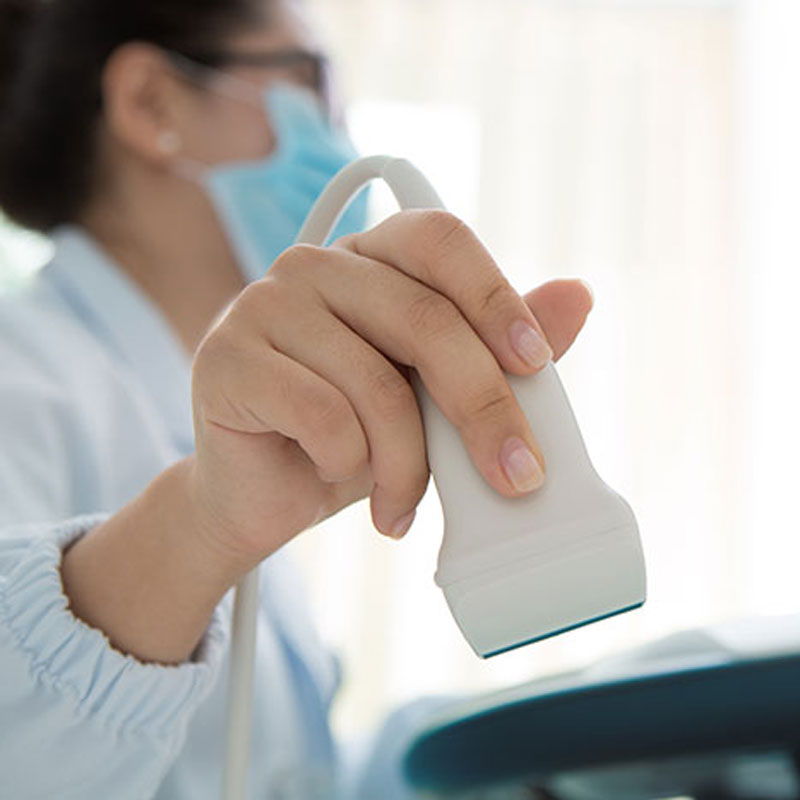
Diagnosis starts with a physical exam and a review of your symptoms and history, followed by a painless venous ultrasound that allows us to see exactly which veins are affected and how severely.
What happens if vein disease is left untreated?
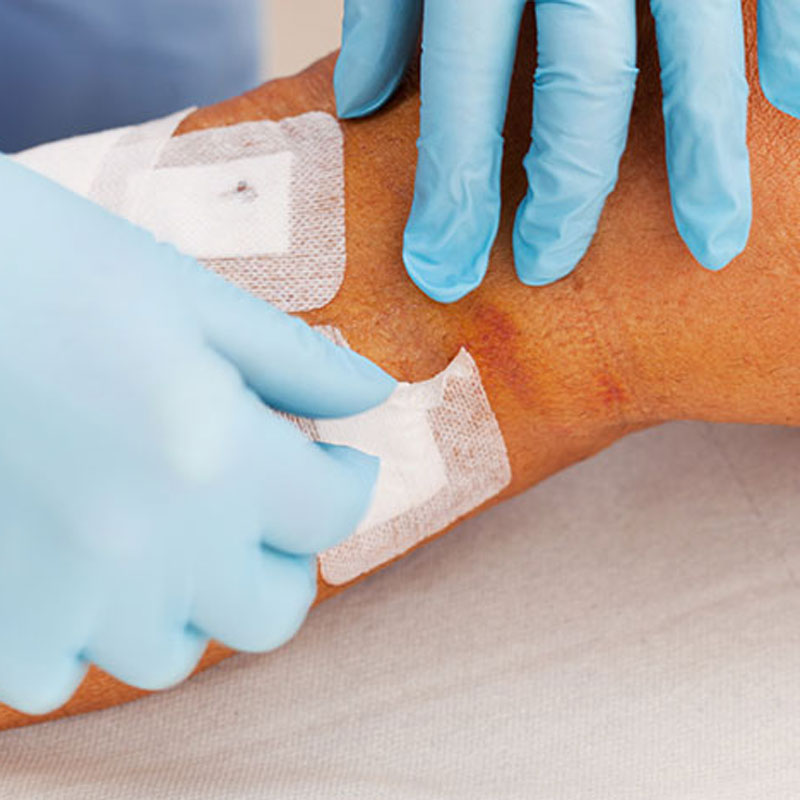
Untreated vein disease tends to progress, potentially leading to worsening pain and swelling, skin discoloration and thickening, and eventually venous ulcers that are difficult to heal.
Is vein disease treatment covered by insurance?
Treatment for medically necessary symptoms such as pain, swelling, or skin changes is often covered by insurance, including Medicare. Our office can help verify your specific benefits before treatment.
How soon can I be seen for a vein evaluation in Houston?
We work to schedule new patient evaluations promptly. Contact our office or request an appointment online, and our team will help find a time that works for you.