
Vein Health Guide
Published January 29, 2026 · Updated September 21, 2026 · Premier Vein & Vascular Center
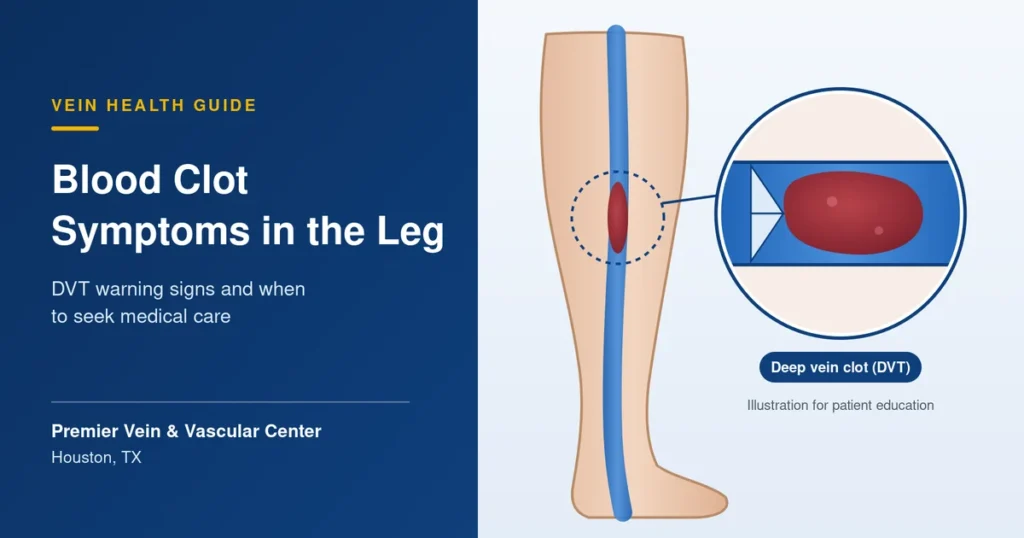
Blood clot symptoms in the leg can include swelling, pain or tenderness, warmth, and redness or other skin discoloration, usually in one leg. A clot that forms in a deep vein of the leg is called deep vein thrombosis (DVT).
Not every sore or swollen leg is a clot, and DVT does not always cause noticeable symptoms. This guide explains the warning signs, how they differ from a pulled muscle or varicose veins, and how doctors test for a clot. Recognizing concerning symptom patterns and getting the right medical evaluation promptly can help reduce the risk of complications.
Possible Pulmonary Embolism Requires Emergency Care
- Sudden, unexplained shortness of breath
- Chest pain, especially when breathing in
- Coughing, or coughing up blood
- Rapid or irregular heartbeat
- Severe lightheadedness
- Fainting
Seek emergency medical care immediately or call 911 for severe or life-threatening symptoms.
In This Article:
What You Will Learn in This Guide
- Early warning signs of a leg blood clot
- What DVT pain and swelling may feel like
- How symptoms differ from muscle strain and varicose veins
- Important DVT risk factors
- How doctors test for a blood clot
- When symptoms require emergency care
Table of Contents
- What Is a Blood Clot in the Leg?
- What Are the Early Symptoms of DVT?
- What Does a Blood Clot in the Calf Feel Like?
- Can You Have DVT Without Symptoms?
- What Does DVT Swelling Look Like?
- Blood Clot vs Muscle Strain
- Blood Clot vs Varicose Veins
- Other Conditions That Can Resemble DVT
- Who Is at Higher Risk for DVT?
- When Is a Possible Blood Clot an Emergency?
- What Is a Blood Clot in the Leg?
- What Are the Early Symptoms of DVT?
- What Does a Blood Clot in the Calf Feel Like?
- Can You Have DVT Without Symptoms?
- What Does DVT Swelling Look Like?
- Blood Clot vs Muscle Strain
- Blood Clot vs Varicose Veins
- Other Conditions That Can Resemble DVT
- Who Is at Higher Risk for DVT?
- When Is a Possible Blood Clot an Emergency?
- How Doctors Diagnose DVT
- What Happens If a Blood Clot Is Found?
- What Is Post-Thrombotic Syndrome?
- Can Blood Clots Be Prevented?
- When Should You See a Vein or Vascular Specialist?
- Blood Clot Evaluation in Houston
- FAQs
- Key Takeaways
- Clinical References
What Is a Blood Clot in the Leg?
What Are the Early Symptoms of a Blood Clot in the Leg?
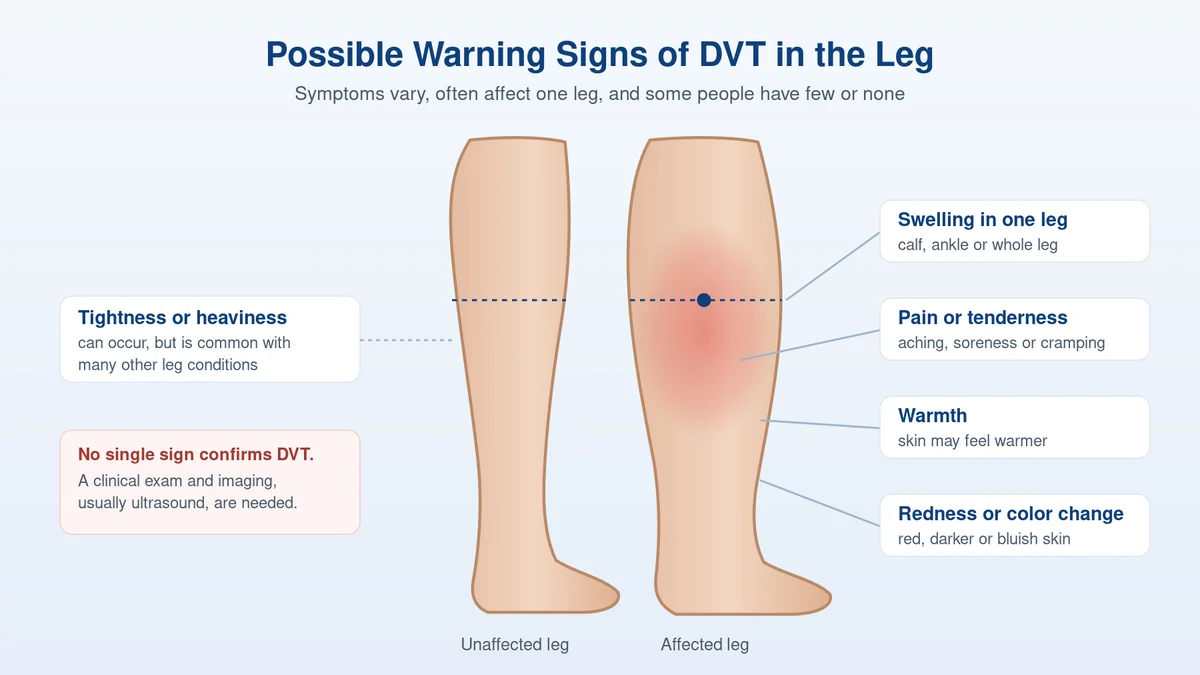
Swelling in One Leg
Calf or Thigh Pain
Warmth
Redness or Skin Discoloration
Tenderness
Tightness or Heaviness
What Does a Blood Clot in the Calf Feel Like?
- A dull ache or soreness deep in the calf
- Tenderness when the calf is touched or squeezed
- A cramp that does not settle the way a normal cramp does
- Tightness or fullness, as if the calf is swollen
- Pain that is noticeable when standing or walking
Can You Have a Blood Clot Without Symptoms?
What Does DVT Swelling Look Like?
- Swelling of one leg rather than both
- Calf or ankle swelling, sometimes extending up the leg
- A visible difference in size between the two legs
- Skin that looks stretched or feels tight
- Warmth or discomfort in the swollen area
Blood Clot vs Muscle Strain
| Feature | Possible DVT | Muscle Strain |
|---|---|---|
| Onset | Can develop over hours to days, often without an obvious trigger | Usually sudden, during or soon after activity |
| Injury or activity | Often no injury; may follow surgery, illness, immobility or long travel | Linked to exercise, a slip, lifting or overuse |
| Swelling | Can be marked, usually in one leg | Usually mild and localized, if present |
| Warmth | May be present over the affected area | Uncommon |
| Tenderness | Along the calf or thigh, sometimes diffuse | Localized to the injured muscle |
| Skin changes | Redness, darker or bluish color possible | Bruising may appear after a tear |
| Pain with activity | May be present and may not improve with rest | Worse when using the muscle; improves with rest |
| Risk factors | Recent surgery, hospital stay, immobility, pregnancy, hormones, cancer, prior clot | Recent exercise or strain; no clotting risk required |
Blood Clot vs Varicose Veins
Possible DVT
- Clot in a deep vein, not visible from the skin
- Can develop relatively quickly (acute)
- Often affects one leg
- Swelling, pain or tenderness, and warmth
- Possible red, darker or bluish discoloration
Varicose Veins
- Enlarged surface veins with faulty valves
- Usually chronic and slow to change
- Visible bulging or twisting veins
- Aching, heaviness or itching
- Often worse after long periods of standing
Other Conditions That Can Resemble DVT
Muscle Strain or Tear
Cellulitis
Superficial Thrombophlebitis
Chronic Venous Insufficiency
Ruptured Baker’s Cyst
Edema from Other Causes
Who Is at Higher Risk for DVT?
Prolonged immobility
Recent hospitalization
Surgery, especially orthopedic
Significant injury or trauma
Long periods of travel
Previous DVT or PE
Pregnancy and postpartum period
Estrogen-containing medicines or hormone therapy
Cancer and some cancer treatments
Certain serious illnesses, such as heart failure
Older age
Obesity
Inherited or acquired clotting tendencies
Family history of blood clots
Can Long Flights or Car Trips Increase Blood Clot Risk?
When Is a Possible Blood Clot an Emergency?
Possible DVT Symptoms
- Swelling in one leg
- Pain or tenderness in the calf or thigh
- Warmth over part of the leg
- Red, darker or bluish discoloration
Possible Pulmonary Embolism Symptoms
- Sudden difficulty breathing or shortness of breath
- Chest pain, especially when breathing in
- Coughing up blood
- Fainting
- Severe lightheadedness
- Rapid or irregular heartbeat
How Do Doctors Diagnose a Blood Clot in the Leg?
1
Symptoms
2
Medical history
3
Risk assessment
4
Physical examination
5
D-dimer, when appropriate
6
Compression / duplex ultrasound
7
Diagnosis and treatment plan
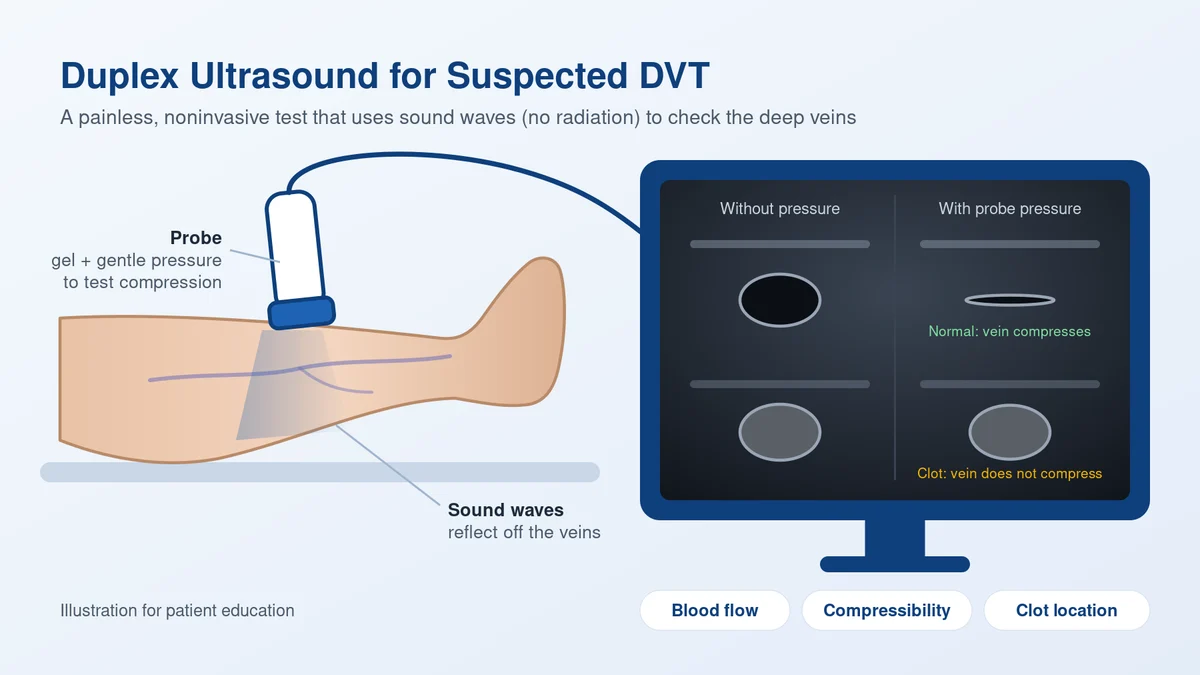
Venous Duplex Ultrasound
- Compressibility: a healthy vein flattens under light pressure; a vein with a clot usually does not
- Blood flow: Doppler imaging shows whether blood is moving normally through the vein
- Clot location: the scan shows where a clot is and how far it extends
D-Dimer Blood Test
Need Evaluation for Ongoing Leg Vein Symptoms?
For lingering swelling, heaviness or vein problems, a vein specialist can help find the cause. New symptoms that could be a clot need same-day medical care, and chest pain or shortness of breath needs 911.
What Happens If a Blood Clot Is Found?
Anticoagulation
Compression
Movement and Activity
Advanced Interventional Treatment
What Is Post-Thrombotic Syndrome?
- Chronic swelling in the affected leg
- Aching, heaviness or fatigue, often worse by the end of the day
- Skin darkening, thickening or itching near the ankle
- In more advanced cases, slow-healing sores (venous ulcers)
Experiencing Persistent Swelling or Vein Problems After DVT?
Can Blood Clots Be Prevented?
- Get up and move, or flex your ankles and calves, during long periods of sitting
- Walk as soon as your care team says it is safe after surgery or illness
- Follow hospital and surgical clot-prevention instructions exactly
- Ask about your clot risk before surgery or a long hospital stay
- Discuss clot risk before starting estrogen-containing medicines or hormone therapy
- If you have been prescribed an anticoagulant, take it exactly as directed and do not stop it without talking to your prescriber
When Should You See a Vein or Vascular Specialist?
Suspected New DVT
Possible Pulmonary Embolism
Ongoing or Chronic Symptoms

About our vein specialist
Dr. Syed Raza, MD
Vascular & Interventional Radiology
Dr. Syed Raza, MD is a fellowship-trained interventional radiologist certified by the American Board of Radiology, as well as the Royal College of Radiologists in the United Kingdom. He has extensive experience treating vein disease, including varicose veins and venous reflux, using image-guided, minimally invasive techniques at Premier Vein & Vascular Center. Meet the rest of the Premier Vein care team.
Blood Clot and Venous Evaluation in Houston
Premier Vein & Vascular Center
19255 Park Row Dr, Suite 201, Houston, TX 77084
Phone: (832) 321-5355
Hours: Monday–Friday, 8:00 AM – 4:30 PM
Schedule a Vein Consultation
For ongoing leg swelling, vein symptoms or follow-up after a blood clot. For emergency symptoms, call 911.
FAQ
Frequently Asked Questions
What are the first signs of a blood clot in the leg?
The first signs of a blood clot in the leg often include new swelling in one leg, pain or tenderness in the calf or thigh, warmth, and red, darker or bluish skin. Some people feel only tightness or heaviness, and some have no obvious symptoms. None of these signs confirms a clot by itself, so new, unexplained changes in one leg should be evaluated promptly.
What does a blood clot in the calf feel like?
A calf clot may feel like a dull ache, soreness, cramping, tightness or tenderness, sometimes with swelling or warmth. It can also feel very mild. Because a pulled muscle or cramp can feel similar, the sensation alone cannot tell you whether a clot is present. If you have risk factors or one-sided swelling, get checked rather than trying to test it yourself.
Does a blood clot always cause swelling?
No. Swelling is common with DVT, but some people have a clot with little or no visible swelling, and some have no symptoms at all. Pain, tenderness, warmth or discoloration may be present without much swelling. That is why doctors consider risk factors and use ultrasound when DVT is suspected, instead of relying on how the leg looks.
Can you have DVT without knowing it?
Yes. Some people with DVT have mild or no noticeable symptoms, and the clot is discovered during testing for another reason or after a pulmonary embolism. People with risk factors, such as recent surgery, a hospital stay, pregnancy or a previous clot, should take any new one-sided leg symptoms seriously and follow the clot-prevention plan their care team provides.
Is blood clot pain constant or does it come and go?
It varies. Some people describe a steady ache or tenderness, while others notice pain mainly when standing, walking or pressing on the calf. Pain may also change over time. Because the pattern is not consistent, whether pain comes and goes cannot be used to rule a clot in or out. New, unexplained leg pain with swelling or warmth should be evaluated.
How can you tell the difference between DVT and a pulled muscle?
A pulled muscle usually follows a specific activity or injury, is tender in one spot and improves with rest. DVT may appear without an obvious cause and can bring one-sided swelling, warmth or skin color change, especially after surgery, illness or long travel. The two often overlap, so you cannot reliably tell them apart at home. An exam and ultrasound are usually needed.
Can varicose veins cause a blood clot?
Varicose veins are linked to a higher chance of superficial thrombophlebitis, a clot in a surface vein, and some studies associate them with a modestly higher risk of DVT. Most people with varicose veins never develop DVT. A new tender, firm cord along a vein, or new swelling, pain or warmth in one leg, should be checked by a clinician.
What test checks for a blood clot in the leg?
The most commonly used test is a compression or duplex ultrasound of the leg veins, which checks whether the veins flatten normally under gentle pressure and how blood is flowing. A D-dimer blood test may be used in people with a lower likelihood of DVT to help rule a clot out. The right test depends on your symptoms, history and risk.
How quickly should possible DVT be evaluated?
Possible DVT should be evaluated promptly, ideally the same day that you notice new, unexplained swelling, pain, warmth or discoloration in one leg. Contact your doctor, visit urgent care, or go to an emergency department if you cannot be seen quickly. If you also have shortness of breath, chest pain, coughing up blood or fainting, call 911 immediately.
What symptoms mean a blood clot may have traveled to the lungs?
Symptoms of a pulmonary embolism include sudden shortness of breath, chest pain that is often worse when breathing in, coughing or coughing up blood, a rapid or irregular heartbeat, severe lightheadedness and fainting. These can occur with or without leg symptoms. They are a medical emergency: call 911 or go to the nearest emergency department right away.
Can you walk if you have a blood clot?
It depends on your situation, so follow your treating clinician’s advice. Once treatment has started, many people with DVT are encouraged to walk and stay active rather than rest in bed. If you think you may have a clot but have not been evaluated, get checked first; do not use walking, massage or stretching as a way to test or treat it.
What type of doctor treats long-term vein problems after DVT?
Vein and vascular specialists, including interventional radiologists and vascular surgeons, evaluate and treat long-term problems after DVT, such as persistent swelling, post-thrombotic syndrome and chronic venous insufficiency. Anticoagulation for an acute clot is often managed by the doctor who diagnosed it, a primary care physician or a hematologist, depending on the situation.
Summary & Next Steps
Key Takeaways
The essentials
- DVT is a blood clot that usually forms in a deep vein of the leg, thigh or pelvis.
- Swelling, pain or tenderness, warmth and skin discoloration, often in one leg, are common signs.
- Some people have few or no symptoms, so risk factors matter.
- Symptoms overlap with muscle strain, varicose veins and other conditions; they cannot confirm DVT on their own.
- Ultrasound is the test most commonly used to diagnose DVT.
- Shortness of breath, chest pain, coughing blood or fainting may signal pulmonary embolism: call 911.
The Bottom Line
Blood clot symptoms in the leg are not always obvious, and they can look like many less serious problems. If you notice new swelling, pain, warmth or color change in one leg, get evaluated promptly rather than waiting to see if it passes, and call 911 for any breathing or chest symptoms. If you are living with swelling or vein problems after a clot, a vein specialist can help you understand what is happening and what options may help.
Sources & Clinical References
This article was prepared using current patient education and clinical guidance from the following organizations:
- Centers for Disease Control and Prevention (CDC) – About Venous Thromboembolism (Blood Clots) – cdc.gov/blood-clots/about/index.html
- CDC Yellow Book – Deep Vein Thrombosis and Pulmonary Embolism (travel) – cdc.gov/yellow-book/hcp/travel-air-sea/deep-vein-thrombosis-and-pulmonary-embolism.html
- American Heart Association – Symptoms, Diagnosis, Prevention and Treatment of Venous Thromboembolism – heart.org/en/health-topics/venous-thromboembolism/symptoms-and-diagnosis-of-vte
- National Heart, Lung, and Blood Institute (NIH) – Venous Thromboembolism: Symptoms – nhlbi.nih.gov/health/venous-thromboembolism/symptoms
- National Heart, Lung, and Blood Institute (NIH) – Venous Thromboembolism: Diagnosis – nhlbi.nih.gov/health/venous-thromboembolism/diagnosis
- Society for Vascular Surgery – Deep Vein Thrombosis (patient information) – vascular.org/patients/vascular-conditions/deep-vein-thrombosis
- American Society of Hematology 2018 guidelines for management of venous thromboembolism: diagnosis of venous thromboembolism (Blood Advances) – pubmed.ncbi.nlm.nih.gov/30482764
- MedlinePlus, U.S. National Library of Medicine – Deep Vein Thrombosis – medlineplus.gov/deepveinthrombosis.html
Medical Disclaimer: The information provided in this article is for educational and informational purposes only and is not intended as a substitute for professional medical advice, diagnosis, or treatment. Always seek the advice of your physician or another qualified healthcare provider with questions regarding a medical condition. Never disregard professional medical advice or delay seeking it because of information you have read on this website. If you believe you may be experiencing a medical emergency, call 911 or seek emergency medical care.