
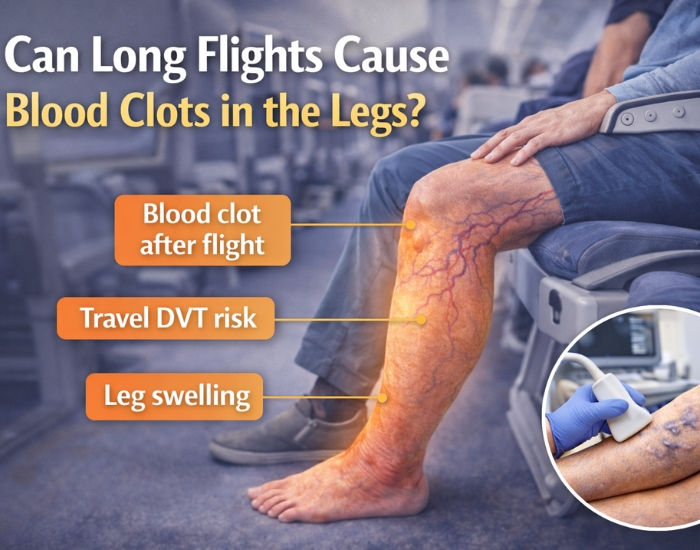
For many travelers, a long flight is exciting, stressful, or exhausting—but rarely do people think about the risk of blood clot long flights. After sitting for hours in a cramped airplane seat, some may notice leg swelling, heaviness, or mild discomfort. While these symptoms are often temporary, in certain cases, prolonged immobility can increase the risk of a serious condition called deep vein thrombosis (DVT).
Quick Answer: Yes, long flights can contribute to blood clots, mainly because sitting still for hours slows blood flow in the deep leg veins. For most healthy travelers the added risk is small. It rises with trips longer than about four hours, several flights close together, and personal risk factors such as a previous clot, recent surgery, cancer, pregnancy, estrogen use or obesity. Moving every hour, doing calf exercises, staying hydrated and wearing compression socks when advised all lower the risk.
Understanding the signs, risks, and prevention of blood clot after flight is essential for frequent flyers, especially those with other health risk factors. Being aware of warning signs and simple preventative measures can help ensure a safe journey.

Meet your vein specialist
Dr. Syed Raza, MD
Vascular & Interventional Radiology · Founder, Premier Vein & Vascular Center
Fellowship-trained interventional radiologist certified by the American Board of Radiology and the Royal College of Radiologists (UK). Former Chief of Interventional Radiology at UTMB Galveston and Memorial Hermann Memorial City, with 15+ years treating varicose veins, venous reflux and peripheral arterial disease.
How Blood Clots Develop During Flights
Blood clot long flights occur when blood flow in the legs slows, allowing clots to form in deep veins. Sitting in a confined space for several hours, often without stretching or moving, can reduce circulation.
Several factors contribute to the risk:
-
Prolonged immobility: Remaining seated for 4–6 hours or more increases vein pressure.
-
Dehydration: Airplane cabins have low humidity, which can thicken the blood slightly.
-
Previous vein issues: Weak valves or a history of DVT increases susceptibility.
-
Other risk factors: Age, obesity, pregnancy, hormone therapy, or recent surgery.
This combination of factors explains why long flights are sometimes linked to travel DVT risk.
Recognizing Blood Clot Symptoms After a Flight
Not all leg discomfort is a sign of DVT. Mild swelling or heaviness may resolve after walking. However, blood clot after flight requires attention if accompanied by:
-
Sudden swelling in one leg only
-
Pain or tenderness, especially in the calf
-
Redness, warmth, or discoloration of the skin
-
Tightness or cramping that doesn’t improve with movement
-
Shortness of breath or chest pain (emergency symptoms)
Early recognition is vital. Prompt evaluation can prevent serious complications, such as a pulmonary embolism.
Preventing Blood Clots During Travel
Fortunately, there are several effective ways to reduce travel DVT risk:
-
Move frequently: Walk the aisle every 1–2 hours, or perform seated leg exercises.
-
Stretch and flex: Rotate ankles, extend knees, and lift legs while seated.
-
Stay hydrated: Drink water regularly and limit alcohol or caffeinated beverages.
-
Compression stockings: Graduated compression stockings improve circulation in at-risk travelers.
-
Elevate legs when possible: When resting in a hotel or during layovers, elevate legs above heart level.
These strategies support healthy blood flow and reduce the likelihood of blood clot long flights.
When to Seek Medical Attention
It is important not to ignore persistent or unusual leg symptoms after a flight. Seek medical care if you notice:
-
One-sided leg swelling
-
Pain or tenderness that worsens over time
-
Warmth, redness, or unusual skin color
-
Shortness of breath, chest pain, or sudden dizziness
A vein specialist can perform a duplex ultrasound to detect clots and evaluate overall vein health. Early intervention prevents serious complications and allows safe resumption of travel.
Who Is at Higher Risk for Blood Clots from Flying
Some travelers are more prone to blood clot after flight, including:
-
Individuals over 50
-
People with obesity or sedentary lifestyles
-
Those with previous DVT or family history of clots
-
Pregnant women or individuals on hormone therapy
-
Travelers recovering from surgery
If risk factors are present, preventive measures are especially important, and discussing travel plans with a healthcare provider is recommended.
Long-Term Considerations
Even if a clot does not form, repeated blood clot long flights combined with vein valve issues can contribute to chronic vein problems. Steps to maintain healthy circulation over time include:
-
Regular physical activity
-
Maintaining a healthy weight
-
Avoiding long periods of immobility
-
Wearing compression stockings during long travel if recommended
These strategies not only reduce DVT risk but also help prevent leg swelling after travel and improve overall vein health.
Can Flying Cause Blood Clots? What Actually Raises the Risk
Flying itself does not damage your veins. The problem is what long flights do to the way you sit and move. In a cramped seat, the knees are bent, the edge of the seat presses on the back of the thighs and the calf muscles barely contract for hours. Without that calf muscle pump, blood in the deep leg veins slows down. Slow flow is one of the three classic conditions for a clot, along with injury to the vein wall and blood that clots more easily than normal.
For a healthy traveler, the extra risk from a single long flight is small. It grows with the length of the trip, with several long flights close together, and especially when other risk factors are present. Travel-related clots are not limited to planes. Long car, bus and train journeys create the same conditions, and the same precautions apply.
How long after a flight can a clot appear?
Many people expect symptoms during or right after landing. In reality, travel-related DVT can show up days later, and the period of raised risk is generally thought to extend for a few weeks after a long journey. Leg swelling and pain in one leg a week after a trip still deserve the same attention as symptoms on the day you land.
Normal Travel Swelling vs a Possible Blood Clot
Swollen ankles after a long flight are extremely common, and most of the time they are harmless. The table below shows the differences we look for in clinic.
| Feature | Ordinary travel swelling | Possible deep vein thrombosis |
|---|---|---|
| Which legs | Usually both, fairly evenly | Usually one leg, clearly more than the other |
| Pain | Mild tightness or heaviness | Aching, cramping or tenderness, often in the calf |
| Skin | Normal color | May be warm, red, purple or darker |
| After walking and elevation | Improves within a day or so | Persists or gets worse |
| Breathing | Normal | Shortness of breath or chest pain is an emergency |
If you are not sure which column you fit, it is far better to be checked. A venous duplex ultrasound gives a clear answer quickly and painlessly.
A Pre-Trip Checklist for Higher-Risk Travelers
The original article above lists who is at higher risk. If that includes you, a little planning before the trip goes a long way.
- Talk to your doctor before long trips if you have had a previous clot, recent surgery or injury, active cancer, pregnancy or recent delivery, or a known clotting disorder.
- Ask specifically about medication. Some very high-risk travelers are prescribed a short course of an injectable or oral blood thinner. Aspirin is generally not recommended for preventing travel clots on its own, so do not start it without medical advice.
- Get properly fitted compression socks. Knee-high graduated socks, often in the 15 to 30 mmHg range, are commonly advised for at-risk travelers. Ill-fitting socks that roll down can do more harm than good.
- Choose an aisle seat when you can. It makes it much easier to get up and walk without disturbing others.
- Plan breaks on road trips. Stop every one to two hours to walk for a few minutes.
- Keep your legs free. Avoid storing bags under the seat in front of you so you can stretch and move your feet.
- Limit sedatives and alcohol. Sleeping pills and drinks can keep you still for hours in one position.
Simple in-seat exercises
Every 20 to 30 minutes, try these while seated:
- Ankle pumps: point the toes down, then pull them up toward the shin, 10 to 15 times
- Heel and toe raises: lift the heels with toes on the floor, then lift the toes with heels down
- Ankle circles in both directions
- Knee lifts: raise each knee toward the chest a few times, if space allows
Flying After Surgery, a DVT or Vein Treatment
These situations need individual advice, but some general principles help with planning.
- After major surgery, especially orthopedic, abdominal or pelvic surgery, the risk of clots is higher for several weeks. Ask your surgeon before booking long flights, and whether you need prevention during travel.
- After a diagnosed DVT, many patients can fly once they are established on blood thinners and their symptoms are stable, but the timing should be decided with your doctor.
- After a vein procedure, such as ablation or sclerotherapy, we usually suggest avoiding long flights for a short period and wearing compression and walking regularly when you do travel. Your specialist will give exact timing based on what was treated.
Do Varicose Veins Increase the Risk of Clots When Flying?
Patients with varicose veins often ask us whether they should worry more about travel. Varicose veins are a problem in the surface veins, while DVT forms in the deep veins. Even so, people with significant varicose veins and venous insufficiency tend to have more swelling and discomfort after long trips, and they may have a modestly higher chance of developing clots, including painful clots in the surface veins themselves (superficial thrombophlebitis).
Practical steps help: wear your compression socks on the plane, walk the aisle when you can and raise your legs once you arrive. If your legs routinely swell, ache or throb for days after travel, that is a sign the underlying vein problem may be worth treating. An ultrasound shows whether refluxing veins are to blame, and our varicose vein treatment page explains the minimally invasive options.
Call 911 or go to the nearest emergency room if, during or after travel, you have:
- Sudden shortness of breath or fast breathing
- Chest pain that is sharp or worse when you breathe in
- Coughing up blood
- A racing heartbeat, fainting or severe lightheadedness
New swelling, pain or warmth in one leg without these symptoms still needs same-day medical evaluation.
How We Evaluate Leg Symptoms After Travel
- Focused history. We ask about the trip, when symptoms began, your personal and family history of clots, recent surgery, hormones and other medical conditions.
- Examination. We compare both legs for swelling, tenderness, warmth and color change, and look for varicose veins or inflamed surface veins.
- Venous duplex ultrasound. Performed in our IAC-accredited vascular lab, this painless scan checks the deep and superficial veins for clot and shows whether vein reflux is contributing to swelling. You can read more about the venous ultrasound.
- A clear plan. If a clot is found, treatment starts or is coordinated promptly, as described on our deep vein thrombosis page. If not, we explain the cause of your symptoms and give you a practical plan for future trips.
When to See a Vein Specialist in Houston About Travel and Clots
Houston is a major travel hub, and many of our patients fly frequently for work or to see family. If you have had leg swelling or pain after a trip, have risk factors and plan a long journey, or have varicose veins that flare every time you travel, it is worth being checked. Dr. Syed Raza is a fellowship-trained interventional radiologist with more than 15 years of experience treating venous disease, and a former Chief of Interventional Radiology at UTMB Galveston and Memorial Hermann Memorial City. To see a vein doctor in Houston, call (832) 321-5355. Same-week appointments are usually available, and most insurance plans, including Medicare, are accepted.
Talk With a Specialist at Premier Vein
Have questions about your symptoms or treatment options? Dr. Syed Raza and the team at Premier Vein & Vascular Center can evaluate your concerns and explain your options clearly. Same-week appointments are usually available, and most insurance plans are accepted.
Frequently Asked Questions
1. Can long flights really cause blood clots?
Yes, sitting for extended periods can increase the risk, especially in individuals with other risk factors.
2. How do I know if swelling is normal or a clot?
Mild, symmetrical swelling often improves after walking or elevating legs. One-sided swelling with pain, warmth, or redness may indicate a blood clot after flight.
3. What is the best way of preventing blood clots during travel?
Regular movement, leg exercises, hydration, and compression stockings are effective preventive measures.
4. Should I see a doctor after a flight?
Seek evaluation if swelling, pain, or skin changes persist or if you experience any shortness of breath or chest pain.
5. Can repeated flights affect vein health?
Frequent long flights without proper precautions can contribute to chronic vein issues and increase travel DVT risk over time.
Final Thoughts on Blood Clots from Flying
While most travelers do not develop clots, blood clot long flights is a real concern for certain individuals. Awareness of travel DVT risk, recognizing blood clot after flight symptoms, and taking preventive measures are key to safe travel.
A vein specialist can assess personal risk, perform imaging if necessary, and recommend preventive strategies, including lifestyle changes and compression therapy. Professional guidance ensures safe travel and long-term vein health.
How soon after a flight can a blood clot appear?
Symptoms can appear during the flight, within a day, or up to a few weeks after a long journey. One-sided leg swelling or pain in the weeks after travel should be checked, even if the flight felt uneventful.
Should I take aspirin before a long flight to prevent clots?
Aspirin is generally not recommended on its own for preventing travel-related DVT. People at high risk should talk with their doctor, who may suggest compression socks or, in some cases, a prescription blood thinner.
Can I fly if I have a DVT?
Many people can fly once they are on a stable blood thinner and their symptoms are controlled, but timing should be decided with your doctor. Wear compression if advised, walk regularly during the flight and seek care immediately for any breathing problems.
Is an aisle seat better for preventing blood clots?
An aisle seat makes it easier to stand up and walk regularly, which helps keep blood moving in the legs. If you cannot get one, do seated ankle and calf exercises often.
Do short flights cause blood clots?
Flights under about four hours carry very little added risk for most people. Risk rises with longer travel time and when several flights are taken back to back.
Can long car rides cause blood clots too?
Yes. Any long period of sitting still, whether in a car, bus, train or plane, slows blood flow in the leg veins. Stopping every one to two hours to walk is the simplest way to lower the risk.
Trusted Health Resources
- Venous Thromboembolism, National Heart, Lung, and Blood Institute (NIH)
- About Venous Thromboembolism (Blood Clots), Centers for Disease Control and Prevention
Medical Disclaimer:
This content is for educational purposes only and does not replace professional medical advice, diagnosis, or treatment. Always consult a qualified healthcare provider regarding travel-related swelling or suspected blood clots.