
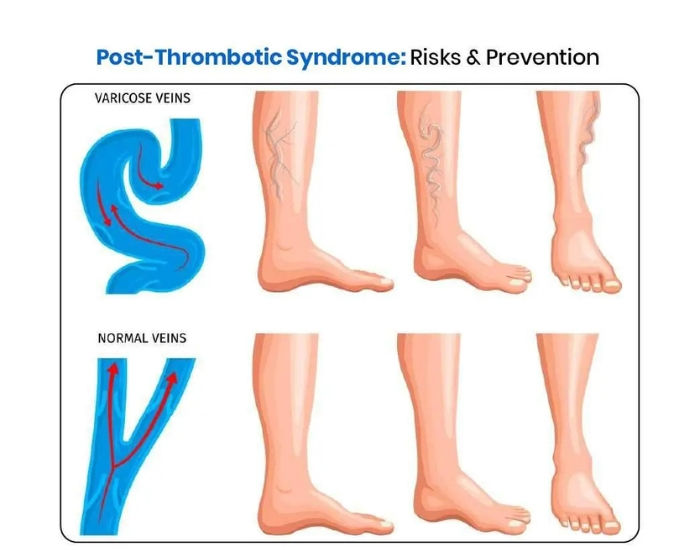
Recovering from a deep vein thrombosis (DVT) can bring relief, but many people find that leg problems linger long after the clot has cleared. These ongoing issues often signal post thrombotic syndrome, a condition that affects the veins in the legs after a DVT. Patients may experience swelling, aching, heaviness, or even skin changes that make daily activities uncomfortable. Understanding post thrombotic syndrome is important because it allows patients to recognize symptoms early, manage discomfort effectively, and prevent long-term complications. Knowing what to expect and how to take care of your legs can make a significant difference in quality of life..
How Post-Thrombotic Syndrome Develops
Blood clots in the deep veins can damage valves that help blood return from the legs to the heart. When these valves fail, blood can pool in the legs, causing swelling and discomfort. The resulting pressure in the veins can create chronic pain and skin changes. The long term effects of blood clot damage may vary in severity, but post thrombotic syndrome is a common complication after DVT.
Common Symptoms of Post-Thrombotic Syndrome
Recognizing post thrombotic syndrome early can help manage symptoms effectively. Common signs include:
- Persistent leg swelling, especially after standing or walking
- Chronic aching, heaviness, or throbbing pain in the leg
- Skin changes such as redness, discoloration, or thickening
- Varicose veins or visibly enlarged veins
- Itching, cramping, or a feeling of tightness in the affected leg
- Development of ulcers in severe cases
These symptoms can range from mild to debilitating. Some patients report chronic pain after DVT that impacts daily activities, work, or sleep.
Risk Factors for Developing Post-Thrombotic Syndrome
Not every person who has had a DVT will develop post thrombotic syndrome. Certain factors increase the likelihood, including:
- Large or recurrent blood clots
- DVT in the thigh or iliac veins
- Delays in treating the initial clot
- Inadequate anticoagulation therapy
- Obesity or other health conditions that affect circulation
Understanding risk factors helps patients and doctors anticipate potential complications and take preventive measures.
When to Seek Medical Attention
Post-thrombotic syndrome is generally not life-threatening, but symptoms can significantly impact comfort and mobility. Seek medical care if you notice:
- Worsening leg swelling or persistent pain
- Changes in skin color or temperature
- Open sores or ulcers on the leg
- Sudden shortness of breath or chest pain (these could signal a new clot and require immediate attention)
Early evaluation by a vascular specialist can help manage symptoms and prevent further complications.
Diagnosing Post-Thrombotic Syndrome
Doctors typically diagnose post thrombotic syndrome using a combination of medical history, physical examination, and imaging studies. Steps may include:
- Reviewing the history of DVT and any ongoing symptoms
- Physical exam to check for swelling, skin changes, and vein function
- Ultrasound imaging to assess vein valves and blood flow
- Other tests if ulcers or severe skin changes are present
Accurate diagnosis is key to creating a treatment plan tailored to the patient’s needs.
Management and Treatment Strategies
Managing post thrombotic syndrome focuses on symptom relief, improving circulation, and preventing progression. Common approaches include:
- Compression therapy: Wearing graduated compression stockings helps reduce leg swelling and improve blood flow.
- Medications: Doctors may prescribe pain relief or anticoagulants if there is risk of new clots.
- Lifestyle changes: Elevating legs, regular exercise, and maintaining a healthy weight can help control symptoms.
- Skin care: Keeping skin clean and moisturized helps prevent infections or ulcers.
- Minimally invasive procedures: In severe cases, procedures such as vein angioplasty or stenting may be considered.
Consistency in daily management often provides the best results, reducing discomfort and preventing worsening of the condition.
Preventing Post-Thrombotic Syndrome
While not all cases can be prevented, certain measures can lower risk or reduce severity:
- Treat DVT promptly and follow prescribed anticoagulation therapy
- Wear compression stockings as recommended
- Maintain an active lifestyle to promote circulation
- Avoid prolonged sitting or standing without movement
- Attend follow-up appointments with a vascular specialist
These steps support vein health and can minimize the long-term effects of blood clot complications.
Living With Post-Thrombotic Syndrome
Living with post thrombotic syndrome means paying regular attention to leg health. Symptoms like swelling, aching, or heaviness can make everyday activities harder, but there are many ways to manage them effectively. Regular check-ups with a vascular specialist help monitor your legs and adjust treatments as needed.
Quick Answer: Post-thrombotic syndrome (PTS) is long-term leg swelling, aching, heaviness and skin change that develops after a deep vein thrombosis, because the clot damaged the vein valves, left the vein narrowed, or both. Symptoms usually worsen with standing and improve with rest and elevation. It is diagnosed from symptoms and a venous duplex ultrasound, sometimes with venography or intravascular ultrasound. Treatment combines compression, exercise and skin care, and selected patients benefit from treating superficial vein reflux or opening a narrowed pelvic vein with a stent.
Wearing compression stockings every day, elevating your legs when resting, and doing gentle exercises like walking or stretching can reduce swelling and improve circulation. Small lifestyle changes, such as avoiding long periods of sitting or standing and taking care of your skin, also make a big difference.
Open communication with healthcare providers is important. Sharing any changes in symptoms allows for timely adjustments in care. Many patients find that following these steps consistently—through simple daily routines—can significantly ease discomfort, improve mobility, and help them stay active and independent.

Meet your vein specialist
Dr. Syed Raza, MD
Vascular & Interventional Radiology · Founder, Premier Vein & Vascular Center
Fellowship-trained interventional radiologist certified by the American Board of Radiology and the Royal College of Radiologists (UK). Former Chief of Interventional Radiology at UTMB Galveston and Memorial Hermann Memorial City, with 15+ years treating varicose veins, venous reflux and peripheral arterial disease.
Post-Thrombotic Syndrome: Two Problems in One Vein
When we explain post-thrombotic syndrome to patients, we describe two separate kinds of damage a clot can leave behind. Understanding which one you have makes the treatment options much clearer.
The first is reflux. As the body breaks down a clot, the healing process scars the delicate valve leaflets. They thicken and stop closing, so blood falls back down the leg each time you stand. The second is obstruction. Some clots never fully dissolve, and the vein heals with scar tissue, webs or narrowing inside it. Blood then struggles to leave the leg, much like traffic through a lane closure. Many patients have some of both.
| Feature | Mainly reflux | Mainly obstruction |
|---|---|---|
| What happened to the vein | Valves scarred and leaking | Vein narrowed or partly blocked by scar |
| Typical symptoms | Heaviness, swelling and aching that build through the day | Bursting or tight pain with walking, swelling of the whole leg |
| Common location | Thigh and calf veins | Pelvic (iliac) and upper thigh veins |
| Key test | Duplex ultrasound reflux study | Duplex ultrasound plus CT or MR venography, venography, intravascular ultrasound |
| Possible procedures | Treating superficial reflux that adds to pressure | Venous angioplasty and stenting |
How Doctors Measure Post-Thrombotic Syndrome
Because there is no single blood test or scan that confirms PTS, doctors use a scoring tool called the Villalta scale. It combines five symptoms you report (pain, cramps, heaviness, tingling and itching) with six signs the doctor examines (swelling, skin hardening, darkened skin, redness, new small veins and pain when the calf is squeezed). Each is scored from 0 to 3.
- A total of 0 to 4 usually means no PTS
- 5 to 9 suggests mild PTS
- 10 to 14 suggests moderate PTS
- 15 or more, or any venous ulcer, indicates severe PTS
The score is usually checked at least three to six months after the DVT, since early swelling and pain from the clot itself often improve on their own during that time. Repeating it over time helps show whether treatment is working.
Is It a New Clot or Post-Thrombotic Syndrome?
One of the most common worries we hear is whether a flare of leg pain means another clot. The symptoms can overlap, and when in doubt an ultrasound is the safe answer.
- New DVT tends to come on over hours to a few days, often with a clear change from your usual leg, new calf pain or tenderness, warmth and increased swelling.
- PTS follows a familiar daily pattern: worse after standing or walking, better after a night’s rest or leg elevation, with symptoms that have been present for months.
If your leg suddenly feels different from your usual baseline, do not assume it is just PTS. Get it checked the same day.
How We Evaluate Post-Thrombotic Syndrome
- Focused history. We review the original clot, where it was, how it was treated and for how long, any repeat clots, your current blood thinner, and how symptoms affect walking, work and sleep.
- Examination and scoring. We examine both legs for swelling, skin hardening, discoloration, varicose veins and ulcers, and record a Villalta score as a baseline.
- Venous duplex ultrasound. In our IAC-accredited vascular lab, we look for scarred or narrowed deep veins, leaking valves, any new clot, and reflux in the superficial veins that may be adding to the pressure.
- Advanced imaging when needed. If symptoms suggest a blockage higher up, CT or MR venography, catheter venography and intravascular ultrasound show the pelvic veins in detail.
- A clear plan. We explain whether reflux, obstruction or both are driving your symptoms and which treatments are likely to help.
Treatment Options for Post-Thrombotic Syndrome Beyond Compression
A structured exercise program
Exercise is safe for most people with PTS once the initial clot has been treated, and it strengthens the calf muscle pump that pushes blood out of the leg. A program of walking plus calf strengthening, such as heel raises, several times a week over a few months can improve leg symptoms and quality of life. Wearing compression during exercise often makes it more comfortable.
Treating superficial vein reflux
Some patients with PTS also have leaking superficial veins, either from before the clot or developing afterward. When the deep veins are open enough to carry blood out of the leg, closing a refluxing superficial vein can lower the overall pressure and ease swelling. This decision needs careful ultrasound mapping, because in a leg with blocked deep veins, superficial veins may be acting as important bypass routes and should be left alone.
Venous angioplasty and stenting
When imaging shows a significant narrowing or chronic blockage in the iliac or common femoral veins, an interventional radiologist can reopen it from inside. Through a small puncture, usually behind the knee or in the groin, a catheter is guided into the scarred segment, which is widened with a balloon and held open with a dedicated venous stent. Intravascular ultrasound helps size and position the stent precisely. In well-selected patients, relieving the obstruction can reduce swelling, pain and venous claudication and help ulcers heal. Blood thinners are usually continued for a period afterward.
Wound care for ulcers
Ulcers caused by PTS heal best when compression, careful wound care and treatment of any correctable reflux or obstruction are combined. Our venous ulcer page explains this approach.
You can learn more about clots themselves on our deep vein thrombosis page and about the broader condition on our venous insufficiency page.
Call 911 or seek emergency care if…
- You have sudden shortness of breath, chest pain, a racing heart or cough up blood, which can signal a pulmonary embolism
- Your leg suddenly becomes much more swollen, painful, warm or discolored than your usual baseline
- Your leg turns blue or very pale and painful
- A leg sore shows spreading redness, pus or fever
- You have unusual bleeding while on a blood thinner, such as black stools or vomiting blood
When to See a Vein Specialist in Houston After a DVT
If your leg still swells, aches or feels heavy months after a blood clot, or if the skin around your ankle is darkening or breaking down, a specialist evaluation can identify whether reflux, obstruction or both are to blame. Many patients have been told to simply live with these symptoms, when targeted treatment could help.
Dr. Syed Raza is a fellowship-trained interventional radiologist and former Chief of Interventional Radiology at UTMB Galveston and Memorial Hermann Memorial City, with more than 15 years of experience treating venous disease. Our vein clinic in Houston serves patients from Katy and across Greater Houston, usually with same-week appointments, and accepts most insurance plans, including Medicare.
FAQs About Post-Thrombotic Syndrome
1. Can post thrombotic syndrome appear years after a DVT?
Yes, symptoms can develop months or even years after the initial blood clot.
2. Are compression stockings necessary?
Compression stockings are highly effective in reducing leg swelling and discomfort for many patients.
3. Can post thrombotic syndrome lead to ulcers?
In severe cases, chronic vein pressure and skin changes can lead to ulcers.
4. Is post thrombotic syndrome preventable?
Prompt treatment of DVT, consistent use of compression therapy, and lifestyle adjustments can lower the risk.
5. Should I see a specialist if I have chronic leg pain after DVT?
Yes, a vascular specialist can evaluate symptoms and recommend appropriate management strategies.
Final Thoughts
Post thrombotic syndrome can feel frustrating and worrying, especially when symptoms like swelling, aching, or heaviness in the leg continue for months or even years after a blood clot. These ongoing problems can make daily activities harder and affect overall comfort. The good news is that with proper care and attention, most people can still live an active and comfortable life.
Noticing symptoms early is very important. Simple steps like wearing compression stockings every day, keeping the legs elevated when resting, and moving regularly through gentle exercise can help reduce swelling and ease pain. Taking care of your skin and avoiding long periods of sitting or standing can also prevent problems from getting worse.
Visiting a vascular specialist regularly is helpful because they can check your legs, adjust treatments, and offer advice that fits your specific needs. Staying informed about your condition, following recommended therapies, and seeking medical help when new or worsening symptoms appear can protect your veins and prevent serious complications.
By taking these steps, patients can lower the long-term effects of blood clots, keep their legs healthier, and regain confidence in walking, standing, and enjoying everyday life. Managing post thrombotic syndrome is about small, consistent actions that make a big difference over time.
Can post-thrombotic syndrome be cured?
The valve damage from a clot is permanent, so PTS is usually managed rather than cured. However, symptoms can often be reduced substantially with compression, exercise and, for selected patients, procedures that treat superficial reflux or reopen a narrowed deep vein.
What is the Villalta score?
The Villalta score is a standard tool doctors use to diagnose and grade post-thrombotic syndrome. It adds up five symptoms and six physical signs, each scored from 0 to 3, and classifies PTS as mild, moderate or severe, with any venous ulcer counting as severe.
Can a stent help post-thrombotic syndrome?
For patients whose symptoms come mainly from a narrowed or blocked iliac or upper thigh vein, venous angioplasty and stenting can improve blood flow out of the leg and reduce swelling and pain. It is not helpful when the problem is mainly leaking valves in the calf veins, so careful imaging is needed first.
Is it safe to exercise with post-thrombotic syndrome?
For most patients, yes, once the acute clot has been treated. Walking and calf strengthening help the muscle pump move blood out of the leg. Start gradually, wear compression if it helps, and ask your doctor before beginning if you have other heart or lung conditions.
Can I fly if I have post-thrombotic syndrome?
Many people with PTS fly safely. Wear your compression stockings, walk the aisle when possible, do ankle exercises while seated and stay hydrated. If you have had recent or recurrent clots, discuss travel plans and blood thinner timing with your doctor beforehand.
Does May-Thurner syndrome increase the risk of post-thrombotic syndrome?
May-Thurner anatomy, where the left iliac vein is compressed by the overlying artery, can contribute to left-leg DVT and to ongoing obstruction after a clot. When it is present, PTS symptoms may be driven largely by that narrowing, which can sometimes be treated with a venous stent.
Talk With a Specialist at Premier Vein
Have questions about your symptoms or treatment options? Dr. Syed Raza and the team at Premier Vein & Vascular Center can evaluate your concerns and explain your options clearly. Same-week appointments are usually available, and most insurance plans are accepted.
Trusted Health Resources
- Venous Thromboembolism, National Heart, Lung, and Blood Institute (NIH)
- About Venous Thromboembolism (Blood Clots), Centers for Disease Control and Prevention