What is radiofrequency ablation (RFA)?
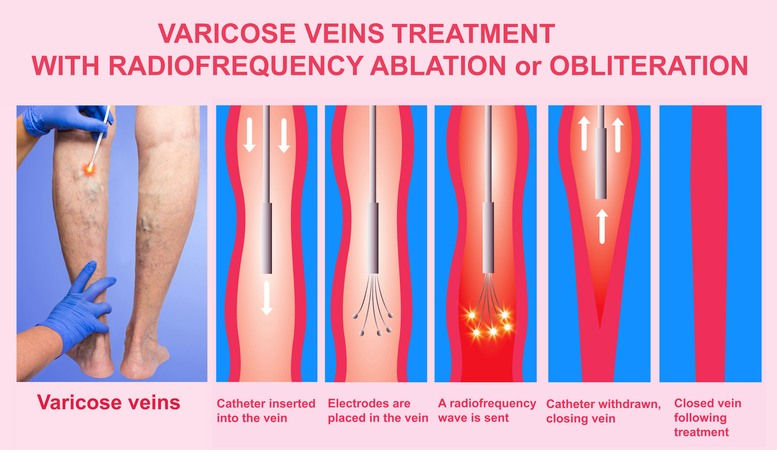
RFA is a minimally invasive procedure that uses a thin catheter and controlled radiofrequency energy to heat and seal shut a diseased vein, treating the underlying cause of varicose veins.
Is RFA painful?
Most patients feel only the local numbing injection. The ablation itself is typically felt as warmth or pressure, not pain, and is performed under local anesthesia.
How long does the procedure take?
RFA typically takes about 30 to 45 minutes per leg and is performed entirely in-office.
How long is recovery after RFA?
Most patients resume normal daily activities within 1 to 2 days. Strenuous exercise is usually limited for about one to two weeks.
Will I need to wear compression stockings?
Yes, medical-grade compression stockings are typically worn for several days to a week after treatment to support healing.
Is RFA covered by insurance?
When medically necessary and supported by diagnostic ultrasound, RFA is typically covered by most major insurance plans, including Medicare. We verify your benefits beforehand.
How is RFA different from endovenous laser treatment?
Both are forms of
endovenous thermal ablation that close a diseased vein from the inside. RFA uses radiofrequency energy through a catheter, while laser treatment uses laser light; your specialist recommends the best option for your vein anatomy.
Will the varicose vein come back after RFA?
The specific vein that is sealed will not reopen. However, venous insufficiency can develop in other veins over time, so periodic monitoring is recommended.
Who is not a candidate for RFA?
Patients with certain blood clotting disorders, active infection in the treatment area, or veins that are not accessible for catheter placement may need an alternative treatment, determined during your ultrasound evaluation.
What happens to the sealed vein?
The closed vein is no longer part of active circulation and is gradually reabsorbed by the body over time, while blood flow continues through healthy nearby veins.