
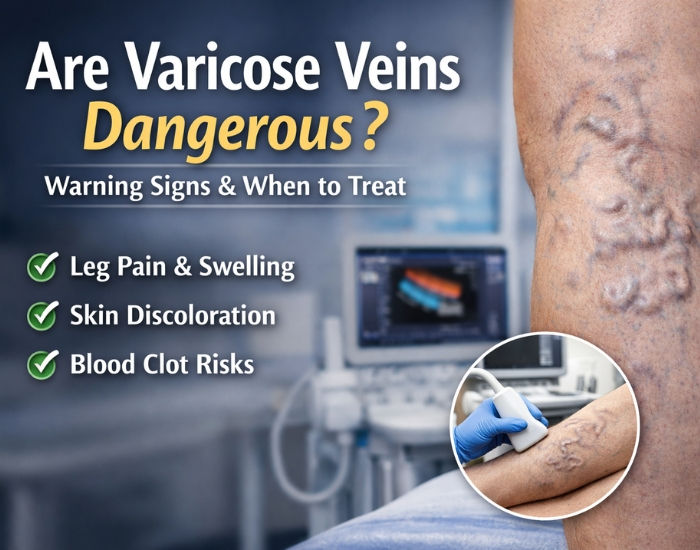
You notice thick, twisted veins along your legs. At first, they seem like a cosmetic issue. Maybe they look darker after standing all day. Then, over time, aching, swelling, or heaviness begins to set in. It becomes harder to ignore.
Quick Answer: Varicose veins are usually not dangerous in the short term, but they are a sign of venous insufficiency, which tends to progress. The warning signs that matter most are a vein that bleeds, a hot, red, painful cord along a vein, swelling of one whole leg, skin darkening or hardening near the ankle, and any sore that does not heal. A venous duplex ultrasound shows how advanced the problem is, and most varicose veins can be treated in the office with little downtime.
That is often when the question comes up: are varicose veins dangerous, or are they simply a normal part of aging?
Many people feel unsure about what to do next. Should a primary care doctor take a look? Is this something that needs a specialist? Is it safe to wait? The confusion can be overwhelming, especially when online information ranges from reassuring to alarming.
Understanding whether are varicose veins dangerous depends on recognizing what they are, how they progress, and when they require medical attention. While some cases are mild, others can lead to real health concerns. Knowing the difference can protect long-term vein health and prevent avoidable complications.

Meet your vein specialist
Dr. Syed Raza, MD
Vascular & Interventional Radiology · Founder, Premier Vein & Vascular Center
Fellowship-trained interventional radiologist certified by the American Board of Radiology and the Royal College of Radiologists (UK). Former Chief of Interventional Radiology at UTMB Galveston and Memorial Hermann Memorial City, with 15+ years treating varicose veins, venous reflux and peripheral arterial disease.
What Are Varicose Veins?
Before answering are varicose veins dangerous, it helps to understand what is happening inside the body.
Varicose veins develop when the tiny valves inside leg veins stop working properly. Normally, these valves keep blood flowing upward toward the heart. However, when they weaken or become damaged, blood begins to pool in the veins. Over time, the veins stretch, twist, and bulge under the skin.
They commonly appear:
-
On the calves or thighs
-
As blue, purple, or rope-like veins
-
More noticeable after long periods of standing
Although many people associate them with cosmetic concerns, varicose veins are actually a form of chronic venous insufficiency, which means blood flow in the legs is not functioning as it should.
So again, are varicose veins dangerous? The answer depends on how advanced the vein disease becomes.
Are Varicose Veins Dangerous or Just Cosmetic?
In early stages, varicose veins may cause minimal discomfort. Some individuals experience:
-
Aching or throbbing in the legs
-
A feeling of heaviness
-
Mild swelling around the ankles
-
Itching near the affected veins
At this point, many assume treatment is optional. However, vein disease is progressive. Without proper care, symptoms can worsen.
This is where the question are varicose veins dangerous becomes more serious. While not usually life-threatening at first, untreated vein disease can lead to significant problems.
Varicose Veins Complications That Should Not Be Ignored
When evaluating whether are varicose veins dangerous, it is important to consider potential varicose veins complications.
Over time, increased pressure in the veins can cause:
1. Chronic Swelling
Persistent swelling around the lower legs and ankles may indicate worsening circulation problems.
2. Skin Changes
The skin may become:
-
Darkened or discolored
-
Thickened
-
Dry or irritated
These changes are signs of advanced venous disease.
3. Venous Ulcers
Open sores, typically near the ankles, can develop due to poor circulation. These wounds can be slow to heal and may become infected.
4. Superficial Blood Clots
Inflamed, painful veins near the surface may signal superficial thrombophlebitis.
5. Deep Vein Thrombosis Risk
Although less common, severe untreated venous disease can increase the likelihood of more serious clotting conditions.
When asking are varicose veins dangerous, these complications highlight why medical evaluation matters.
The Risks of Untreated Varicose Veins
Understanding the risks of untreated varicose veins can clarify why early care is beneficial.
If left unmanaged, vein disease may lead to:
-
Increasing leg pain that interferes with daily activity
-
Night cramps and sleep disruption
-
Progressive skin breakdown
-
Long-term tissue damage
-
Higher risk of chronic wounds
Additionally, many patients report reduced mobility because walking or standing becomes uncomfortable. Over time, this can impact overall health and quality of life.
Therefore, while not every case is immediately severe, the risks of untreated varicose veins should not be underestimated.
When to Treat Varicose Veins
A common concern is when to treat varicose veins. Some people delay care because they assume treatment is cosmetic or unnecessary.
Medical evaluation is strongly recommended if there are:
-
Persistent leg pain or heaviness
-
Swelling that worsens throughout the day
-
Skin discoloration near the ankles
-
Itching, burning, or throbbing sensations
-
Open sores or slow-healing wounds
-
Sudden tenderness or redness along a vein
At this stage, asking are varicose veins dangerous becomes more urgent. These signs may indicate progression of vein disease.
Early evaluation can prevent more serious varicose veins complications and reduce the long-term risks of untreated varicose veins.
How a Specialized Vein Clinic Evaluates Varicose Veins
When patients are unsure are varicose veins dangerous, a specialized vein and vascular center provides clarity.
Evaluation typically includes:
Detailed Medical History
Questions about symptoms, family history, pregnancies, standing habits, and previous clotting events.
Physical Examination
Visual inspection of veins and assessment of swelling or skin changes.
Ultrasound Imaging
A painless duplex ultrasound allows providers to:
-
See blood flow patterns
-
Identify valve dysfunction
-
Detect hidden vein problems
This imaging helps determine when to treat varicose veins and which treatment options are most appropriate.
Modern Treatment Options for Varicose Veins
Many people hesitate because they imagine painful surgery. However, modern vein care has advanced significantly.
If evaluation confirms that are varicose veins dangerous in a particular case, minimally invasive treatments may be recommended.
Common approaches include:
Endovenous Ablation
Heat energy seals the faulty vein from the inside, redirecting blood flow to healthier veins.
Sclerotherapy
A medical solution is injected into smaller veins, causing them to close and fade.
Microphlebectomy
Small incisions allow removal of bulging veins under local anesthesia.
Most procedures are performed in-office with minimal downtime. Patients typically resume normal activity quickly.
Treating vein disease early reduces the likelihood of further varicose veins complications and lowers the overall risks of untreated varicose veins.
Who Is at Higher Risk?
Although anyone can develop varicose veins, certain factors increase the likelihood:
-
Family history of vein disease
-
Pregnancy
-
Prolonged standing occupations
-
Obesity
-
Aging
-
Prior leg injury
If these risk factors are present and symptoms develop, it becomes even more important to ask, are varicose veins dangerous in this situation?
In many cases, earlier evaluation leads to simpler treatment.
Prevention and Long-Term Vein Health
While not all varicose veins can be prevented, several strategies support healthy circulation:
-
Regular walking to encourage blood flow
-
Elevating legs when resting
-
Maintaining a healthy weight
-
Avoiding long periods of sitting or standing
-
Wearing medical-grade compression stockings when recommended
These steps may reduce discomfort and slow progression. However, lifestyle changes alone cannot reverse advanced venous disease.
That is why understanding when to treat varicose veins is essential.
Emotional and Quality-of-Life Impact
The conversation about are varicose veins dangerous often focuses on physical symptoms. However, emotional impact also matters.
Some individuals feel self-conscious wearing shorts or skirts. Others avoid activities because of discomfort. Chronic pain and swelling can affect mood and energy levels.
Addressing vein disease is not only about appearance. It is about comfort, confidence, and overall well-being.
Varicose Vein Warning Signs Ranked by Urgency
One of the most common questions we hear in clinic is not just whether varicose veins are dangerous, but how quickly a particular change needs attention. The table below is the framework we use when patients call with a new symptom.
| What you notice | What it may mean | How soon to act |
|---|---|---|
| Sudden swelling, pain and warmth in a whole calf or thigh | Possible deep vein thrombosis | Same day; emergency care if you also have chest symptoms |
| A varicose vein that is bleeding | A thin vein wall has broken, often near the ankle | Control bleeding now; call 911 if it does not stop |
| A red, hot, hard, tender cord along a vein | Superficial thrombophlebitis | Within a day or two; sooner if it is near the groin or behind the knee |
| A sore near the ankle that is not healing | Venous ulcer | Within days to a couple of weeks |
| Brown staining, eczema or hardened skin above the ankle | Advanced venous disease | Within a few weeks |
| Aching, heaviness, evening swelling, night cramps | Symptomatic venous insufficiency | Routine evaluation |
| Visible veins without symptoms | Early or cosmetic vein disease | When convenient |
What to Do If a Varicose Vein Bleeds
Bleeding from a varicose vein is one of the complications patients find most frightening, and it is worth knowing the first-aid steps in advance. Veins close to the skin near the ankle can become very thin after years of high pressure. A small scratch, shaving nick or even a warm shower can cause them to bleed briskly, and because the pressure is high when you stand, the bleeding can look alarming.
- Lie down right away and raise the bleeding leg above the level of your heart, propped on a chair or pillows. This lowers the pressure in the vein dramatically.
- Press firmly directly on the bleeding point with a clean cloth or gauze, and hold steady pressure for at least 10 to 15 minutes without lifting to check.
- Wrap the area with a bandage once bleeding stops, and keep the leg raised for a while.
- Call 911 if bleeding does not stop with pressure and elevation, if you feel faint, or if you take blood thinners and bleeding is heavy.
- Arrange a vein evaluation within a few days. A vein that has bled once is likely to bleed again, and the vein feeding it can usually be closed in the office.
Superficial Clot or DVT? Telling Them Apart
Painful clots can form in surface varicose veins, a condition called superficial thrombophlebitis. Most settle with treatment, but they share some features with deep vein thrombosis, which is more serious, so it helps to know the difference.
- Superficial thrombophlebitis usually causes a firm, red, warm, tender cord you can see and feel along a visible vein. The rest of the leg is often not swollen.
- Deep vein thrombosis usually causes swelling of the calf or whole leg, a deep ache or cramp, and sometimes warmth or color change, often without a visible cord.
A superficial clot that is long, close to where the surface vein joins the deep veins in the groin or behind the knee, or that keeps growing can extend into the deep system. That is why we recommend an ultrasound for any new painful, hard vein. If a clot is found, treatment may include compression, anti-inflammatory medication, and in some cases blood thinners. Learn more about deep vein thrombosis.
Special Situations: Pregnancy, Travel and Exercise
During pregnancy
Varicose veins in the legs and vulva are common during pregnancy and often improve after delivery. They are rarely dangerous, but pregnancy does raise clot risk. Compression stockings, regular walking and lying on your left side can help. Any sudden one-sided leg swelling needs prompt evaluation.
Long flights and car trips
Sitting still for hours slows blood flow in the legs. If you have varicose veins, wear graduated compression on long trips, walk the aisle or stop the car every hour or two, do ankle pumps while seated and stay hydrated.
Exercise
Exercise does not damage varicose veins; walking, cycling and swimming strengthen the calf pump and generally help. Heavy straining lifts raise abdominal and leg vein pressure briefly, so focus on good breathing technique and avoid holding your breath under load.
How We Assess Varicose Vein Risk at Premier Vein
Our evaluation is designed to give you a clear answer about your own veins, not a general one.
- Focused history. We review symptoms, any bleeding or clot episodes, pregnancies, medications such as blood thinners or hormones, and family history.
- Examination. We check the veins standing and lying down, look closely at the skin around the ankles and check pulses.
- Venous duplex ultrasound. In our IAC-accredited vascular lab, we map reflux, check for superficial or deep clot and look at the veins under any thin or bleeding areas.
- A clear plan. We tell you plainly whether your veins pose a near-term risk, what to watch for and which treatments, such as endovenous ablation or ultrasound-guided foam sclerotherapy, would lower that risk.
Call 911 or seek emergency care if you have:
- Sudden chest pain, shortness of breath, coughing up blood or a racing heartbeat
- Sudden swelling, pain and warmth in one leg
- A bleeding varicose vein that does not stop with firm pressure and leg elevation
- A painful, red vein with fever, chills or redness spreading quickly
When to See a Vein Doctor in Houston About Varicose Veins
If your varicose veins have bled, become painful and hard, or are changing the skin around your ankles, do not wait to have them checked. Even without those warning signs, aching and swelling that affect your day are good reasons for an evaluation. Our vein clinic in Houston, led by fellowship-trained interventional radiologist Dr. Syed Raza, usually offers same-week appointments, accepts most insurance plans, including Medicare, and serves patients across Houston and Katy. Call (832) 321-5355 to schedule.
Talk With a Specialist at Premier Vein
Have questions about your symptoms or treatment options? Dr. Syed Raza and the team at Premier Vein & Vascular Center can evaluate your concerns and explain your options clearly. Same-week appointments are usually available, and most insurance plans are accepted.
Frequently Asked Questions
1. Are varicose veins dangerous if they do not hurt?
Even painless veins can worsen over time. A professional evaluation helps determine underlying circulation problems.
2. Can untreated varicose veins cause blood clots?
Yes, certain varicose veins complications include superficial clots, and advanced cases may increase clot risk.
3. When should someone worry about varicose veins?
Seek medical attention if there is swelling, skin changes, or pain. These may signal progression and higher risks of untreated varicose veins.
4. When to treat varicose veins if symptoms are mild?
Early treatment often prevents complications and improves comfort. Waiting may allow disease progression.
5. Are minimally invasive treatments safe?
Modern vein procedures are widely performed and generally well tolerated, but individual risks should always be discussed with a qualified specialist.
Final Thoughts: Should Varicose Veins Be Ignored?
So, are varicose veins dangerous?
In some cases, they begin as a cosmetic issue. However, over time, they can progress into a chronic medical condition with real health consequences. The key is not panic, but awareness.
If symptoms are increasing, if swelling or skin changes appear, or if discomfort affects daily life, professional evaluation is appropriate. Early diagnosis reduces the chance of serious varicose veins complications, helps determine when to treat varicose veins, and lowers the long-term risks of untreated varicose veins.
Taking symptoms seriously today may prevent more complex problems tomorrow.
Can a varicose vein burst?
A varicose vein near the skin surface, especially around the ankle, can break and bleed after minor trauma or sometimes on its own. Lying down, raising the leg and pressing firmly usually stops it, and the vein should then be evaluated and treated to prevent repeat bleeding.
Can varicose veins cause a stroke or heart attack?
Varicose veins do not directly cause strokes or heart attacks, which involve the arteries. A deep vein clot can travel to the lungs, but that is different from a stroke, and most people with varicose veins never develop a deep clot.
Is it safe to massage varicose veins?
Gentle massage toward the heart is generally fine for tired legs, but avoid deep pressure over bulging veins, and do not massage a vein that is red, hard or painful, as it may contain a clot.
Are varicose veins dangerous during pregnancy?
They are usually not dangerous and often improve after delivery, though they can be uncomfortable. Because pregnancy increases clot risk, sudden swelling or pain in one leg should be checked promptly.
Should I worry about a hard lump in a varicose vein?
A firm, tender lump or cord in a varicose vein is often a superficial clot. It should be checked with an ultrasound, especially if it is near the groin or behind the knee or is getting larger.
Can I fly if I have varicose veins?
Most people with varicose veins can fly safely. Wearing graduated compression stockings, walking the aisle, doing ankle exercises and staying hydrated help reduce clot risk on long flights.
Trusted Health Resources
- Chronic Venous Insufficiency, Society for Vascular Surgery
- Venous Insufficiency, MedlinePlus Medical Encyclopedia (NIH)
- Varicose Veins and Spider Veins, MedlinePlus (NIH)
Medical Disclaimer:
This content is provided for educational purposes only and is not a substitute for professional medical advice, diagnosis, or treatment. Always consult a qualified healthcare provider regarding any questions about vein health or medical conditions.