
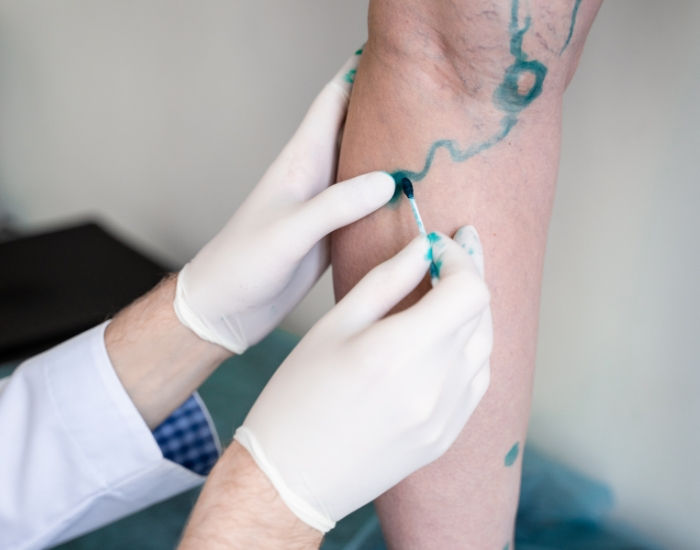
Treating varicose veins can bring several benefits, both in terms of physical comfort and overall health. Here are some of the key benefits:
- Relief from Symptoms: Varicose veins can cause discomfort, pain, swelling, and aching in the legs. Treatment can alleviate these symptoms, improving your overall quality of life and allowing you to engage in activities without discomfort.
- Prevention of Complications: Varicose veins can lead to complications such as skin ulcers, blood clots, and bleeding. Treating them can lower the risk of these complications occurring, thus protecting your health in the long run.
- Improved Circulation: Varicose veins disrupt blood flow in the affected veins. Treatment helps to restore proper circulation, reducing the risk of blood pooling in the legs and lowering the likelihood of blood clots forming.
- Cosmetic Enhancement: Many people seek treatment for varicose veins due to their appearance. By eliminating or reducing the visibility of varicose veins, treatment can enhance the appearance of the legs, boosting confidence and self-esteem.
- Increased Mobility: Varicose veins can make it uncomfortable to stand or walk for long periods. By addressing the underlying issue, treatment can improve mobility and allow you to engage in physical activities with greater ease.
- Faster Healing: In cases where varicose veins have led to skin ulcers or other wounds, treatment can promote faster healing by improving blood flow and circulation to the affected area.
- Reduced Risk of Recurrence: While no treatment can guarantee that varicose veins will never return, certain procedures, such as radiofrequency ablation, endovenous laser treatment, or sclerotherapy, have high success rates and lower the risk of vein recurrence when compared to traditional surgical methods.
- Overall Health Benefits: Improving circulation and reducing venous insufficiency through varicose vein treatment can have positive effects on your overall cardiovascular health, potentially lowering the risk of related conditions such as deep vein thrombosis and peripheral artery disease.
- Less Pain and Discomfort: Varicose veins can cause throbbing, cramping, and aching sensations in the legs. Treatment can significantly reduce or eliminate these symptoms, leading to a more comfortable daily life.
- Customized Treatment Options: There are various treatment options available for varicose veins, ranging from minimally invasive procedures to surgical interventions. At Premier vein and vascular center, our highly qualified vein doctors and vein specialists can recommend the most suitable option based on your specific condition and preferences, ensuring personalized care and optimal outcomes.


Meet your vein specialist
Dr. Syed Raza, MD
Vascular & Interventional Radiology · Founder, Premier Vein & Vascular Center
Fellowship-trained interventional radiologist certified by the American Board of Radiology and the Royal College of Radiologists (UK). Former Chief of Interventional Radiology at UTMB Galveston and Memorial Hermann Memorial City, with 15+ years treating varicose veins, venous reflux and peripheral arterial disease.
Why the Benefits of Varicose Vein Treatment Go Beyond Appearance
Many people think of varicose veins as a cosmetic issue. In our practice, most patients who come in for treatment are really looking for relief: legs that no longer feel heavy by mid-afternoon, ankles that do not swell in the Houston heat, and nights without cramps or restless legs. The appearance often improves too, but it is usually not the main reason people are glad they had treatment.
Quick Answer: The main benefits of varicose vein treatment are relief from aching, heaviness, swelling, cramping and itching, a lower risk of complications such as skin damage, venous ulcers, bleeding and inflamed clotted veins, and better-looking legs. Modern treatments such as endovenous ablation, ambulatory phlebectomy and sclerotherapy are done in the office under local anesthesia, and most patients walk out and return to normal routines within a day or two. When symptoms are present, treatment is often covered by insurance, including Medicare.
The reason treatment helps so much is that it addresses the cause, not just the surface. Most varicose veins are fed by a larger vein with leaking valves, a problem called reflux or venous insufficiency. Reflux keeps pressure in the lower leg high whenever you stand. When the faulty vein is closed, blood reroutes through healthy veins, the pressure falls, and many symptoms ease as a result.
How Quickly Will I Notice the Benefits?
Patients often ask what the recovery timeline looks like. Every leg is different, but this is a typical pattern after modern office-based treatment:
- First few days. You walk out of the office and resume light activity. Mild tightness or bruising along the treated vein is common and fades.
- First two to four weeks. Heaviness and end-of-day aching often start to improve. Swelling settles gradually.
- One to three months. Treated veins shrink and are absorbed by the body. Bulges that were removed or injected become less visible.
- Three to six months. Skin discoloration around the ankle may lighten slowly, though long-standing brown staining may not disappear completely.
Night cramps and restless legs improve for many people with venous reflux, though not for everyone, because those symptoms can have other causes too.
What recovery feels like day to day
On the day of an ablation, you lie on the exam table while the leg is numbed along the vein with dilute local anesthetic. The procedure itself usually takes under an hour, and most patients are surprised at how little they feel. Afterward you put on a compression stocking, take a short walk and go home. Over the next week the treated vein may feel like a tight cord or a pulled muscle along the inner thigh or calf, which is a normal sign that it is closing. Walking two or three times a day eases that tightness and helps healthy veins take over the flow. A follow-up ultrasound within the first week or two confirms that the vein has closed and that the deep veins are clear.
Comparing Modern Varicose Vein Treatments
The right treatment depends on which veins are leaking, their size and shape, and your goals. Many patients have a combination, starting with the source vein and finishing with the visible branches.
| Treatment | Best for | How it works | Typical downtime |
|---|---|---|---|
| Endovenous thermal ablation (radiofrequency or laser) | Refluxing saphenous trunk veins | Heat delivered through a thin catheter seals the vein | Walk immediately, routine activity in a day or two |
| Non-thermal ablation (adhesive or chemical) | Trunk veins, especially where heat is less suitable | Medical adhesive or a sclerosant closes the vein without heat | Walk immediately, often minimal soreness |
| Ambulatory phlebectomy | Large bulging surface veins | Vein removed through tiny skin nicks | A day or two of light activity |
| Ultrasound-guided foam sclerotherapy | Twisted or recurrent varicose veins | Foam injected under ultrasound to close the vein | Usually same-day return to routine |
| Sclerotherapy | Spider and small reticular veins | Solution injected through a fine needle | Minimal, compression often advised |
You can read more about specific options on our pages for radiofrequency ablation, ambulatory phlebectomy and sclerotherapy.
What Happens If Varicose Veins Are Not Treated?
Not every varicose vein needs treatment. Small veins without symptoms can simply be watched. But when reflux is present, vein disease tends to progress slowly over years. Without treatment, some patients go on to develop:
- Swelling that becomes harder to control and leaves deep sock marks
- Brown or purple staining of the skin around the ankles
- Itchy, scaly patches of venous eczema
- Hardened, tight skin above the ankle
- Painful, tender lumps where a superficial vein has clotted (superficial thrombophlebitis)
- Bleeding from a thin-walled vein close to the skin
- Open wounds known as venous ulcers
Treating reflux before skin changes appear is easier and usually more comfortable than treating it after a wound has formed. That is one of the strongest arguments for having symptomatic veins evaluated sooner rather than later.
Who Benefits Most From Treatment?
In our experience, the patients who notice the biggest difference are those whose symptoms clearly match the vein findings on ultrasound. You are likely to benefit if you have:
- Aching, heaviness or throbbing that builds with standing and improves with leg elevation
- Ankle swelling by the end of the day
- Skin changes, itching or a healed or open ulcer near the ankle
- Bleeding or a clotted, tender varicose vein in the past
- Varicose veins that are steadily getting larger
Treatment may help less if leg pain is mainly from arthritis, a back or nerve problem, or narrowed arteries. That is why a careful exam and ultrasound come first. When pain gets worse with walking and eases with rest, for instance, we also check for peripheral arterial disease.
Everyday benefits patients tell us about
The improvements patients mention most are practical ones. Nurses, teachers and retail workers often say they finish a long shift without needing to put their feet up straight away. Others notice they can stand through a church service, a child's game or a day of travel without that familiar heavy ache. Some sleep better because night cramps or restless legs have eased. Many simply feel comfortable wearing shorts or a skirt again, which matters in a climate as warm as ours. These are not dramatic medical outcomes, but they make a real difference to daily life, and they are often why patients wish they had come in sooner.
Medical vs Cosmetic Treatment and Insurance
Insurance companies make a distinction between medically necessary treatment and cosmetic treatment. Treatment is usually considered medically necessary when a duplex ultrasound shows significant reflux and you have symptoms such as pain, swelling, skin changes, bleeding or ulcers. Many plans require a period of wearing compression stockings first. Treatment of small spider veins for appearance alone is generally considered cosmetic.
Most insurance plans, including Medicare, cover medically necessary vein treatment. Our team checks your coverage and any requirements before treatment so there are no surprises.
If you have both symptomatic varicose veins and cosmetic spider veins, the medical part of the treatment is usually done first. Once the leaking source veins are closed, many small surface veins fade or become easier to treat, and any remaining cosmetic sclerotherapy can be planned afterward as a separate, optional step. We explain clearly which parts of your plan fall into each category before anything is scheduled.
Questions worth asking before treatment
- Which veins are leaking on my ultrasound, and which of my symptoms do you expect to improve?
- Which procedure do you recommend for each vein, and why?
- How many visits will my treatment plan take?
- Will I need to wear compression stockings before or after treatment, and for how long?
- What activities should I avoid during recovery, and when can I exercise again?
- What does my insurance require, and what portion is cosmetic, if any?
Setting Realistic Expectations
Treatment closes the veins that are leaking today, but it does not change the underlying tendency toward vein disease. Over the years, some patients develop new varicose veins in other places, especially after pregnancy, weight gain or long hours on their feet. A few habits help keep results lasting longer:
- Walk regularly and take breaks from long sitting or standing
- Wear compression during long flights or long work shifts if recommended
- Keep a healthy weight
- Come back for a check-up if heaviness, swelling or new bulges return
It is also normal for treated areas to look bruised or lumpy for a few weeks before they settle. Small touch-up sclerotherapy sessions are often planned as part of the overall treatment course rather than a sign that something went wrong.
How We Evaluate Varicose Veins Before Treatment
- Focused history. We talk through your symptoms, how they affect work and sleep, previous clots, pregnancies, medications and treatments you have already tried.
- Standing exam. We examine both legs upright to see the full pattern of veins, swelling and skin changes.
- Venous duplex ultrasound. In our IAC-accredited vascular lab, the scan maps every refluxing segment and confirms the deep veins are healthy.
- A clear plan. We explain which veins to treat, in what order, what recovery involves and what results to expect, and we confirm insurance coverage.
Seek urgent medical care if you notice:
- Bleeding from a varicose vein that does not stop with firm pressure and leg elevation
- Sudden swelling, pain and warmth in one leg
- Chest pain or sudden shortness of breath
- A red, hot, hard and tender vein in the thigh
Varicose Vein Treatment in Houston
If your varicose veins are aching, swelling or changing your skin, an ultrasound can show exactly what is causing them and which treatment fits. Dr. Syed Raza, a fellowship-trained interventional radiologist with more than 15 years of experience treating varicose veins and venous reflux, leads our Houston vein clinic, where procedures are done in the office under local anesthesia. Same-week appointments are usually available and most insurance plans, including Medicare, are accepted.
Talk With a Specialist at Premier Vein
Have questions about your symptoms or treatment options? Dr. Syed Raza and the team at Premier Vein & Vascular Center can evaluate your concerns and explain your options clearly. Same-week appointments are usually available, and most insurance plans are accepted.
Frequently Asked Questions
Is varicose vein treatment worth it?
For patients with symptoms such as aching, heaviness, swelling or skin changes and reflux confirmed on ultrasound, treatment often brings meaningful relief and lowers the risk of complications. Recovery is usually quick with modern office-based procedures. Whether it is right for you depends on your ultrasound findings and goals.
How long do the results of varicose vein treatment last?
Veins that are properly closed generally stay closed. However, new varicose veins can form over time because the tendency toward vein disease remains, so some patients need touch-up treatment years later.
Does varicose vein treatment hurt?
Most procedures are done under local anesthesia, so patients usually feel only brief stinging from the numbing injections and some pressure. Mild soreness or tightness for a few days afterward is common and usually managed with walking and over-the-counter pain relief.
Will my legs look better after treatment?
Bulging veins usually flatten or disappear over weeks to months as the treated veins are absorbed. Brown skin staining from long-standing reflux may lighten slowly but may not vanish completely.
How soon can I go back to work after varicose vein treatment?
Most patients return to desk work the next day and to most jobs within a few days. Heavy lifting and strenuous exercise are often limited for about a week, depending on the procedure.
Does closing a vein affect circulation?
No. The closed vein was already carrying blood the wrong way. After treatment, blood is rerouted through healthy veins with working valves, so overall circulation in the leg usually improves.
ABOUT PREMIER VEIN & VASCULAR CENTER: Premier Vein & Vascular Center, a leading vein clinic in Houston and among the top specialized vein treatment clinics in the USA, has provided expert vein care for over 20 years. The center offers minimally invasive treatments for varicose veins, spider veins, and deep vein thrombosis, led by Dr. Syed Raza, MD, a Board-Certified Vein Specialist and Interventional Radiologist. Dedicated to pain-free, healthier living, the clinic delivers cutting-edge, patient-centered care for optimal results.
Trusted Health Resources
- Chronic Venous Insufficiency, Society for Vascular Surgery
- Venous Insufficiency, MedlinePlus Medical Encyclopedia (NIH)
- Varicose Veins and Spider Veins, MedlinePlus (NIH)