
If your varicose veins throb after work, ache at night or make your legs feel heavy and swollen, you are probably less interested in how they look and more interested in what will actually make them stop hurting. That depends on which veins are causing the problem, and there is no single procedure that is best for everyone.
For most people with painful varicose veins caused by venous reflux, the most effective approach is to close the faulty vein feeding the problem, usually with a minimally invasive ablation such as radiofrequency ablation or VenaSeal, and then treat any remaining bulging branches with foam, sclerotherapy or phlebectomy. A duplex ultrasound decides which combination fits your legs.
Quick Answer: The best treatment for painful varicose veins is the one that fixes the source of the pain. In most patients that source is reflux in a larger vein, such as the great saphenous vein, and it is best treated by closing that vein with a minimally invasive procedure: radiofrequency ablation, VenaSeal or Varithena foam. Visible branch veins are then treated with sclerotherapy or ambulatory phlebectomy. Compression and lifestyle changes help but do not remove the cause. A duplex ultrasound shows which option suits you.

Meet your vein specialist
Dr. Syed Raza, MD
Vascular & Interventional Radiology · Founder, Premier Vein & Vascular Center
Fellowship-trained interventional radiologist certified by the American Board of Radiology and the Royal College of Radiologists (UK). Former Chief of Interventional Radiology at UTMB Galveston and Memorial Hermann Memorial City, with 15+ years treating varicose veins, venous reflux and peripheral arterial disease.
What Is the Best Treatment for Painful Varicose Veins?
Varicose vein pain usually comes from pressure. When the valves in a vein fail, blood flows backward and pools, stretching the vein and irritating the tissue around it. Treatments that close or remove the refluxing vein lower that pressure, which is why they tend to relieve aching, heaviness and swelling more effectively than measures that only support the leg from the outside.
In clinical guidelines, endovenous ablation is the preferred first-line treatment for symptomatic reflux in the main superficial veins, ahead of traditional surgical stripping. The right technique within that group depends on the size, shape and depth of your veins, your health and your preferences, and sometimes on your insurance coverage.
Why Do Varicose Veins Become Painful?
Varicose veins hurt because the vein wall is stretched and inflamed, and because the extra blood and fluid in the lower leg put pressure on surrounding tissue and nerves. That is why the pain often:
- Builds through the day and after standing or sitting for long periods
- Feels like aching, heaviness, throbbing or burning over the veins
- Comes with ankle swelling, night cramps or itching
- Eases with walking, leg elevation or compression
Sudden, sharp pain with a red, hard, tender cord along a vein may be superficial thrombophlebitis, and sudden swelling of the whole calf may be a deep vein clot. Both need prompt medical evaluation.
How Specialists Diagnose the Cause of Vein Pain
Before recommending treatment, a vein specialist needs to know exactly which veins are failing. At Premier Vein & Vascular Center the evaluation includes:
- A detailed history of your symptoms, what makes them better or worse, prior clots, medications and what you have tried
- A physical exam of the veins, skin, swelling and foot pulses
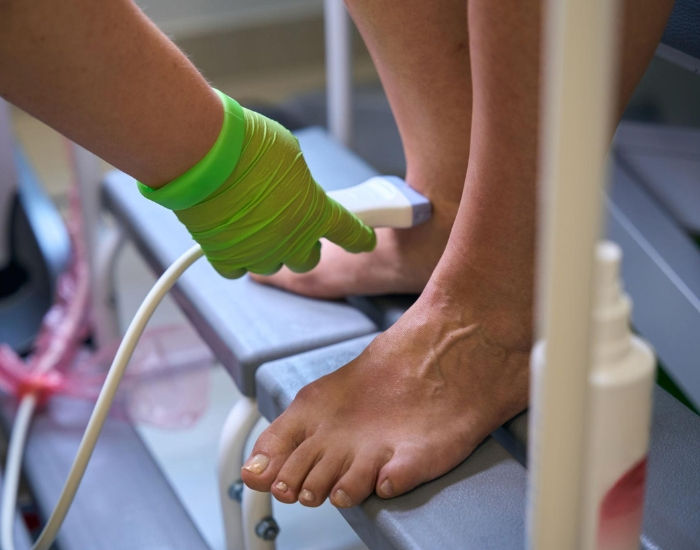
- A venous duplex ultrasound that maps every superficial and deep vein and measures reflux
- A treatment plan that explains which veins to treat, in what order and why
If your pain does not match vein disease, for example pain in the calf that starts with walking and stops with rest, we check your arteries too, because peripheral arterial disease needs a different approach.
Conservative Treatment and Symptom Management
Conservative care is often the first step and remains useful even after a procedure:
- Graduated compression stockings to reduce swelling and heaviness
- Regular walking and calf exercises to strengthen the calf muscle pump
- Raising the legs above heart level several times a day
- Breaking up long periods of standing or sitting
- Weight management
These measures can make painful veins much more tolerable, and many insurance plans require a trial of compression before approving treatment. They do not, however, close the refluxing vein.
Radiofrequency Ablation
Radiofrequency ablation (RFA) is one of the most widely used treatments for reflux in the great and small saphenous veins. Under ultrasound guidance, a thin catheter is placed into the vein through a needle puncture. Numbing fluid is injected around the vein, and the catheter delivers controlled heat that seals the vein shut as it is withdrawn.
The procedure takes about an hour in the office. Most patients walk out, wear compression for a short period and return to normal light activity within a day or two. Mild tenderness or a pulling sensation along the treated vein for a week or two is common. RFA has a long track record and high closure rates.
VenaSeal Closure System
VenaSeal uses a small amount of medical adhesive to close the vein instead of heat. Because no heat is used, only one small numbing injection is needed rather than numbing fluid along the whole length of the vein, and many patients do not need compression stockings afterward. It is one of the non-thermal ablation options we offer.
VenaSeal is a good choice for some patients who prefer fewer needle sticks or cannot tolerate compression. It is not ideal for everyone, including people with certain allergies to the adhesive, and insurance coverage varies more than for RFA.
Varithena Foam Treatment
Varithena is an FDA-approved microfoam injected through a small needle or catheter under ultrasound guidance. The foam displaces blood and irritates the vein lining so the vein collapses and closes. It works well for twisted veins and for veins that are hard to reach with a straight catheter, and it does not use heat.
Sclerotherapy
Sclerotherapy uses a medication injected into smaller varicose and spider veins to make them close and fade over the following weeks. For larger or deeper branches, ultrasound-guided foam sclerotherapy lets us see the vein and the foam in real time. Several sessions are sometimes needed, and temporary bruising or brown staining can occur.
Ambulatory Phlebectomy
Ambulatory phlebectomy removes large bulging surface veins through tiny punctures a few millimeters long, under local anesthesia. No stitches are usually needed, and the punctures heal with marks that are typically hard to see. It is often combined with ablation, either on the same day or a few weeks later, for an immediate improvement in visible veins.
How Doctors Select the Right Treatment
There is no universal best procedure. When we recommend a plan, we consider:
- Which veins show reflux on ultrasound, and how large and deep they are
- Whether the vein is straight enough for a catheter or tortuous and better suited to foam
- How close the vein is to the skin and to nearby nerves
- Your symptoms, skin changes and any history of clots
- Your medications, allergies and ability to wear compression
- Your insurance coverage and personal preferences
Often the best result comes from combining treatments: closing the main source vein first, then treating the visible branches.
Recovery Time and What to Expect
Most patients walk immediately after treatment and are encouraged to keep walking daily. Typical recovery includes:
- Returning to desk work and normal light activity within one to two days
- Some bruising, tenderness or a tight feeling along the treated vein for one to two weeks
- Avoiding heavy lifting, hot tubs and intense exercise for about a week, depending on the procedure
- A follow-up ultrasound shortly after ablation to confirm the vein is closed and check for clots
Uncommon risks include skin burns or numbness after thermal ablation, inflammation along the vein, allergic reactions and blood clots. Your physician will explain the risks that apply to the procedure recommended for you.
Can Varicose Veins Return After Treatment?
A vein that has been successfully closed or removed does not come back. However, venous disease is a chronic tendency, and new veins can become varicose over the years, especially with strong family history, pregnancy, weight gain or long hours on your feet. Staying active, managing weight and having follow-up when symptoms return help keep results lasting.
Does Insurance Cover Treatment?
Most insurance plans, including Medicare, cover treatment of painful varicose veins when an ultrasound confirms reflux and medical necessity criteria are met. Many require a trial of compression stockings and prior authorization, and coverage for VenaSeal varies by plan. Cosmetic spider vein treatment is usually not covered. Our guide on insurance coverage for varicose vein treatment explains the details.
When to Schedule a Vein Consultation
Consider an evaluation if varicose veins ache, throb or swell most days, keep you up at night, have bled or come with skin changes around the ankles, or if home measures are no longer enough. If your veins are not painful yet, our article on whether varicose veins can go away without treatment may help you decide when to act.
Premier Vein & Vascular Center offers RFA, VenaSeal, Varithena, sclerotherapy and ambulatory phlebectomy in our office at 19255 Park Row Blvd Ste 201, Houston, TX 77084, serving West Houston, Katy and nearby communities. Treatment is led by Dr. Syed Raza, a fellowship-trained interventional radiologist. To meet with a vein doctor in Houston, call (832) 321-5355 or request an appointment, and see our varicose vein treatment page for more on each option.
Painful Varicose Veins? Explore Your Treatment Options.
Schedule an evaluation to learn which treatments may be suitable for your symptoms and ultrasound findings. Call (832) 321-5355.
Frequently Asked Questions
What is the most effective treatment for painful varicose veins?
For pain caused by reflux in a main superficial vein, endovenous ablation such as radiofrequency ablation or VenaSeal is generally the most effective first-line treatment. Remaining branch veins are then treated with foam, sclerotherapy or phlebectomy.
Can varicose veins be treated without surgery?
Yes. Most varicose veins are now treated with minimally invasive office procedures under local anesthesia, without incisions or general anesthesia.
Is VenaSeal better than radiofrequency ablation?
Neither is better for everyone. Both close veins effectively; VenaSeal avoids heat, needs fewer numbing injections and often no compression, while RFA has a longer track record and more consistent insurance coverage. The best choice depends on your veins and coverage.
How painful is vein ablation?
Most patients feel only the numbing injections and some pressure during ablation. Mild soreness or a pulling feeling along the treated vein for a week or two is common and is usually managed with walking and over-the-counter pain relief if your doctor approves.
How long does it take to recover?
Most people return to work and normal light activity within one to two days. Bruising and tenderness usually settle within one to two weeks.
Can I walk after varicose vein treatment?
Yes, and you should. Walking right after treatment and daily during recovery lowers the risk of clots and helps you heal.
Which vein procedure has the shortest recovery?
Non-thermal options such as VenaSeal and Varithena, along with sclerotherapy, generally have the quickest return to normal activity. Recovery after any of these minimally invasive treatments is usually short.
Can treated varicose veins return?
A vein that has been closed or removed does not return, but new veins can become varicose over time. Staying active and having follow-up when symptoms recur helps maintain results.
Does insurance cover vein ablation?
Most plans, including Medicare, cover ablation for symptomatic venous reflux when medical necessity is documented with an ultrasound. Prior authorization and a compression trial are often required.
How does a specialist choose the right procedure?
The choice is based on duplex ultrasound findings, vein size, shape and depth, your symptoms and health history, your ability to wear compression, your preferences and your insurance coverage.
Trusted Health Resources
- Chronic Venous Insufficiency, Society for Vascular Surgery
- Venous Insufficiency, MedlinePlus Medical Encyclopedia (NIH)
- Varicose Veins and Spider Veins, MedlinePlus (NIH)
Medical Disclaimer
This article is for general education and does not replace professional medical advice, diagnosis or treatment. Only a clinical evaluation can determine the cause of your symptoms. If you have sudden or severe symptoms, call 911 or go to the nearest emergency room.