
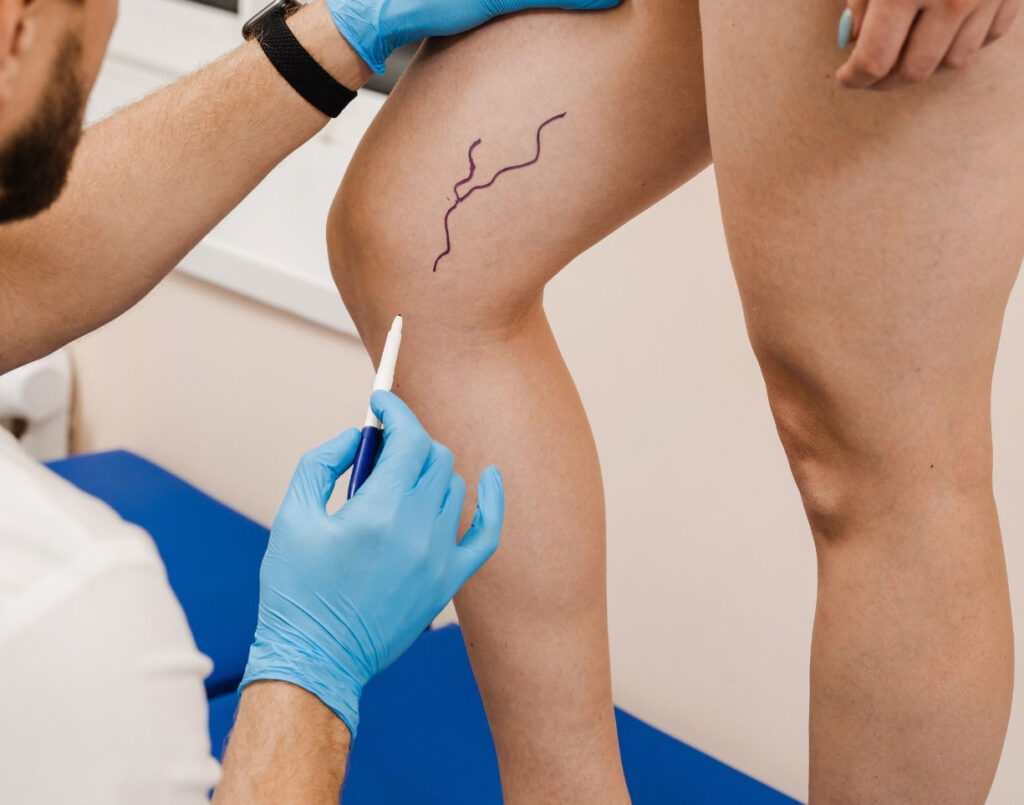
Varicose veins are swollen, twisted veins that commonly appear in the legs and affect millions of people. They can cause discomfort, leg heaviness, swelling, and skin changes if left untreated. With advances in medical technology, there are now several effective treatment options available in Houston that provide relief without traditional surgery. Understanding the available treatments helps patients make informed decisions and select the most suitable option for their condition.
Quick Answer: The best treatment for varicose veins is the one matched to your venous duplex ultrasound. For most people with a leaking saphenous vein, that means closing it in the office with radiofrequency or laser ablation, or a non-thermal method when the vein runs near a nerve, followed by ambulatory phlebectomy or foam sclerotherapy for bulging branches. Small veins without significant reflux usually respond to sclerotherapy alone. Surgery is rarely needed, and most patients walk out the same day and return to normal routines within a day or two.

Meet your vein specialist
Dr. Syed Raza, MD
Vascular & Interventional Radiology · Founder, Premier Vein & Vascular Center
Fellowship-trained interventional radiologist, board certified in diagnostic and interventional radiology with a Certificate of Added Qualification (CAQ) in interventional radiology, and a Fellow of the Royal College of Radiologists (UK). Member of SIR and RSNA. Former Chief of Interventional Radiology at UTMB Galveston and Memorial Hermann Memorial City, with 15+ years treating varicose veins, venous reflux and peripheral arterial disease.
1. What Are Varicose Veins?
Varicose veins develop when the valves in the veins weaken or fail, allowing blood to flow backward and pool in the veins. This increases pressure, causing the veins to enlarge, twist, and become visible under the skin. While they often affect the legs, varicose veins can appear in other areas of the body as well. Although they are sometimes considered a cosmetic issue, varicose veins can also lead to pain, swelling, and more serious complications if untreated.
2. Symptoms and Complications
Common symptoms of varicose veins include visible, bulging veins, leg heaviness, aching, swelling in the calves or ankles, cramping, and restless legs at night. In more severe cases, varicose veins can cause skin discoloration, dryness, itching, or even venous ulcers. Early treatment not only improves appearance but also prevents progression and reduces the risk of complications such as blood clots or chronic venous insufficiency.
3. Minimally Invasive Treatments
Today, the most effective varicose vein treatments are minimally invasive. These procedures are safer, involve less discomfort, and require shorter recovery times than traditional vein surgery. Minimally invasive treatments target the underlying vein problem, such as valve dysfunction or venous reflux, rather than just treating the surface appearance.
4. Endovenous Laser Therapy (EVLT)
EVLT is a popular treatment for varicose veins. During the procedure, a small laser fiber is inserted into the affected vein, and laser energy closes the vein. Blood naturally reroutes through healthy veins, and the treated vein gradually shrinks. EVLT is performed in-office, usually takes less than an hour, and allows patients to resume normal activities the same day.
5. Radiofrequency Ablation (RFA)
RFA uses radiofrequency energy delivered through a small catheter to heat the vein wall, causing it to collapse and seal shut. This treatment is highly effective for larger varicose veins and has minimal risks. Patients generally experience only mild discomfort, and recovery is quick, making it a convenient solution for long-term relief from vein-related symptoms.
6. Sclerotherapy
Sclerotherapy involves injecting a special solution directly into smaller varicose veins or spider veins. The solution irritates the vein lining, causing it to close and fade over time. This treatment is minimally invasive, performed in-office, and typically requires multiple sessions depending on the number and size of veins. Sclerotherapy improves both the appearance of the legs and minor discomfort such as swelling or heaviness.
7. Ultrasound-Guided Foam Sclerotherapy
For deeper or larger veins that are not visible on the surface, doctors use ultrasound-guided foam sclerotherapy. A foam solution is injected precisely under ultrasound guidance, allowing the vein to close and gradually be absorbed by the body. This treatment is effective for complex vein issues and can reach veins that traditional sclerotherapy cannot. Patients benefit from minimal downtime and noticeable symptom improvement.
8. Lifestyle Measures to Improve Vein Health
Alongside professional treatment, adopting healthy lifestyle habits can help reduce symptoms and prevent new varicose veins from forming. Effective strategies include:
- Regular exercise, such as walking or swimming, to boost circulation
- Avoiding long periods of sitting or standing
- Maintaining a healthy weight to reduce pressure on leg veins
- Wearing compression stockings if recommended
- Elevating the legs while resting to encourage blood flow
These habits support long-term vein health and enhance the results of medical treatments.
9. Factors That Determine the Best Treatment
The most appropriate treatment for varicose veins depends on several factors, including:
- The size, location, and severity of the veins
- The presence of underlying venous insufficiency
- Symptoms, such as pain, swelling, or skin changes
- Patient preference regarding recovery time and invasiveness
- Overall health and any existing medical conditions
A consultation with a qualified vein doctor in Houston can help determine the safest and most effective treatment plan based on individual needs.
The Best Treatment for Varicose Veins Depends on Your Ultrasound Map
Patients often ask us which treatment is the best one, as if there were a single winner. In practice, the best treatment for varicose veins is the one that matches what your ultrasound shows. Two people with similar-looking veins on the surface can have very different problems underneath, and the right plan follows the source of the reflux rather than the appearance alone.
A venous duplex ultrasound shows which trunk vein is leaking, where the leak starts, how wide and straight the vein is, how close it runs to nerves or the skin, and whether the deep veins are healthy. Those details decide whether a vein is best sealed from inside with a catheter, closed with foam, removed through tiny nicks, or treated with a combination. That is why we never recommend a procedure before the scan.
Varicose Vein Treatment Options Compared
The sections above describe laser and radiofrequency ablation and the two forms of sclerotherapy. The table below places them alongside the other options we use, so you can see how each fits.
| Treatment | Best suited for | Anesthesia | Typical return to routine |
|---|---|---|---|
| Laser or radiofrequency ablation | Straight, refluxing saphenous trunk veins | Local numbing along the vein | Same day to a day or two |
| Non-thermal ablation (adhesive or chemical) | Trunk veins, especially below the knee near nerves, or patients who prefer fewer needle sticks | Minimal local numbing | Same day |
| Polidocanol microfoam (Varithena) | Trunk veins and tortuous branches, including some recurrent veins | Minimal; injection through a small access | Same day |
| Ambulatory phlebectomy | Bulging, rope-like surface branches | Local numbing | Same day to a few days; bruising for one to two weeks |
| Ultrasound-guided foam sclerotherapy | Deeper or twisted branches, perforator-fed veins | None needed | Same day |
| Sclerotherapy | Small varicose, reticular and spider veins | None needed | Same day |
| Surgical stripping | Rarely needed today; selected complex cases | Regional or general | Longer recovery |
Matching the Treatment to the Situation
Here are some of the patterns we see most often in clinic and how the plan usually follows from them:
- A leaking great saphenous vein with bulging calf branches: ablation of the trunk first, then phlebectomy or foam for remaining branches, often a few weeks later.
- Reflux in the small saphenous vein at the back of the calf: because a sensory nerve runs close by, non-thermal vein ablation is often preferred.
- Very twisted veins, or veins that came back after previous surgery: injectable foam, such as Varithena or ultrasound-guided foam sclerotherapy, can follow the curves where a catheter cannot.
- Large surface branches with a normal trunk: ambulatory phlebectomy alone may be enough.
- Small varicose and spider veins without significant reflux: sclerotherapy, often in a few sessions.
- Patients on blood thinners: many procedures can still be done safely, but the plan and timing are tailored, and we coordinate with the prescribing doctor.
One more practical point: the best treatment is also one you can fit into your life. Ask how many visits your plan involves, how long each takes, whether you can drive yourself home and when you can return to work, exercise and travel. For most office-based vein procedures, the answers are reassuringly simple.
What a Typical Treatment Journey Looks Like
Most patients go through a similar sequence:
- Consultation and ultrasound: often on the same day or within a short time of each other
- Conservative care period: many insurance plans require a documented trial of compression stockings before approving procedures
- Main procedure: closure of the leaking trunk vein in the office, usually under an hour
- Early follow-up scan: confirms the vein is closed and the deep veins are clear
- Branch treatment: phlebectomy or sclerotherapy for any remaining visible veins
- Long-term check-ins: a scan if symptoms return, since vein disease can progress over time
From first visit to final touch-up, the whole process often spans several weeks to a few months, with very little time away from work.
Medical vs Cosmetic Vein Treatment: Why the Distinction Matters
Insurance plans, including Medicare, generally cover varicose vein treatment when it is medically necessary. In practice that usually means you have symptoms such as aching, heaviness, swelling, cramping or skin changes, and your ultrasound shows reflux in a vein that is large enough to explain them. Treating spider veins or small surface veins purely to improve their appearance is usually considered cosmetic and paid for directly. Many patients have both kinds of veins. A good plan separates them clearly: the medically necessary treatment of the leaking trunk vein and symptomatic branches comes first, and any cosmetic touch-ups are discussed afterward, once you can see how much the main treatment has already improved the leg.
How to Choose a Vein Clinic in Houston
The Houston area has many places that advertise vein treatment, and quality varies. Questions worth asking any clinic include:
- Who performs and interprets the venous ultrasound, and what is their training?
- Who reads the ultrasound, and who performs the procedure?
- Does the clinic offer several treatment methods, or only one?
- Will they check the deep veins and arteries before treatment?
- Do they explain clearly which veins are cosmetic and which are medically necessary?
A clinic that offers the full range of options has no reason to fit every patient into the same procedure.
Call 911 or seek emergency care if you notice:
- Sudden swelling, pain and warmth in one leg, which may be a deep vein thrombosis
- Sudden shortness of breath, chest pain or coughing up blood
- Bleeding from a varicose vein that does not stop with firm pressure and raising the leg
- A hot, red, tender vein with fever or spreading redness
How We Evaluate Varicose Veins at Premier Vein
- Focused history. We review your symptoms, how they affect work and sleep, prior clots, pregnancies, family history and treatments you have tried.
- Standing examination. We look at the pattern of veins, swelling and skin changes and check pulses in the feet.
- Venous duplex ultrasound. In our in-office vascular lab, we map reflux in every relevant vein and confirm the deep veins are healthy. An ankle-brachial index is added if arterial disease is suspected.
- A clear plan. We show you the images, explain which veins are responsible and recommend a sequence of treatments, including what your insurance is likely to require.
Choosing the Right Varicose Vein Specialist in Houston
Dr. Syed Raza is a fellowship-trained interventional radiologist, board certified in diagnostic and interventional radiology by the American Board of Radiology and a Fellow of the Royal College of Radiologists (UK), with more than 15 years of experience treating varicose veins and venous reflux. He offers thermal, non-thermal, foam and phlebectomy techniques, so your plan is based on your anatomy rather than on a single device. Patients from Houston, Katy and the surrounding area can usually be seen the same week, and most insurance plans, including Medicare, are accepted. To get started, contact our vein doctor in Houston or review our varicose vein treatment page.
Talk With a Specialist at Premier Vein
Have questions about your symptoms or treatment options? Dr. Syed Raza and the team at Premier Vein & Vascular Center can evaluate your concerns and explain your options clearly. Same-week appointments are usually available, and most insurance plans are accepted.
10. FAQs About Varicose Vein Treatments
1. How long do minimally invasive varicose vein treatments take?
Most procedures are completed within 30–60 minutes, depending on the extent of veins treated.
2. Are these treatments painful?
Most patients experience only mild discomfort, as local anesthesia or small injections are used.
3. Is recovery quick?
Yes, most patients can return to normal activities the same day or within a few days.
4. Will treated veins come back?
Treated veins usually do not return, but new veins may develop over time. Follow-up care is important.
5. How do I know which treatment is right for me?
A vein doctor evaluates your symptoms, vein structure, and health history to recommend the most suitable option.
11. Final Thoughts
Varicose veins can cause discomfort and affect your confidence, but effective treatments are available in Houston. Minimally invasive options like EVLT, RFA, sclerotherapy, and ultrasound-guided foam sclerotherapy address the root causes of vein problems and provide lasting relief. Consulting a qualified vein doctor ensures you receive personalized care and the treatment best suited to your condition.
If you are dealing with varicose veins, Premier Vein offers expert evaluation and minimally invasive treatments to help you achieve healthier, more comfortable legs.
Is laser or radiofrequency ablation better for varicose veins?
Both are highly effective for closing leaking saphenous veins and are recommended by vascular guidelines over traditional surgery. The choice usually depends on the vein’s size and course and on the physician’s experience, and recovery is similar for most patients.
What is the least invasive treatment for varicose veins?
Injection-based options such as sclerotherapy and foam treatments are the least invasive, requiring no incision and usually no anesthesia. Non-thermal closure is also very minimally invasive. Whether they are suitable depends on the size and type of vein found on ultrasound.
Do I need surgery for varicose veins?
Very few patients need traditional vein stripping today. Most varicose veins can be treated with in-office catheter, injection or micro-incision procedures under local anesthesia, with walking the same day.
Can both legs be treated at the same time?
It depends on the treatment and on your overall plan. Small-vein sclerotherapy can often be done on both legs in one session, while trunk vein ablation is commonly done one leg at a time, a short interval apart, to keep recovery comfortable.
What happens if I do not treat my varicose veins?
Some varicose veins stay stable for years, but many slowly progress, with more swelling, aching and, over time, skin damage and a risk of ulcers or bleeding. Getting an ultrasound early helps you decide on timing with accurate information.
How many sessions does varicose vein treatment take?
Many patients need one procedure to close the leaking trunk vein in each affected leg, followed by one or more shorter sessions to treat remaining branches. Spider veins often need two or three sclerotherapy sessions spaced several weeks apart. Your ultrasound findings determine the exact number.
Trusted Health Resources
- Chronic Venous Insufficiency, Society for Vascular Surgery
- Venous Insufficiency, MedlinePlus Medical Encyclopedia (NIH)
- Varicose Veins and Spider Veins, MedlinePlus (NIH)
Disclaimer: This blog is intended for informational purposes only and does not replace professional medical advice, diagnosis, or treatment. Always consult a qualified healthcare provider regarding vein-related concerns.