
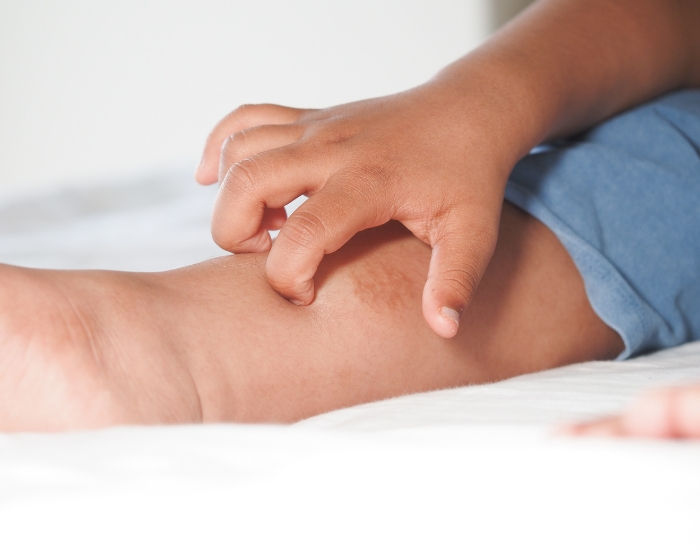
Have you noticed persistent itching on your legs, especially around visible veins? While itchy skin is often caused by dryness, allergies, or irritation, it can sometimes signal a more serious underlying issue: varicose veins. Varicose veins are not just a cosmetic concern—they can affect circulation and skin health, and itching may be an early sign of vein dysfunction.
Quick Answer: Yes. Itching around varicose veins is common and is usually caused by high pressure in the leg veins, which lets fluid and blood cells leak into the skin and trigger inflammation. Early on it feels like a localized itch over a bulging vein; later it can become venous (stasis) eczema with red, scaly, darkened skin around the ankles. Moisturizers, leg elevation and compression ease it, but lasting relief usually comes from finding and treating the leaking vein with a duplex ultrasound and a minimally invasive procedure.
In this article, we explore why varicose veins can cause itching, other symptoms to watch for, risk factors, and effective ways to relieve discomfort. Understanding these signs can help you protect your leg health and prevent complications.

Meet your vein specialist
Dr. Syed Raza, MD
Vascular & Interventional Radiology · Founder, Premier Vein & Vascular Center
Fellowship-trained interventional radiologist certified by the American Board of Radiology and the Royal College of Radiologists (UK). Former Chief of Interventional Radiology at UTMB Galveston and Memorial Hermann Memorial City, with 15+ years treating varicose veins, venous reflux and peripheral arterial disease.
1. What Are Varicose Veins?
Varicose veins are swollen, twisted veins that usually appear in the legs. They develop when the valves inside the veins fail to function properly, causing blood to pool and increasing pressure within the vein. This pressure can lead to visible bulging veins, discomfort, and even skin changes over time. Beyond cosmetic concerns, varicose veins can impact circulation in the lower extremities. Poor blood flow contributes to swelling, heaviness, and irritation in the surrounding skin, which can manifest as itching. Understanding the connection between vein function and skin health is key to recognizing early symptoms.
2. Why Varicose Veins Cause Itching
Itching often occurs around varicose veins due to a combination of factors. Increased venous pressure from blood pooling can stretch the veins and irritate surrounding skin. Chronic venous insufficiency may also trigger inflammation, leading to itchy sensations.
In some cases, the skin overlying varicose veins may become dry, tight, or inflamed, contributing further to itching. Venous eczema—a skin condition associated with poor vein function—can also develop, causing redness, flaking, or persistent itchiness. While it may seem minor at first, untreated itching can signal worsening vein issues or increased risk of skin complications.
3. Other Symptoms That Accompany Varicose Veins
Itching rarely occurs alone. Varicose veins often cause a variety of symptoms, including:
- Aching or throbbing sensations in the legs
- Heaviness or fatigue in the lower extremities
- Swelling in the ankles or calves
- Visible bulging, twisted veins
- Tingling, burning, or persistent itching
- Skin changes such as discoloration, dryness, or ulcers in advanced cases
These symptoms often worsen after prolonged periods of standing or sitting. Elevating your legs regularly can help relieve pressure, reduce swelling, and temporarily alleviate itching.
4. Risk Factors That Contribute to Varicose Veins
Several factors increase the likelihood of developing varicose veins and associated symptoms like itching. Age is a major factor, as vein valves weaken over time. Genetics and family history also play a role, as varicose veins often run in families.
Women face higher risk due to hormonal changes during pregnancy, menopause, or while taking birth control, which can weaken vein walls. Carrying excess weight or being obese adds pressure to the leg veins. A sedentary lifestyle—or jobs that require prolonged sitting or standing—can slow circulation and worsen vein function. Recognizing these risk factors allows you to take preventive measures and monitor early symptoms such as itching.
5. How Varicose Veins Are Diagnosed
If you experience persistent itching or discomfort in your legs, a vein specialist will perform a thorough evaluation. The process typically begins with a medical history and physical exam to understand your symptoms, lifestyle, and potential risk factors. Diagnostic tests, such as Doppler or duplex ultrasound, are commonly used to evaluate vein valve function and blood flow in the legs. Specialists may also recommend additional tests to rule out other circulation, nerve, or skin issues. Early diagnosis is important to prevent progression, relieve discomfort, and reduce the risk of complications like venous ulcers or worsening skin changes.
6. Ways to Relieve Itching and Discomfort
You can take several steps to relieve itching and discomfort caused by varicose veins. Staying active through walking, stretching, and leg exercises helps improve circulation and reduces venous pressure. Avoid prolonged standing or sitting, and elevate your legs when resting to minimize swelling and pressure on the veins.
Wearing compression stockings supports vein function and promotes better blood flow, which can alleviate itching. Proper skin care is also essential—moisturize regularly and avoid harsh soaps or irritants that dry out the skin. For severe varicose veins, minimally invasive procedures such as endovenous ablation or sclerotherapy can restore proper blood flow and relieve both itching and other vein-related symptoms.
7. When to Consult a Vein Specialist
Seek professional evaluation if you experience persistent itching, swelling, or discomfort in your legs. You should also consult a specialist if you notice visible varicose veins, skin changes, or reduced mobility. A vein specialist at Premier Vein & Vascular Center can provide a comprehensive assessment, recommend treatment options, and help prevent complications associated with varicose veins.
8. Final Thoughts
Itching can indeed be a symptom of varicose veins, often signaling underlying vein dysfunction or poor circulation. Recognizing this early, making lifestyle adjustments, and seeking professional care can relieve discomfort, improve circulation, and prevent more serious complications. Monitoring your leg health and addressing symptoms promptly is essential for long-term vein wellness.
If you experience persistent itching or other varicose vein symptoms, contact Premier Vein & Vascular Center today. Our expert team can assess your vein health, provide personalized treatment, and help you achieve relief from discomfort while improving overall leg circulation.
Venous Eczema: When Varicose Vein Itching Becomes a Skin Condition
An itch over a single vein is often the first sign. If the pressure in the veins stays high, the skin of the lower leg can develop a recognizable condition called venous eczema, also known as stasis dermatitis. It usually starts just above the inner ankle and can spread around the lower leg.
Typical features include:
- Red, pink or purplish patches that may look darker on brown or black skin
- Dry, scaly or flaky skin that can weep or crust during a flare
- Brown staining from iron deposits left by red blood cells that leak out of the veins
- Swelling around the ankle that is worse in the evening
- Thickened, shiny or tight skin in long-standing cases
Venous eczema is a sign that vein disease has progressed beyond visible veins and into skin changes. That matters, because skin affected this way heals poorly and is more likely to break down into an ulcer after scratching or a minor injury.
Why the itch is often worse at night and in the heat
Many patients tell us the itching is worst in the evening or when they get into bed. After a full day upright, fluid has built up in the lower legs, and warmth under the covers widens the veins and increases blood flow to the skin, which intensifies the itch. Hot weather has a similar effect, which is why Houston summers can make vein-related itching noticeably worse. Dry indoor air from air conditioning can also dry the skin further.
Is the Itch From Your Veins or Something Else?
Itchy legs have many possible causes. These features help separate vein-related itching from other common conditions.
| Cause | Where it itches | Clues |
|---|---|---|
| Varicose veins or venous eczema | Over bulging veins and the lower leg above the ankle | Worse after standing and in the evening; swelling, brown staining, visible veins |
| Dry skin (xerosis) | Shins and both legs evenly | Fine cracking, worse in dry air and after hot showers; no swelling |
| Contact dermatitis | Where a product, fabric or dressing touched the skin | Starts after a new cream, soap or bandage; sharp edges to the rash |
| Fungal or bacterial skin infection | Feet, between toes, or a spreading area on the leg | Scaling between toes, or warmth, spreading redness and tenderness |
| Insect bites or hives | Scattered spots anywhere | Raised bumps that come and go; no vein pattern |
| Medical conditions | Often widespread | Kidney, liver or thyroid disease and some medicines can cause generalized itching |
One trap we see often is contact dermatitis on top of venous eczema. Skin affected by vein disease is more sensitive, and some over-the-counter creams, especially those with fragrances, lanolin or certain topical antibiotics, can trigger a new allergic rash that makes the itch worse. If a cream seems to aggravate the problem, stop it and let your doctor know.
Skin-Care Steps That Calm Vein-Related Itching
The general relief tips above are a good start. These specific skin-care steps make a real difference for most of our patients:
- Apply a thick, fragrance-free emollient or ointment to the lower legs at least twice a day, ideally after bathing while the skin is still slightly damp
- Use lukewarm rather than hot water, and a gentle soap substitute instead of regular soap
- Pat the skin dry instead of rubbing
- Keep nails short and consider light cotton gloves at night if you scratch in your sleep
- Press or pat an itchy patch, or apply a cool compress, rather than scratching
- Choose breathable cotton or moisture-wicking fabrics and avoid wool directly on the legs
- Ask your doctor before using a topical steroid; short courses can calm a flare of venous eczema, but they should not be used for long periods without supervision
These steps reduce inflammation in the skin, but they do not change the pressure in the veins underneath. If the itch returns as soon as you stop, that is a strong sign the veins themselves need attention.
Seek urgent medical care if you notice:
- Spreading redness, warmth, red streaks or fever, which may mean infection
- An open sore or weeping wound that is not healing
- Bleeding from a varicose vein that does not stop with firm pressure and leg elevation
- Sudden swelling, pain and warmth in one leg, which may be a deep vein thrombosis
- Chest pain or sudden shortness of breath
How We Evaluate Itchy Legs and Varicose Veins
At Premier Vein and Vascular Center, the goal of the first visit is to find out whether the veins are driving the itch, and how far the condition has progressed.
- Focused history. We ask where and when the itching happens, what creams and soaps you use, how long you stand or sit each day, prior clots, pregnancies, medications and other medical conditions.
- Skin and leg examination. With you standing, we look at the veins, swelling and skin of the lower leg for signs of venous eczema, staining, hardening or early breakdown, and check the pulses in your feet.
- Venous duplex ultrasound. A painless venous ultrasound in our IAC-accredited vascular lab measures reflux in the superficial and deep veins and rules out clots.
- A clear plan. We explain whether vein treatment is likely to help the itching, which veins are responsible, and how skin care and compression fit in while you wait for treatment.
Treating the Cause: Vein Procedures That Relieve Itching
When reflux in a leaking vein is the source, closing that vein lowers the pressure in the lower leg. As the pressure falls, swelling reduces and the inflammation in the skin settles. Many patients notice the itching ease within weeks, while skin discoloration fades more slowly over months and may not disappear entirely.
Depending on the ultrasound findings, options include radiofrequency ablation or other endovenous ablation to seal the main leaking vein, foam sclerotherapy for smaller branches, and phlebectomy for large surface veins. These are done in the office under local anesthesia, and most patients walk out and return to normal activity within a day or two. For a full overview of the condition and its stages, see our chronic venous insufficiency page.
Relief for Itchy Varicose Veins in Houston
If itching over your veins or around your ankles keeps coming back, or the skin is darkening or thickening, it is a good time to have your veins checked. Patients from Houston, Katy and across the area can see Dr. Syed Raza, a fellowship-trained interventional radiologist with more than 15 years of experience treating venous reflux, at our vein clinic in Houston. Most insurance plans, including Medicare, are accepted and same-week appointments are usually available.
Talk With a Specialist at Premier Vein
Have questions about your symptoms or treatment options? Dr. Syed Raza and the team at Premier Vein & Vascular Center can evaluate your concerns and explain your options clearly. Same-week appointments are usually available, and most insurance plans are accepted.
Frequently Asked Questions
Why do my varicose veins itch at night?
Fluid builds up in the lower legs during the day, and warmth in bed widens the veins and increases blood flow to the skin, which intensifies the itch. Elevating the legs in the evening and moisturizing before bed often helps.
What cream is best for itchy varicose veins?
A thick, fragrance-free emollient applied twice a day is the foundation. A doctor may prescribe a short course of a topical steroid for a flare of venous eczema, but creams treat the skin, not the vein pressure behind it.
Is itching around varicose veins a sign of a blood clot?
Itching alone is not usually a sign of a clot. Sudden swelling, pain, warmth or a hard, tender cord along a vein, however, should be checked promptly with an ultrasound.
Can scratching varicose veins cause problems?
Yes. Skin affected by vein disease is fragile and heals poorly, so scratching can cause breaks in the skin, infection or a venous ulcer. Patting, cool compresses and moisturizing are safer ways to ease the itch.
Will treating my varicose veins stop the itching?
When reflux is the cause, treating the leaking vein lowers pressure in the leg and the itching often improves within weeks. Brown staining may fade more slowly, and good skin care remains helpful.
Is venous eczema contagious?
No. Venous eczema is an inflammatory skin reaction to high vein pressure and cannot be passed to other people. If the area becomes hot, very red or produces pus, it may be infected and needs medical attention.
Do compression stockings help itchy legs from varicose veins?
Often, yes. By reducing swelling and vein pressure, compression can ease itching and calm venous eczema. Wear them over well-moisturized skin, choose a breathable fabric, and have your circulation checked first if you have diabetes or weak foot pulses.
Trusted Health Resources
- Chronic Venous Insufficiency, Society for Vascular Surgery
- Venous Insufficiency, MedlinePlus Medical Encyclopedia (NIH)
- Varicose Veins and Spider Veins, MedlinePlus (NIH)
Disclaimer: This article is for informational purposes only and does not constitute medical advice. Please consult a qualified vein specialist at Premier Vein & Vascular Center for personalized evaluation and treatment.