
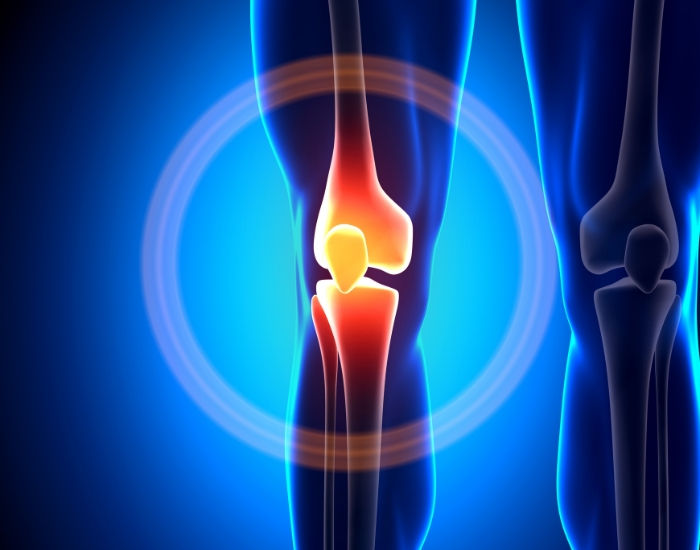
In recent years, medical science has witnessed remarkable advancements in the field of pain management. One such breakthrough is the technique of Genicular Artery Embolization (GAE), a minimally invasive procedure offering newfound hope for patients suffering from chronic knee pain.
Quick Answer: Genicular artery embolization (GAE) is a minimally invasive treatment for knee osteoarthritis pain. An interventional radiologist threads a tiny catheter from the wrist or groin to the arteries around the knee and blocks the abnormal small vessels that feed inflammation in the joint lining. It is done under local anesthesia with light sedation, usually as an outpatient procedure. GAE is best suited to mild to moderate arthritis that has not responded to medication, therapy or injections, for people who want to avoid or delay knee replacement.
Chronic knee pain, often stemming from conditions such as osteoarthritis or previous injuries, can significantly impair a person’s quality of life. Traditional treatments such as medication, physical therapy, and even knee replacement surgery may not always provide satisfactory relief. This is where Genicular Artery Embolization steps in as a promising alternative.
The procedure involves selectively blocking the genicular arteries, which are responsible for supplying blood to the knee joint and surrounding tissues. By doing so, the nerves responsible for transmitting pain signals from the knee to the brain are effectively desensitized, leading to a reduction in pain perception.
What sets GAE apart is its minimally invasive nature. Unlike traditional surgical interventions, which often entail lengthy recovery periods and potential complications, GAE can be performed using only a small incision and local anesthesia. This means reduced risk, shorter hospital stays, and quicker recovery times for patients.
Moreover, GAE has shown promising results in clinical studies. Patients who have undergone the procedure report significant reductions in pain levels and improvements in overall function and mobility. This has led to increased interest and adoption of GAE among both patients and healthcare providers alike.
However, like any medical procedure, GAE is not without its limitations and potential risks. Complications such as bleeding, infection, or damage to surrounding tissues are possible, although rare. Additionally, not all patients may be suitable candidates for GAE, and further research is needed to fully understand its long-term efficacy and safety.
In conclusion, Genicular Artery Embolization represents a promising frontier in the field of pain management, offering hope for those struggling with chronic knee pain. With its minimally invasive approach and promising results, GAE has the potential to improve the lives of countless individuals, enabling them to regain mobility, independence, and a better quality of life.

Meet your vein specialist
Dr. Syed Raza, MD
Vascular & Interventional Radiology · Founder, Premier Vein & Vascular Center
Fellowship-trained interventional radiologist, board certified in diagnostic and interventional radiology with a Certificate of Added Qualification (CAQ) in interventional radiology, and a Fellow of the Royal College of Radiologists (UK). Member of SIR and RSNA. Former Chief of Interventional Radiology at UTMB Galveston and Memorial Hermann Memorial City, with 15+ years treating varicose veins, venous reflux and peripheral arterial disease.
Understanding Knee Arthritis Pain
Osteoarthritis of the knee develops when the smooth cartilage covering the ends of the thigh and shin bones gradually thins and roughens. As it progresses, the bone underneath thickens, small bony spurs form at the edges of the joint and the space between the bones narrows. Doctors often grade this on X-ray from mild to severe, but the grade alone does not predict how much a knee will hurt.
Pain in an arthritic knee comes from several sources at once. The joint lining becomes inflamed and produces excess fluid, which causes swelling and stiffness. The bone just beneath the cartilage can become irritated. The ligaments and tendons around the joint work harder to compensate. And, as researchers have increasingly recognized, inflamed joint tissue develops new small blood vessels with accompanying nerve fibers that amplify pain. This vascular part of the pain story is the target of genicular artery embolization.
Common features of knee osteoarthritis pain include:
- Aching that worsens with walking, stairs, squatting or getting up from a chair
- Stiffness in the morning or after sitting that eases within about half an hour
- Swelling or a feeling of warmth after a busy day
- Tenderness along the inner or outer edge of the joint, or around the kneecap
- Night pain that disturbs sleep in more advanced cases
Where Genicular Artery Embolization Fits in Knee Pain Management
Knee arthritis care follows a ladder. Most people start with weight management, exercise and physical therapy, anti-inflammatory medicine, bracing and activity changes. Joint injections are often the next step. At the top of the ladder is total knee replacement, an effective operation but a major one, with a long recovery and risks that are higher for some patients.
Many people sit in the gap between those steps: injections are wearing off sooner each time, yet they are not ready for surgery, are too young to want an implant, or have heart, lung or other health conditions that make surgery risky. Genicular artery embolization was developed for this group. It grew out of embolization techniques interventional radiologists have used safely for decades to treat bleeding, fibroids and tumors, and it applies the same principle to the inflamed blood vessels of the arthritic knee.
GAE Compared With Other Knee Arthritis Pain Treatments
Patients often ask how GAE differs from other procedures they have heard about, especially those that also target the genicular region.
| Treatment | Target | How long relief may last | Downtime |
|---|---|---|---|
| Steroid injection | Joint inflammation, short term | Often weeks to a few months | Minimal |
| Hyaluronic acid (gel) injection | Joint lubrication | Varies widely between patients | Minimal |
| Genicular nerve radiofrequency ablation | Heats the small sensory nerves around the knee | Often several months; nerves can regrow | A day or two |
| Genicular artery embolization | Abnormal blood vessels feeding joint inflammation | Can be long-lasting for responders; varies | One to two days for most patients |
| Total knee replacement | Replaces worn joint surfaces | Many years | Weeks to months of rehabilitation |
The approaches are not competitors so much as tools for different situations. The right one depends on the stage of your arthritis, where your pain is, what has already been tried and your overall health.
Signs Your Knee Pain May Respond to GAE
In our experience, patients most likely to benefit share a few features:
- X-ray evidence of mild to moderate knee osteoarthritis
- Pain for at least several months that limits walking, work, exercise or sleep
- Inadequate or short-lived relief from medication, therapy and injections
- Pain that is focused on particular parts of the knee that can be pointed to
- A preference to avoid or postpone knee replacement, or a higher risk with surgery
GAE is less likely to help when the main problem is mechanical, such as a knee that locks or buckles from a loose fragment or torn meniscus, when the joint is severely collapsed and deformed, or when the pain is actually referred from the hip or lower back. Inflammatory arthritis such as rheumatoid arthritis, active infection and certain artery conditions also need a different approach. Patients with significant peripheral arterial disease are assessed carefully, because healthy blood flow to the leg must be protected.
How We Evaluate Knee Pain for Genicular Artery Embolization
Careful selection is the single biggest factor in a good outcome, so our consultation is thorough.
- Pain history. We map how long the knee has hurt, how pain affects walking distance, stairs and sleep, and what has been tried so far, including the timing and effect of each injection and any previous knee surgery.
- Hands-on examination. We pinpoint the most tender areas around the joint, check swelling, range of motion and ligament stability, examine the hip and spine to rule out referred pain, and feel the pulses in both legs.
- Imaging. Recent standing X-rays of the knee confirm the stage of osteoarthritis. An MRI is added when we need to exclude problems such as a displaced meniscal tear, a stress reaction in the bone or other conditions that embolization would not help.
- A clear plan. We explain whether GAE is a reasonable option for your knee, what improvement is realistic, which other treatments might be better and how we would coordinate with your orthopedic surgeon, primary care doctor or physical therapist.
The GAE Procedure Step by Step
- Preparation. You are asked to fast for a few hours. Blood thinners and diabetes medicines are reviewed in advance, and kidney function is checked because a contrast dye is used.
- Access. After light sedation and local numbing, a small sheath is placed in the radial artery at the wrist or the femoral artery at the top of the thigh.
- Mapping. A microcatheter, thinner than a strand of spaghetti, is advanced to the knee. Contrast injections show the genicular branches and the areas of abnormal increased blood flow that correspond to your painful spots.
- Embolization. Microscopic particles are delivered slowly into the targeted branches until the abnormal flow is reduced. The aim is to calm the inflamed tissue, not to cut off the knee’s normal blood supply.
- Finishing up. The catheter is removed and the access site is closed with pressure, a compression band or a closure device.
Most procedures take one to two hours. You recover in our care for a few hours and go home the same day with a responsible adult.
Recovery Timeline After GAE
The first few days may bring mild aching in the knee and soreness or bruising at the access site. Ice, elevation and simple pain relievers usually manage this well. Walking is encouraged right away, but we generally advise avoiding strenuous exercise, heavy lifting and long hikes for about a week.
Over the following weeks, many patients notice that the knee is less swollen and less painful at rest and at night. Improvement in walking and stairs tends to follow and can continue for several months. We usually see patients back for follow-up to check progress and, where helpful, arrange physical therapy so that the window of reduced pain is used to rebuild strength.
Risks and How They Are Minimized
GAE has a favorable safety profile when it is performed by an experienced interventional radiologist, but patients should understand the possible side effects:
- Bruising, bleeding or a small collection of blood at the access site
- Temporary reddish or purple discoloration of the skin over the knee, which usually resolves on its own over days to weeks
- Brief numbness or tingling around the knee
- Reaction to the contrast dye, or strain on the kidneys in people with reduced kidney function
- Rarely, particles reaching skin, muscle or bone that were not intended to be treated
Detailed mapping of the arteries, slow controlled delivery of particles and careful selection of which branches to treat all help reduce these risks.
Seek urgent medical care if you notice:
- Bleeding from the wrist or groin that does not stop with firm pressure, or a rapidly enlarging lump
- A cold, pale, numb or painful hand or foot
- A red, hot, very swollen knee with fever or chills
- An open sore or blistering skin over the treated knee
- Sudden chest pain, shortness of breath or one-sided calf swelling
Knee Arthritis Pain Treatment in Houston
If knee osteoarthritis keeps you from walking, working or sleeping the way you want to, and conservative treatment has stopped working, an interventional radiology consultation can tell you whether GAE is a realistic next step. Dr. Syed Raza is a fellowship-trained interventional radiologist board certified in diagnostic and interventional radiology by the American Board of Radiology and a Fellow of the Royal College of Radiologists (UK), with more than 15 years of experience in image-guided procedures. He sees patients from across Houston, Katy and surrounding communities.
To learn more, visit our genicular artery embolization page or our overview of knee pain treatment in Houston. If you are looking for a Houston vein and interventional radiology clinic that can review your X-rays and explain your options, you can request an appointment. Same-week appointments are usually available, and most insurance plans, including Medicare, are accepted.
Talk With a Specialist at Premier Vein
Have questions about your symptoms or treatment options? Dr. Syed Raza and the team at Premier Vein & Vascular Center can evaluate your concerns and explain your options clearly. Same-week appointments are usually available, and most insurance plans are accepted.
Frequently Asked Questions
Is genicular artery embolization FDA approved?
The catheters and embolic particles used in GAE are FDA-cleared devices that have long been used for other embolization procedures. Their use for knee arthritis pain is a newer application that is supported by a growing body of clinical research. Your interventional radiologist should discuss the current evidence with you during your consultation.
How is GAE different from a knee nerve ablation?
Radiofrequency ablation uses heat to switch off the small sensory nerves around the knee, while GAE reduces the abnormal blood vessels that feed inflammation in the joint. They target different parts of the pain pathway, and the right option depends on your exam, imaging and earlier treatments.
How soon does knee pain improve after GAE?
Some patients notice improvement within the first couple of weeks, but for many the benefit builds gradually over one to three months as inflammation settles. Results vary from person to person.
Can GAE be done if I have had a knee replacement?
GAE can sometimes be used for persistent pain or recurrent bleeding into the joint after knee replacement, but this is a different situation from osteoarthritis pain and needs individual evaluation. Your surgeon and interventional radiologist would review the cause of pain first.
Am I too old for genicular artery embolization?
There is no strict upper age limit. GAE is often considered for older adults precisely because it avoids general anesthesia and major surgery. Overall health, kidney function and circulation matter more than age alone.
What should I avoid after genicular artery embolization?
For about a week, avoid strenuous exercise, heavy lifting and long periods of standing, and protect the access site from strain. Keep walking gently, use ice for knee aching and follow the specific instructions you receive at discharge.
Will I still need physical therapy after GAE?
Physical therapy is often recommended after GAE. With less pain, strengthening exercises become easier to do, and stronger thigh and hip muscles help protect the knee and support longer-lasting results.
ABOUT PREMIER VEIN & VASCULAR CENTER: Premier Vein & Vascular Center, a leading vein clinic in Houston and among the top specialized vein treatment clinics in the USA, has provided expert vein care for over 20 years. The center offers minimally invasive treatments for varicose veins, spider veins, and deep vein thrombosis, led by Dr. Syed Raza, MD, a Board-Certified Vein Specialist and Interventional Radiologist. Dedicated to pain-free, healthier living, the clinic delivers cutting-edge, patient-centered care for optimal results.
Trusted Health Resources
- Osteoarthritis, National Institute of Arthritis and Musculoskeletal and Skin Diseases (NIH)
- Osteoarthritis, Centers for Disease Control and Prevention