
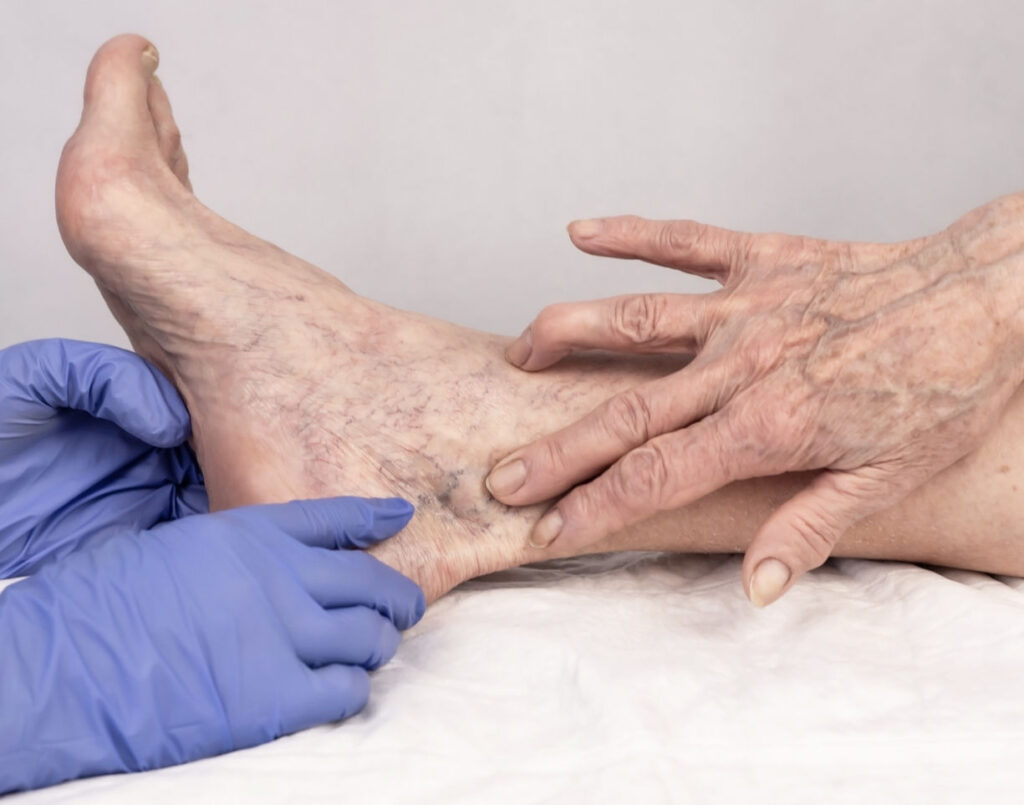
Many people notice changes in their legs—such as visible veins, swelling, or heaviness—but wonder if these symptoms require professional care. Recognizing when veins need medical treatment is important for preventing complications and maintaining healthy legs. Early evaluation by a qualified vein doctor ensures accurate diagnosis, effective treatment, and relief from discomfort.
Quick Answer: Your veins likely need medical treatment if they cause symptoms such as aching, heaviness, swelling, cramps or itching, if the skin around your ankles is darkening, hardening or breaking down, or if a vein has bled or developed a painful clot. Veins that are only visible, with no symptoms or skin changes, are usually a cosmetic choice rather than a medical need. A venous duplex ultrasound settles the question by showing whether the valves are leaking, which is also what most insurance plans, including Medicare, require before covering treatment.

Meet your vein specialist
Dr. Syed Raza, MD
Vascular & Interventional Radiology · Founder, Premier Vein & Vascular Center
Fellowship-trained interventional radiologist, board certified in diagnostic and interventional radiology with a Certificate of Added Qualification (CAQ) in interventional radiology, and a Fellow of the Royal College of Radiologists (UK). Member of SIR and RSNA. Former Chief of Interventional Radiology at UTMB Galveston and Memorial Hermann Memorial City, with 15+ years treating varicose veins, venous reflux and peripheral arterial disease.
1. Understanding Vein Health
Veins carry blood from the legs back to the heart. Healthy veins have one-way valves that keep blood moving in the right direction and prevent it from pooling. When these valves weaken or stop working, blood can flow backward, causing veins to swell, bulge, or feel uncomfortable. Vein problems can range from minor cosmetic issues, like spider veins, to more serious conditions, such as chronic venous insufficiency or blood clots. By understanding how healthy veins work, you can better recognize when it is time to see a doctor.
2. Common Signs Your Veins Need Attention
Several symptoms may indicate that your veins require medical care. Common warning signs include:
- Visible bulging veins: Twisted or enlarged veins on the legs.
- Leg heaviness or aching: Feeling tired or heavy, especially after standing or sitting.
- Swelling: Particularly around the ankles and calves.
- Skin changes: Discoloration, dryness, or itching near the veins.
- Venous ulcers: Open sores caused by poor circulation.
- Cramping or restless legs: Especially at night.
Even mild symptoms should not be ignored, as early intervention can prevent worsening and allow less invasive treatments.
3. Risk Factors That Increase the Likelihood of Vein Problems
Certain factors make vein issues more likely. These include:
- Age: Vein valves weaken naturally over time.
- Family history: Genetics can increase susceptibility to varicose veins or chronic venous insufficiency.
- Lifestyle: Long periods of sitting or standing, obesity, and sedentary habits contribute to vein strain.
- Hormonal changes: Pregnancy, menopause, or hormone therapy may affect vein health.
- Previous blood clots or leg injuries: Can increase the risk of venous insufficiency.
If you have one or more risk factors, regular monitoring and early evaluation by a vein specialist are recommended.
4. When Cosmetic Concerns Require Medical Evaluation
Sometimes people seek treatment for spider veins or varicose veins mainly for cosmetic reasons. However, visible veins can also signal underlying medical issues. Veins that worsen over time, cause pain, or are accompanied by swelling or skin changes should always be checked by a doctor. Consulting a professional ensures that both appearance and health are addressed safely and effectively.
5. How Vein Specialists Diagnose Conditions
A vein specialist usually starts with a thorough evaluation. This includes:
- Reviewing your medical history and symptoms.
- Performing a physical examination of your legs.
- Using diagnostic imaging, often duplex ultrasound, to check blood flow and valve function.
This process helps the doctor determine whether the veins are mainly a cosmetic concern or if treatment is needed to correct an underlying venous problem.
6. Treatment Options for Problem Veins
After a diagnosis, a vein specialist can create a treatment plan that fits your needs. Common minimally invasive procedures include endovenous laser therapy (EVLT), radiofrequency ablation (RFA), and ultrasound-guided foam sclerotherapy, which close problem veins with little discomfort and quick recovery. Sclerotherapy is another option, often used for spider veins or smaller varicose veins, reducing both visible veins and minor swelling. Doctors often combine these procedures with lifestyle adjustments, such as wearing compression stockings, elevating the legs, exercising regularly, and maintaining a healthy weight, to improve circulation and support healing. In severe cases where minimally invasive options are not enough, surgery may be considered. Most modern treatments are done in-office, allowing patients to return to daily activities quickly and safely.
7. Lifestyle Measures to Support Healthy Veins
Along with medical treatment, certain healthy habits can help prevent vein problems from getting worse. Regular exercise, such as walking or swimming, improves circulation in the legs. Avoiding long periods of sitting or standing reduces pressure on veins, while maintaining a healthy weight lowers strain. Wearing compression stockings, if recommended, helps blood flow, and elevating your legs while resting encourages circulation back to the heart. By combining these lifestyle habits with professional care, you can enhance treatment results and maintain comfortable, healthy legs over time.
Do My Veins Need Medical Treatment? A Quick Self-Check
The signs above are a good starting point. To make the decision more concrete, here is how we think about common findings in clinic, from those that can wait to those that should not.
| What you notice | What it often means | How soon to act |
|---|---|---|
| Fine red or blue spider veins, no symptoms | Usually cosmetic | Whenever you choose |
| Bulging veins with aching or heaviness by evening | Valve reflux (venous insufficiency) | Schedule an evaluation in the next few weeks |
| Ankle swelling that returns daily | Vein pressure affecting the tissues | Evaluate soon, especially if one leg is worse |
| Brown staining, eczema or hardened skin near the ankle | Advanced venous insufficiency | Prompt evaluation; skin is at risk |
| A sore near the ankle that will not heal | Possible venous ulcer | See a specialist promptly |
| A hot, hard, painful lump along a vein | Superficial phlebitis, a clot in a surface vein | Within a day or two; ultrasound recommended |
| Sudden swelling and pain in one calf or thigh | Possible deep vein thrombosis | Same day or emergency care |
| Bleeding from a varicose vein | Thin, high-pressure vein near the skin | Control bleeding now, then prompt evaluation |
What Happens If You Wait Too Long
Venous insufficiency is a progressive condition. It rarely becomes dangerous overnight, but the high pressure in the leg veins works on the tissues every day you are upright. Over months and years, many patients move through a recognizable sequence: visible veins, then evening swelling, then skin discoloration and thickening, and in some cases an open ulcer.
Each stage is harder to reverse than the last. Swelling and aching often improve quickly after treatment, while skin that has hardened and darkened may soften only partly. That is the practical argument for evaluation when symptoms first appear, not when the skin has already started to break down. Waiting rarely makes treatment simpler.
Situations That Always Deserve a Vein Evaluation
Some circumstances move a vein problem from “something to keep an eye on” to “something to have checked”:
- A vein has bled. Varicose veins near the skin, especially around the ankle, can bleed heavily after a minor knock or in a warm shower. Once a vein has bled, it is likely to do so again.
- You have had phlebitis. A painful, hard, red vein is a clot in a surface vein. Repeated episodes, or one in the thigh, need an ultrasound to be sure the deep veins are clear.
- You have had a deep vein thrombosis. Old clots can damage the deep veins and lead to swelling and skin changes years later.
- One leg is clearly more swollen than the other. One-sided swelling needs a clot ruled out and the cause identified.
- Veins came back after previous treatment. A fresh ultrasound often shows a new or untreated source of reflux.
- You are planning a pregnancy or major surgery and already have significant varicose veins.
Call 911 or seek emergency care if you notice:
- Sudden swelling, pain and warmth in one leg
- Chest pain, sudden shortness of breath or coughing up blood
- Bleeding from a vein that does not stop after 10 minutes of firm pressure with the leg raised above the heart
- Spreading redness, red streaks, fever or chills around a leg wound or vein
- A foot that becomes cold, pale or numb
Medical vs Cosmetic Vein Treatment and Insurance
Insurance plans draw a line between treatment that is medically necessary and treatment that is cosmetic. Understanding where that line sits helps you plan.
Treatment is generally considered medically necessary when you have symptoms such as pain, heaviness, swelling or cramping that affect daily life, or skin changes, bleeding, phlebitis or ulcers, and a duplex ultrasound shows reflux above a defined threshold in the veins to be treated. Many plans also require a documented period of compression stockings first, often around three months, unless there are skin changes or an ulcer. Medicare follows similar principles.
Treatment of spider veins alone, without symptoms or underlying reflux, is usually considered cosmetic. Many patients have both: the medical part of their treatment is covered, and remaining spider veins are treated afterward as an elective step. Our team can check your plan’s specific requirements before anything is scheduled.
How We Decide Whether Treatment Is Needed
At Premier Vein & Vascular Center, the aim of the first visit is a clear, honest answer, including when the answer is that treatment is not needed.
- Focused history. We ask what you are feeling, when it is worst, how long it has been going on, and about pregnancies, family history, past clots and earlier vein treatment.
- Standing examination. We examine your legs upright, check swelling, skin changes and pulses, and note which veins are visible.
- Venous duplex ultrasound. A venous ultrasound in our in-office vascular lab measures reflux in the superficial, perforator and deep veins and checks for clots. If pulses are weak or a wound is present, an ankle-brachial index checks the arteries too.
- A clear plan. We explain whether your veins are a medical problem, a cosmetic concern or both, what treatment would achieve, and what it would not.
What Treatment Looks Like Once It Is Needed
When the ultrasound confirms reflux, treatment targets the source first. The leaking main vein is usually closed from the inside through a single needle entry with endovenous thermal ablation or a non-thermal vein ablation technique. Remaining bulging veins can be removed with ambulatory phlebectomy or closed with foam sclerotherapy.
A typical procedure takes under an hour in the office under local anesthesia. You walk out afterward, are encouraged to walk daily, and most people return to desk work within a day or two. A follow-up ultrasound confirms that the treated vein has closed and the deep veins are clear. Mild tightness along the inner thigh and some bruising for a week or so are common and expected.
When to See a Vein Specialist in Houston
If you have been wondering whether your veins are just a cosmetic nuisance or something that needs attention, a single evaluation usually gives a clear answer. Patients in Houston, Katy and the surrounding area can see Dr. Syed Raza, a fellowship-trained interventional radiologist with more than 15 years of experience treating varicose veins and venous reflux, at our Houston vein clinic. Same-week appointments are usually available, and most insurance plans, including Medicare, are accepted.
Talk With a Specialist at Premier Vein
Have questions about your symptoms or treatment options? Dr. Syed Raza and the team at Premier Vein & Vascular Center can evaluate your concerns and explain your options clearly. Same-week appointments are usually available, and most insurance plans are accepted.
8. FAQs: Vein Health and Treatment
1. How do I know if my veins are a medical concern or just cosmetic?
Veins accompanied by pain, swelling, skin changes, or ulcers are more likely to need medical attention.
2. Are minimally invasive vein treatments painful?
Most procedures involve only mild discomfort and are performed with local anesthesia.
3. How long is the recovery period?
Recovery is usually quick, often allowing patients to resume daily activities the same day.
4. Can untreated vein problems worsen over time?
Yes. Ignoring symptoms can lead to chronic venous insufficiency, ulcers, or blood clots.
5. How do I choose a vein specialist in Houston?
Look for board-certified physicians with experience in minimally invasive vein procedures and positive patient reviews.
9. Final Thoughts
Recognizing when your veins need medical treatment is crucial for maintaining leg health and preventing complications. Symptoms like bulging veins, swelling, leg heaviness, or skin changes warrant evaluation by a qualified vein specialist. Early consultation allows for less invasive treatment, faster relief, and better long-term outcomes.
If you notice symptoms such as bulging veins, leg swelling, or persistent discomfort, Premier Vein offers expert evaluation and minimally invasive treatments to help you maintain healthy, comfortable legs.
Does insurance cover vein treatment?
Most insurance plans, including Medicare, cover vein treatment when you have symptoms or skin changes and a duplex ultrasound confirms reflux. Some plans also require a trial of compression stockings first, while spider vein treatment alone is usually considered cosmetic.
Do I need a referral to see a vein specialist?
Many patients book directly, but some insurance plans, particularly HMO plans, require a referral from a primary care physician. Our team can check your plan’s requirements when you schedule.
Can I wait to treat my varicose veins?
If you have no symptoms or skin changes, waiting is usually safe, though veins often enlarge over time. If you have swelling, skin darkening, bleeding or phlebitis, it is better to be evaluated soon, because these signs suggest the condition is progressing.
What happens at a first vein appointment?
A first visit typically includes a review of your symptoms and history, a standing examination of your legs and, when indicated, a venous duplex ultrasound. You leave with an explanation of what is causing your symptoms and the treatment options that fit.
Is vein treatment safe for older adults?
Yes, for most people. Modern vein procedures use local anesthesia, take place in the office and allow you to walk immediately afterward, which makes them suitable for many older patients, including those with other medical conditions.
Should I see a vein specialist for spider veins?
Spider veins alone are usually cosmetic, but it is worth seeing a specialist if they cluster around the ankle, come with aching or swelling, or keep coming back, since these can be signs of reflux in deeper veins.
Can vein problems go away on their own?
Varicose veins and venous insufficiency do not go away on their own because damaged valves do not repair themselves. Veins that appear during pregnancy may shrink after delivery, and compression, exercise and weight control can ease symptoms, but persistent reflux usually needs treatment to resolve.
Trusted Health Resources
- Chronic Venous Insufficiency, Society for Vascular Surgery
- Venous Insufficiency, MedlinePlus Medical Encyclopedia (NIH)
- Varicose Veins and Spider Veins, MedlinePlus (NIH)
Disclaimer: This blog is for informational purposes only and does not replace professional medical advice, diagnosis, or treatment. Always consult a qualified healthcare provider for vein-related concerns.