
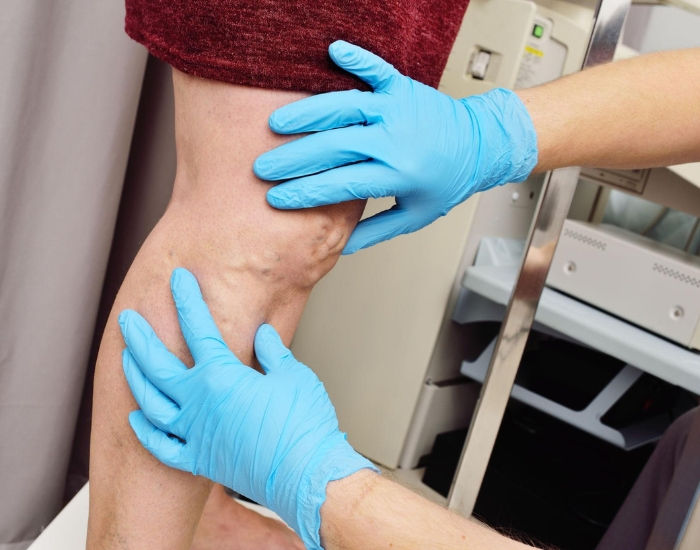

Quick Answer: To find a good vein doctor, confirm the physician is board certified and licensed, check that the vascular lab performing your ultrasound is accredited by the IAC, and make sure the practice does a full venous duplex ultrasound before recommending any treatment. A good vein specialist offers several treatment options, explains your results in plain language, treats the source of reflux rather than only visible veins, and gives honest advice, including when no procedure is needed. Be cautious of clinics that skip testing, push many procedures at once or pressure you to decide on the spot.
Finding a skilled and reputable vein doctor, also known as a vein and vascular specialist, is crucial for receiving effective treatment for varicose veins or other venous conditions. Here are some steps to help you find a good vein doctor:
- Ask for Referrals: Start by asking your primary care physician for recommendations. They may be able to refer you to a reputable vein specialist or vascular surgeon in your area. Additionally, you can ask friends, family members, or colleagues who have undergone vein treatment for their recommendations.
- Check Credentials: Look for a doctor who is board-certified in interventional radiology, or a related specialty. Board certification indicates that the doctor has completed specialized training and has met certain standards of competency in the field.
- Research Online: Use online resources to research vein doctors in your area. Many healthcare providers have websites where you can learn about their credentials, experience, and areas of expertise. Look for doctors who have positive patient reviews and ratings on reputable healthcare websites.
- Consult Professional Organizations: Check if the vein doctor is a member of professional organizations such as the Society of Interventional Radiology or RSNA. Membership in these organizations can indicate a commitment to staying current with advancements in vein care and adhering to high standards of practice.
- Schedule Consultations: Once you have identified potential vein doctors, schedule consultations to meet with them in person. During the consultation, ask about the doctor’s experience treating varicose veins and other venous conditions, their approach to treatment, and the specific procedures they offer.
- Ask Questions: Don’t hesitate to ask questions during the consultation to ensure you feel comfortable with the doctor and their proposed treatment plan. Inquire about their success rates, complication rates, and any potential risks or side effects associated with the procedures they recommend.
- Evaluate Communication: Pay attention to how well the doctor listens to your concerns and explains your diagnosis and treatment options. A good vein doctor should take the time to address your questions and ensure you have a thorough understanding of your condition and treatment plan.
- Consider Experience and Expertise: Look for a vein doctor who has significant experience treating varicose veins and other venous conditions using a variety of treatment modalities. Experience and expertise can often translate into better outcomes for patients.
- Visit the Facility: If possible, visit the vein treatment facility where the doctor practices to ensure it is clean, well-equipped, and staffed by a professional team. A reputable facility should adhere to high standards of patient care and safety.
- Trust Your Instincts: Ultimately, trust your instincts when choosing a vein doctor. Select a doctor who makes you feel comfortable, respected, and confident in their abilities to provide personalized, high-quality care.
By following these steps and conducting thorough research, you can find a skilled and trustworthy vein doctor who can help you effectively manage your varicose veins or other venous conditions.

Meet your vein specialist
Dr. Syed Raza, MD
Vascular & Interventional Radiology · Founder, Premier Vein & Vascular Center
Fellowship-trained interventional radiologist certified by the American Board of Radiology and the Royal College of Radiologists (UK). Former Chief of Interventional Radiology at UTMB Galveston and Memorial Hermann Memorial City, with 15+ years treating varicose veins, venous reflux and peripheral arterial disease.
What a Good Vein Doctor Actually Does
Vein care looks simple from the outside. A vein is visible, so it seems it should just be removed or injected. In reality, the veins you can see are usually the end of a chain. Most varicose veins are fed by a leaking valve higher up, often in the great or small saphenous vein, which you cannot see at all. A good vein doctor’s first job is to find that source.
That means a good vein specialist is, above all, a good diagnostician. They know when symptoms are coming from veins and when they are not, they can read and explain a duplex ultrasound, and they understand how the superficial, perforator and deep veins work together. Only then does the choice of procedure come in. If you remember one thing from this guide, let it be this: the quality of the diagnosis decides the quality of the result.
A good vein doctor is also comfortable saying no. Some leg aches come from the spine, joints or arteries rather than veins, and some small veins do not need treatment at all. A specialist who tells you that honestly, and points you to the right next step, is usually one you can trust when a procedure is recommended.
How to Verify a Vein Doctor’s Credentials Yourself
You do not have to take a clinic’s word for it. Much of what matters can be checked online in a few minutes.
- Board certification. The American Board of Medical Specialties offers a free public lookup that shows which board certifies a physician and whether certification is current.
- Medical license. In Texas, the Texas Medical Board’s public license search shows whether a physician’s license is active and lists any formal disciplinary actions.
- Vascular lab accreditation. The Intersocietal Accreditation Commission (IAC) publishes a directory of accredited vascular testing facilities. Accreditation means the lab’s protocols, equipment, staff training and reports have been reviewed against national standards.
- Training background. Fellowship training in interventional radiology or vascular surgery indicates dedicated experience in image-guided vascular procedures.
- Leadership and hospital roles. Past or current hospital appointments and leadership positions can indicate peer trust, though they are only one piece of the picture.
For transparency, Dr. Syed Raza is certified by the American Board of Radiology and the Royal College of Radiologists (UK), is fellowship-trained in interventional radiology, and previously served as Chief of Interventional Radiology at UTMB Galveston and Memorial Hermann Memorial City. Our vascular lab is IAC-accredited. More is on the Dr. Syed Raza page.
The Ultrasound Test: The Clearest Marker of Quality
The venous duplex ultrasound is to vein care what an X-ray is to a broken bone. If a clinic recommends treatment without one, or with a quick scan that only looks for clots, that is a reason to pause.
A proper venous reflux study is different from a routine clot check. It is usually done with you standing or tilted head-up so the veins fill as they do in daily life. The technologist squeezes the calf or uses a cuff to push blood upward, then measures how long blood flows backward when the pressure is released. In current guidelines, backward flow lasting longer than about half a second in superficial veins, or longer than one second in the deep thigh veins, is considered abnormal reflux. The scan maps each vein, its size, where reflux starts and stops, and whether the deep veins are open.
Ask whether your study will be a full reflux study, who performs it, and whether a physician reviews the images. You can read more on our venous ultrasound page.
Green Flags and Red Flags When Choosing a Vein Specialist
| Green flags | Red flags |
|---|---|
| A full venous reflux ultrasound before any treatment plan | Treatment recommended at the first glance, without testing |
| Results explained with the images and in plain language | Vague explanations or reluctance to share the report |
| Several treatment options offered and compared | Only one procedure offered for every patient |
| Conservative care discussed when appropriate | A long series of procedures proposed for mild symptoms |
| Physician performs or directly supervises the procedure | Unclear who will actually treat you |
| Honest discussion of risks, recovery and insurance | Pressure to sign up or pay that same day |
| Follow-up ultrasound after ablation and a plan for any remaining veins | No clear follow-up or after-hours contact |
No single item makes or breaks a practice, but a pattern of red flags is worth paying attention to.
Reading Online Reviews Wisely
Reviews are useful, but they need context. Look for patterns over many reviews rather than reacting to one glowing or angry post. Comments about how well the doctor explained things, whether staff were organized, how follow-up was handled and whether billing was clear often tell you more than star ratings alone. Reviews about waiting room times or parking are understandable but say little about medical skill. Remember that practices cannot respond to reviews in detail because of patient privacy laws, so one side of the story is usually missing.
Word of mouth still counts. If a friend or relative had vein treatment, ask practical questions: Did the doctor explain the ultrasound? Was the procedure what they expected? How was recovery, and did the office follow up? Their answers often reveal more than any rating.
How We Evaluate New Patients at Premier Vein
We want every patient to leave the first visit knowing what is wrong and what their options are, even if the answer is that no procedure is needed.
- Focused history. Symptoms, timing, what helps, past clots, pregnancies, family history, work and activity, medications and previous vein treatment.
- Standing examination. We look at both legs for varicose veins, swelling, skin changes and ulcers, and check foot pulses.
- Venous duplex reflux study. Performed in our IAC-accredited lab to map every refluxing vein and confirm the deep veins are healthy. An ankle-brachial index is added if circulation in the arteries is a concern.
- A clear plan. We review the images with you, explain which veins are responsible, compare options such as ablation, sclerotherapy and phlebectomy, and outline insurance steps before anything is scheduled.
When to Get a Second Opinion
Second opinions are common and reasonable in vein care. Most physicians welcome them. Consider one if:
- You were advised to have treatment without a reflux ultrasound
- Many procedures were recommended for mild symptoms or small veins
- You were told you need treatment on veins that the report describes as normal
- Your symptoms continued or returned soon after previous treatment
- You simply did not feel your questions were answered
Bring your ultrasound report and images, a list of treatments you have had and your medication list. A fresh look at the same images often clears up uncertainty quickly.
Cost, Insurance and Transparency
When symptoms are documented and an ultrasound confirms reflux, treatment of varicose veins and venous insufficiency is often considered medically necessary. Most insurance plans, including Medicare, may cover it, but many require a period of compression stockings and pre-authorization first. Treatment of spider veins for appearance alone is usually considered cosmetic. A good practice explains which category your care falls into and checks your benefits before treatment rather than after.
Skip the research and seek care now if…
- One leg suddenly becomes swollen, painful, warm or red, which may be a deep vein thrombosis
- You have sudden shortness of breath, chest pain or cough up blood; call 911
- A varicose vein bleeds heavily and does not stop with firm pressure and elevation
- A leg wound shows spreading redness, pus, a foul smell or fever
Finding a Vein Specialist in Houston
If you are in the Houston area and want a thorough evaluation, Premier Vein & Vascular Center has provided vein care for more than 20 years. Dr. Raza has more than 15 years of experience treating varicose veins, venous reflux and PAD and personally reviews each patient’s ultrasound.
As a Houston vein specialist practice serving Katy and Greater Houston, we usually offer same-week appointments and accept most insurance plans, including Medicare. Answers to common patient questions are on our patient FAQs page.
Talk With a Specialist at Premier Vein
Have questions about your symptoms or treatment options? Dr. Syed Raza and the team at Premier Vein & Vascular Center can evaluate your concerns and explain your options clearly. Same-week appointments are usually available, and most insurance plans are accepted.
Frequently Asked Questions
What kind of doctor is best for varicose veins?
Interventional radiologists and vascular surgeons have the most extensive training in diagnosing and treating vein disease, and some physicians from other specialties focus on veins after additional training. What matters most is board certification, dedicated vein experience, a full reflux ultrasound and a range of treatment options.
Should a vein clinic always do an ultrasound before treatment?
For varicose veins, swelling, skin changes or leg symptoms, yes. A duplex reflux ultrasound shows which veins are leaking and whether the deep veins are healthy, and treatment planned without it is more likely to miss the source. Very small cosmetic spider veins without symptoms may not need one.
What does IAC accreditation mean for a vein clinic?
The Intersocietal Accreditation Commission reviews a vascular lab’s equipment, protocols, staff qualifications and sample reports against national standards. Accreditation gives patients reassurance that ultrasound testing is performed and interpreted consistently and carefully.
Is it normal to need more than one vein treatment?
Yes. Many patients have the main refluxing vein closed first and then a follow-up session for remaining branch or spider veins. A plan that stages treatment based on ultrasound findings is common and reasonable, while a long list of procedures for mild symptoms deserves a second opinion.
Can my primary care doctor treat varicose veins?
Primary care doctors play an important role in recognizing vein disease, recommending compression and referring patients. Procedures such as ablation, phlebectomy and ultrasound-guided sclerotherapy are performed by vein specialists with dedicated training and imaging equipment.
How do I check if a doctor is board certified?
The American Board of Medical Specialties offers a free online lookup that shows a physician’s certifying board and current status. State medical boards, such as the Texas Medical Board, show license status and any public disciplinary actions.
What should I bring to my first vein consultation?
Bring a list of your medications, any previous ultrasound reports or images, records of past vein treatments or blood clots, and your insurance card. If you have worn compression stockings, note how long and what strength, since many insurance plans ask for this information.
ABOUT PREMIER VEIN & VASCULAR CENTER: Premier Vein & Vascular Center, a leading vein clinic in Houston and among the top specialized vein treatment clinics in the USA, has provided expert vein care for over 20 years. The center offers minimally invasive treatments for varicose veins, spider veins, and deep vein thrombosis, led by Dr. Syed Raza, MD, a Board-Certified Vein Specialist and Interventional Radiologist. Dedicated to pain-free, healthier living, the clinic delivers cutting-edge, patient-centered care for optimal results.
Trusted Health Resources
- Chronic Venous Insufficiency, Society for Vascular Surgery
- Venous Insufficiency, MedlinePlus Medical Encyclopedia (NIH)
- Varicose Veins and Spider Veins, MedlinePlus (NIH)