
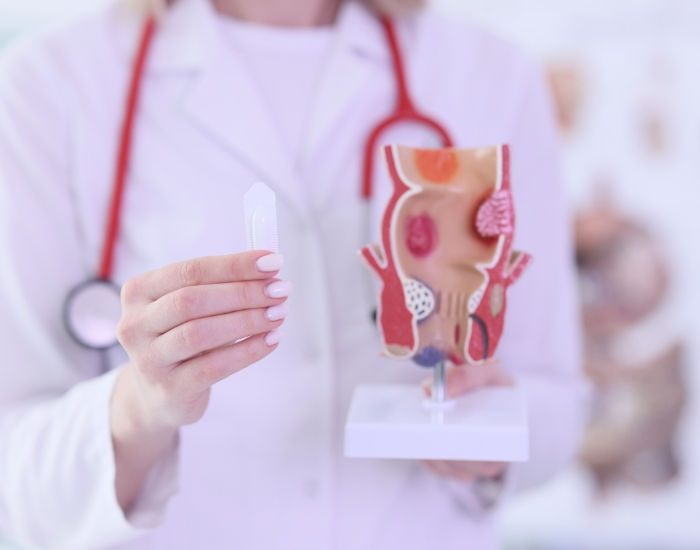
Internal hemorrhoids develop when the veins around the lower rectum or anus swell due to increased pressure. Several factors contribute to this increased pressure:
- Straining during bowel movements: This is often due to constipation or diarrhea, which can strain the rectal area.
- Chronic constipation: Straining during bowel movements due to constipation can put pressure on the veins in the rectum and anus.
- Prolonged sitting: Sitting for long periods of time, especially on the toilet, can increase pressure on the veins in the anus.
- Pregnancy: The increased pressure on the abdomen during pregnancy can cause hemorrhoids to develop or worsen.
- Obesity: Being overweight or obese can increase pressure on the veins in the rectum and anus.
- Low-fiber diet: A diet low in fiber can lead to constipation, which in turn can cause straining during bowel movements.
- Heavy lifting: Straining while lifting heavy objects can also contribute to the development of hemorrhoids.
- Genetics: Some people may be genetically predisposed to developing hemorrhoids due to weak vein walls or valves.
- Age: As people age, the tissues supporting the veins in the rectum and anus may weaken, making hemorrhoids more likely to develop.
Internal hemorrhoids are swollen veins located inside the rectum. While they might not always cause noticeable symptoms, some common signs and symptoms of internal hemorrhoids include:
- Bleeding: This is one of the most common symptoms. You might notice blood on toilet paper after wiping, or you may see blood in the toilet bowl after a bowel movement. The blood is usually bright red.
- Prolapse: Internal hemorrhoids can sometimes protrude from the anus, especially during bowel movements. This can cause a feeling of discomfort or a sensation of fullness in the rectum.
- Pain or discomfort: Internal hemorrhoids can cause pain or discomfort, particularly during bowel movements or when sitting for extended periods.
- Itching or irritation: Some people may experience itching or irritation around the anus due to the presence of internal hemorrhoids.
- Mucus discharge: You may notice mucus in the stool or on toilet paper after wiping.
It’s important to note that these symptoms can also be caused by other conditions, such as anal fissures or external hemorrhoids. If you experience persistent symptoms or are concerned about any changes in your bowel habits, it’s best to consult with a healthcare professional for proper diagnosis and treatment.
Quick Answer: Internal hemorrhoids are swollen cushions of blood vessels inside the lower rectum, above the point where the lining has pain-sensing nerves. That is why their most common sign is painless, bright red bleeding with bowel movements, sometimes with prolapse or mucus. Mild cases usually improve with fiber, fluids and better bowel habits. Ongoing bleeding is treated with office procedures such as rubber band ligation, surgery or, for suitable patients, hemorrhoid embolization, a catheter-based treatment by an interventional radiologist. Rectal bleeding should always be evaluated to rule out other causes.
“Hemorrhoid embolization” is a new technique that is performed as an outpatient procedure and provides immediate relief from symptoms of internal hemorrhoids. Please contact us today at Premier Vein and Vascular Center, to arrange a consultation for your “hemorrhoid embolization”.

Meet your vein specialist
Dr. Syed Raza, MD
Vascular & Interventional Radiology · Founder, Premier Vein & Vascular Center
Fellowship-trained interventional radiologist, board certified in diagnostic and interventional radiology with a Certificate of Added Qualification (CAQ) in interventional radiology, and a Fellow of the Royal College of Radiologists (UK). Member of SIR and RSNA. Former Chief of Interventional Radiology at UTMB Galveston and Memorial Hermann Memorial City, with 15+ years treating varicose veins, venous reflux and peripheral arterial disease.
What Internal Hemorrhoids Really Are
Everyone has hemorrhoidal tissue. These are soft cushions of small blood vessels, connective tissue and muscle in the lining of the anal canal. They help seal the anus and protect it during bowel movements. They only become a problem, and are called hemorrhoids in the everyday sense, when they swell, bleed or slip downward.
A detail many patients find surprising is that these cushions are fed mainly by arteries, especially the branches of the superior rectal artery, and drained by veins. When pressure from straining, pregnancy or prolonged sitting builds up, the cushions become engorged with blood, the supporting tissue stretches and the lining becomes fragile. That combination explains both the bright red bleeding and the tendency to prolapse. It also explains why a treatment that reduces arterial inflow, rather than cutting tissue away, can help.
Internal vs. External Hemorrhoids
Hemorrhoids are divided by where they sit relative to the dentate line, a landmark inside the anal canal. Above that line, the lining has few pain nerves. Below it, the skin is highly sensitive.
| Feature | Internal hemorrhoids | External hemorrhoids |
|---|---|---|
| Location | Inside the rectum, above the dentate line | Under the skin around the anal opening |
| Main symptom | Painless bright red bleeding | Swelling, itching, discomfort |
| Pain | Usually little or none unless prolapsed and trapped | Can be very painful, especially if a clot forms |
| Visible? | Only if they prolapse | Often felt as a soft or firm lump |
| Common treatments | Fiber, banding, embolization, surgery for advanced cases | Sitz baths, topical care, removal of a clotted hemorrhoid |
The Four Grades of Internal Hemorrhoids
Doctors grade internal hemorrhoids by how far they prolapse. The grade helps guide treatment choices.
- Grade I: the cushions bleed but do not prolapse out of the anus
- Grade II: they prolapse during a bowel movement but return on their own
- Grade III: they prolapse and need to be pushed back in by hand
- Grade IV: they stay outside and cannot be pushed back
Bleeding can occur at any grade, and the amount of bleeding does not always match the grade. Some patients with grade II hemorrhoids bleed enough to become anemic, while others with larger hemorrhoids bleed rarely.
Why Rectal Bleeding Always Needs a Proper Check
Hemorrhoids are the most common cause of bright red blood on toilet paper, but they are not the only one. Anal fissures, polyps, inflammatory bowel disease and colorectal cancer can cause similar bleeding. For that reason, anyone with rectal bleeding should be evaluated, and depending on age, symptoms and family history, a colonoscopy may be recommended before hemorrhoid treatment.
We pay particular attention to bleeding that is dark or mixed in with stool, a change in bowel habits lasting more than a few weeks, unexplained weight loss, a family history of colon cancer, or signs of anemia such as fatigue and shortness of breath.
Call 911 or seek emergency care if you have:
- Heavy rectal bleeding, passing large clots or blood that keeps flowing
- Black, tarry stools or vomiting blood
- Dizziness, fainting, a racing heartbeat or pale, clammy skin
- Severe anal pain with a prolapsed hemorrhoid that cannot be pushed back and is turning dark
- Fever with rectal pain and swelling
Treatment Options for Internal Hemorrhoids
Treatment usually follows a step-by-step approach, starting with the simplest measures.
Bowel habits and diet
For grade I and many grade II hemorrhoids, lifestyle changes are often enough. Aim for 25 to 35 grams of fiber a day from fruits, vegetables, whole grains and, if needed, a fiber supplement. Drink plenty of water, go when you feel the urge, avoid straining and limit time on the toilet. Leaving the phone outside the bathroom is a surprisingly helpful tip, since long sitting raises pressure on the cushions.
Office procedures
Rubber band ligation, typically performed by a gastroenterologist or colorectal surgeon, places a small band at the base of the hemorrhoid so it shrinks and falls off. Other office options include sclerotherapy injections and infrared coagulation. These work well for many grade I to III hemorrhoids, though repeat sessions are sometimes needed.
Surgery
Hemorrhoidectomy or stapled procedures are generally reserved for large grade III and IV hemorrhoids or when other treatments have failed. They are effective but recovery can be painful and usually involves time off work.
Hemorrhoid embolization
Embolization is an interventional radiology option aimed mainly at bleeding internal hemorrhoids. Instead of treating the hemorrhoid from below, it reduces the blood flow that feeds it from above. It can be particularly useful for patients who continue to bleed despite other treatments, those who are poor surgical candidates, and those who need to remain on blood thinners. Read more on our hemorrhoid embolization page.
How Hemorrhoid Embolization Works
The procedure is done through a tiny puncture, usually in the wrist or groin, under local anesthesia and light sedation. A thin catheter is guided through the arteries to the branches of the superior rectal artery using X-ray imaging. Once the specific branches supplying the hemorrhoids are identified, tiny coils or particles are placed to reduce their blood flow. The hemorrhoidal cushions then shrink and bleed less.
Because no incision is made near the anus, most patients have little pain afterward. The procedure typically takes about an hour, and patients usually go home the same day after a short recovery period. Many return to normal activity within a day or two. Bleeding often improves quickly, while prolapse may respond less than bleeding, which is why embolization is sometimes combined with banding or other treatments. As with any procedure, there are risks, which we discuss in detail before treatment.
What recovery looks like after embolization
After the procedure, you rest for a short time while the puncture site is checked. If the wrist was used, a compression band is worn for a few hours; if the groin was used, you lie flat for a little longer. At home, most patients need only over-the-counter pain relief, if anything. Some notice mild rectal fullness, a little spotting or a brief change in bowel habits for a few days. We usually suggest avoiding heavy lifting and strenuous exercise for several days, keeping stools soft with fiber and fluids, and calling the office for fever, worsening pain or bleeding that increases rather than settles. A follow-up visit reviews how your bleeding has responded.
How We Evaluate Internal Hemorrhoids
At Premier Vein and Vascular Center, hemorrhoid embolization is performed by Dr. Syed Raza, a fellowship-trained interventional radiologist. Our evaluation focuses on confirming that embolization is a sensible option for you.
- Focused history. We review your bleeding pattern, prolapse, pain, bowel habits, prior hemorrhoid treatments, blood thinners and other medical conditions.
- Review of prior testing. We look at results from your colonoscopy, anoscopy or examination by your gastroenterologist or colorectal surgeon, and recent blood counts if anemia is a concern.
- Coordination of further tests. If a colonoscopy or other testing is needed to rule out other causes of bleeding, we coordinate it with your doctors before treatment.
- A clear plan. We explain whether embolization, another treatment or a combination is likely to help most, what the procedure involves and what recovery will look like.
Preventing Hemorrhoid Flare-Ups
- Eat high-fiber foods every day and increase fiber gradually to avoid bloating
- Drink enough water to keep stools soft
- Do not delay going to the bathroom, and avoid straining or pushing
- Keep toilet time short, ideally under five minutes
- Stay active; walking helps bowel regularity
- Use proper technique when lifting heavy objects and avoid holding your breath
- Manage chronic cough or constipation with your doctor
Hemorrhoids during pregnancy
Pregnancy is one of the most common times for internal hemorrhoids to flare. Rising blood volume, hormonal effects on vessel walls, constipation and pressure from the growing uterus all add up, and the pushing stage of labor can make them worse. Most pregnancy-related hemorrhoids improve in the weeks after delivery. Fiber, fluids, gentle walking, avoiding straining and short toilet visits are the mainstays, and any medicine or cream should be checked with your obstetric provider first. Procedures such as embolization are not performed during pregnancy.
Hemorrhoid Treatment in Houston
If you live in Houston, Katy or nearby and continue to have bleeding from internal hemorrhoids despite diet changes or prior procedures, an interventional radiology consultation may open up another option. Dr. Raza, former Chief of Interventional Radiology at UTMB Galveston and Memorial Hermann Memorial City, performs minimally invasive embolization procedures and works alongside your gastroenterologist or surgeon. Learn more about Dr. Syed Raza or reach our Houston interventional radiology and vein clinic team at (832) 321-5355. Most insurance plans, including Medicare, are accepted.
Talk With a Specialist at Premier Vein
Have questions about your symptoms or treatment options? Dr. Syed Raza and the team at Premier Vein & Vascular Center can evaluate your concerns and explain your options clearly. Same-week appointments are usually available, and most insurance plans are accepted.
Frequently Asked Questions
Do internal hemorrhoids hurt?
Internal hemorrhoids usually do not hurt because they sit above the area of the anal canal that has pain-sensing nerves. They can become painful if they prolapse and become trapped or irritated outside the anus.
Can internal hemorrhoids go away on their own?
Small internal hemorrhoids often settle within days to weeks with more fiber, fluids and less straining. They can return during constipation or pregnancy, and persistent bleeding or prolapse usually needs medical treatment.
Who is a good candidate for hemorrhoid embolization?
Embolization is mainly considered for people with bleeding internal hemorrhoids that persist despite other treatments, those who prefer to avoid surgery, those at higher surgical risk and patients who need to stay on blood thinners. Other causes of bleeding should be ruled out first.
Is hemorrhoid embolization painful?
Most patients report little pain because the treatment is done through a small puncture in the wrist or groin rather than near the anus. Mild soreness at the puncture site or brief rectal discomfort can occur and usually settles quickly.
How do I know if rectal bleeding is from hemorrhoids?
Hemorrhoid bleeding is typically bright red, seen on toilet paper or dripping into the bowl after a bowel movement. Because other conditions can cause similar bleeding, a doctor should evaluate any rectal bleeding, and a colonoscopy may be recommended.
Can I keep taking blood thinners if I have bleeding hemorrhoids?
Do not stop a prescribed blood thinner on your own. Talk to the doctor who prescribed it; in many cases bleeding hemorrhoids can be treated, including with embolization, while blood thinners are continued.
Can internal hemorrhoids cause anemia?
Yes. Repeated bleeding from internal hemorrhoids over weeks or months can lower iron levels and cause anemia, leading to tiredness, pale skin and shortness of breath. A simple blood test can check this, and ongoing bleeding should be treated.
ABOUT PREMIER VEIN & VASCULAR CENTER: Premier Vein & Vascular Center, a leading vein clinic in Houston and among the top specialized vein treatment clinics in the USA, has provided expert vein care for over 20 years. The center offers minimally invasive treatments for varicose veins, spider veins, and deep vein thrombosis, led by Dr. Syed Raza, MD, a Board-Certified Vein Specialist and Interventional Radiologist. Dedicated to pain-free, healthier living, the clinic delivers cutting-edge, patient-centered care for optimal results.
Trusted Health Resources
- Hemorrhoids, National Institute of Diabetes and Digestive and Kidney Diseases (NIH)
- Hemorrhoids, MedlinePlus (NIH)