
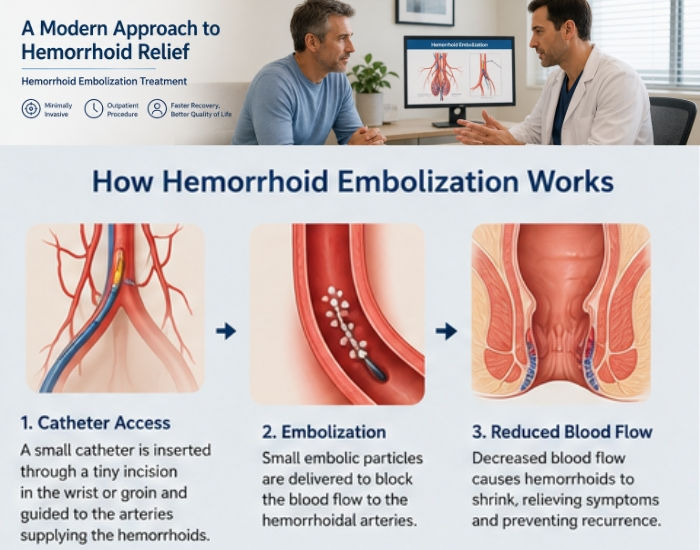
Hemorrhoids, though common, can be a source of discomfort and pain for many individuals. Traditional treatments such as topical creams, dietary changes, and surgical procedures have long been the go-to options. However, a newer approach known as hemorrhoid embolization has emerged as a minimally invasive alternative with promising results. Our experts at Premier vein and vascular center are proud to offer the revolutionary new technique (hemorrhoid embolization) to patients in Houston and Katy areas.

Meet your vein specialist
Dr. Syed Raza, MD
Vascular & Interventional Radiology · Founder, Premier Vein & Vascular Center
Fellowship-trained interventional radiologist, board certified in diagnostic and interventional radiology with a Certificate of Added Qualification (CAQ) in interventional radiology, and a Fellow of the Royal College of Radiologists (UK). Member of SIR and RSNA. Former Chief of Interventional Radiology at UTMB Galveston and Memorial Hermann Memorial City, with 15+ years treating varicose veins, venous reflux and peripheral arterial disease.
What is Hemorrhoid Embolization?
Hemorrhoid embolization, also referred to as trans-arterial embolization, is a minimally invasive procedure aimed at treating symptomatic internal hemorrhoids. Unlike traditional surgical methods like hemorrhoidectomy, which involve the removal of hemorrhoidal tissue, embolization works by reducing blood flow to the hemorrhoidal arteries, thereby shrinking the hemorrhoids.
Quick Answer: Hemorrhoid embolization is a minimally invasive, non-surgical treatment for bleeding internal hemorrhoids. An interventional radiologist guides a thin catheter through a small puncture at the wrist or groin into the arteries that feed the hemorrhoids, then places tiny coils or particles to reduce blood flow. Nothing is cut or removed, there is no incision near the anus, and most patients go home the same day. It is mainly considered for internal hemorrhoids that keep bleeding despite conservative care or banding.

How Does It Work?
Hemorrhoid embolization is performed by board-certified interventional radiologists at Premier vein and vascular center. During a hemorrhoid embolization procedure, the interventional radiologist will insert a catheter into the blood vessels that supply the hemorrhoids. Using advanced imaging techniques such as fluoroscopy or angiography, the radiologist guides the catheter to the targeted arteries. Once in position, small particles or coils are injected through the catheter into these arteries, causing them to clot and block blood flow. By depriving the hemorrhoids of their blood supply, they shrink in size, relieving symptoms such as pain, bleeding, and discomfort.
Benefits of Hemorrhoid Embolization:
- Minimally Invasive: Unlike traditional surgical methods, hemorrhoid embolization is minimally invasive, meaning it involves smaller incisions, less tissue trauma, and typically shorter recovery times.
- Outpatient Procedure: Hemorrhoid embolization is usually performed on an outpatient basis, allowing patients to return home the same day of the procedure.
- Reduced Pain and Discomfort: Since hemorrhoid embolization targets the root cause of hemorrhoids by reducing blood flow, patients often experience less pain and discomfort compared to traditional surgical approaches.
- High Success Rate: Studies have shown that hemorrhoid embolization can be highly effective in treating symptomatic internal hemorrhoids, with many patients experiencing long-term relief from their symptoms.
- Minimal Recurrence: Unlike some other treatments, hemorrhoid embolization has shown promising results in terms of minimizing the risk of hemorrhoid recurrence, providing lasting relief for patients.
Who is a Candidate for Hemorrhoid Embolization?
Hemorrhoid embolization is typically recommended for individuals with symptomatic “internal hemorrhoids” only, that have not responded to conservative treatments such as dietary changes, topical medications, or lifestyle modifications. It may also be suitable for patients who are not candidates for traditional surgical procedures due to underlying health conditions or other factors.
While hemorrhoid embolization is generally considered safe, like any medical procedure, it carries some risks and potential complications. These may include:
- Temporary discomfort or pain at the catheter insertion site
- Bleeding or infection at the catheter insertion site
- Allergic reactions to the contrast dye used during the procedure
- Rarely, damage to surrounding tissues or organs
It’s essential for patients to discuss these risks with our experts at Premier vein and vascular center and ensure they fully understand the potential benefits and drawbacks of the procedure before proceeding.
Conclusion:
Hemorrhoid embolization represents a modern, minimally invasive approach to treating symptomatic internal hemorrhoids. With its high success rates, minimal invasiveness, and promising long-term outcomes, it offers a valuable alternative to traditional surgical methods. However, as with any medical procedure, it’s crucial for patients to consult with our experts at Premier vein and vascular center to determine if hemorrhoid embolization is the right option for them. By staying informed and exploring all available treatment options, individuals can take proactive steps towards managing their hemorrhoid symptoms and improving their quality of life.
Why Hemorrhoids Bleed: The Blood Supply Behind the Problem
Everyone has hemorrhoids. They are normal cushions of blood vessels and connective tissue in the lower rectum and anal canal that help with continence. They only become a medical problem when they swell, bleed, prolapse or cause pain.
Internal hemorrhoids are fed mainly by branches of the superior rectal artery, which comes down from the inferior mesenteric artery in the abdomen. These cushions have a rich arterial supply, which is why the blood from bleeding hemorrhoids is typically bright red. When the cushions become enlarged and engorged, the tissue becomes fragile, and passing stool can tear the surface and cause bleeding.
Hemorrhoid embolization takes advantage of this anatomy. Instead of cutting, tying or stapling the hemorrhoid tissue, an interventional radiologist reduces the arterial inflow from inside the blood vessels. With less blood flowing in, the cushions are less engorged and less likely to bleed.
Internal vs External Hemorrhoids and How They Are Graded
The original article above notes that embolization is intended for internal hemorrhoids. Understanding the difference helps explain why.
| Feature | Internal hemorrhoids | External hemorrhoids |
|---|---|---|
| Location | Above the dentate line inside the rectum | Below the dentate line, under the skin around the anus |
| Main symptom | Painless bright red bleeding, prolapse | Itching, swelling, pain, especially if a clot forms |
| Nerve supply | Few pain nerves | Sensitive skin nerves |
| Main blood supply | Superior rectal artery branches | Middle and inferior rectal vessels |
| Role of embolization | Can be considered for symptomatic cases | Not the usual treatment |
Internal hemorrhoids are commonly graded by how far they prolapse:
- Grade I: Bleed but do not prolapse.
- Grade II: Prolapse with straining and go back in on their own.
- Grade III: Prolapse and need to be pushed back in by hand.
- Grade IV: Stay prolapsed and cannot be pushed back.
Embolization is most often discussed for patients whose main problem is bleeding from grade I to III internal hemorrhoids. Large, permanently prolapsed hemorrhoids may still need a surgical approach.
Rectal Bleeding Should Always Be Evaluated First
One of the most important points we make with every patient: bright red blood is often from hemorrhoids, but not always. Polyps, colorectal cancer, inflammatory bowel disease, anal fissures and other conditions can bleed too, and they need very different care.
Before hemorrhoid embolization is considered, patients generally need an appropriate evaluation of the colon and rectum, often including a colonoscopy, especially if you are over 45, have a family history of colorectal cancer, have had a change in bowel habits, weight loss or anemia, or have not been screened recently. We coordinate with your primary care doctor, gastroenterologist or colorectal surgeon so the cause of bleeding is clear.
Comparing Hemorrhoid Treatment Options
Hemorrhoid treatment usually moves in steps, from simple measures to procedures. Embolization fits alongside, not instead of, these established options.
| Treatment | How it works | Anesthesia | Typical recovery |
|---|---|---|---|
| Fiber, fluids, stool softeners, topical care | Softer stools and less straining reduce swelling and bleeding | None | None |
| Rubber band ligation | A band cuts off blood flow so the hemorrhoid falls off | Usually none | Mild discomfort for a few days; may need several sessions |
| Sclerotherapy or infrared coagulation | Scarring of the hemorrhoid tissue | Usually none | Minimal |
| Hemorrhoid artery ligation | Surgeon ties off feeding arteries through the anus, often with ultrasound guidance | Regional or general | Days to a couple of weeks |
| Hemorrhoidectomy | Surgical removal of hemorrhoid tissue | Regional or general | Often painful for one to several weeks |
| Hemorrhoid embolization | Reduces arterial inflow from inside the blood vessels | Local with light sedation | Most people go home the same day and resume light activity soon after |
What the Hemorrhoid Embolization Procedure Is Like
For patients, the experience is closer to a heart catheterization than to rectal surgery. Nothing is done through the anus during the embolization itself.
- Arrival and preparation. You change into a gown, an IV is placed and light sedation is given so you are relaxed and comfortable.
- Access. The skin over an artery, usually at the wrist or the top of the thigh, is numbed, and a small tube is placed through a needle puncture.
- Mapping the arteries. Under X-ray guidance, a thin catheter is steered to the inferior mesenteric artery and then into the superior rectal branches. Contrast images show the vessels feeding the hemorrhoids.
- Embolization. Tiny coils, microscopic particles or both are placed in the selected branches to reduce inflow, while preserving other circulation to the rectum.
- Finish and recovery. The catheter is removed, the puncture is sealed with pressure or a closure device, and you rest for a short period before going home the same day.
The procedure itself usually takes about an hour or so, depending on the anatomy. Afterward, mild aching in the rectal area, a sense of pressure or a small amount of bleeding for a few days can occur. Most people return to light activities within a day or two.
After the procedure
Bleeding often improves gradually over the following days and weeks rather than stopping instantly, as the engorged cushions settle. Continuing a high-fiber diet, drinking enough water and avoiding straining remain important, because the habits that contributed to hemorrhoids in the first place have not gone away. Some patients with prolapse may still benefit from banding or another treatment afterward, and occasionally a repeat embolization is discussed.
Questions worth asking before you choose a treatment
- Has the cause of my bleeding been confirmed, and is my colon screening up to date?
- Are my hemorrhoids internal, external or both, and what grade are they?
- Would banding or another office treatment be a reasonable first step for me?
- Do I take any medicines, such as blood thinners, that change the plan?
- What should I expect in the first week after the procedure, and when should I call?
- If symptoms come back, what would the next step be?
Bringing these questions to your consultation, along with a list of medications and any previous colonoscopy reports, makes the visit far more productive and helps you make a decision you feel comfortable with.
Everyday Measures That Support Any Hemorrhoid Treatment
- Aim for a diet rich in fiber from vegetables, fruit, whole grains and legumes, or a fiber supplement if your doctor agrees
- Drink enough water through the day so stools stay soft
- Do not linger on the toilet or read on your phone while sitting there
- Respond to the urge to have a bowel movement rather than delaying it
- Stay active, as regular walking helps keep the bowels moving
- Use warm sitz baths for comfort during flare-ups
Seek urgent medical care if you notice:
- Heavy rectal bleeding, passing clots, or bleeding that will not stop
- Dizziness, fainting, a racing heart or shortness of breath with bleeding
- Black, tarry stools, which suggest bleeding higher in the digestive tract
- Severe rectal or abdominal pain, fever or inability to pass stool or gas
- Increasing pain, swelling or a growing lump at a catheter puncture site after a procedure
How We Evaluate Patients for Hemorrhoid Embolization
- Focused history. We review your symptoms, how often and how much you bleed, prolapse, previous treatments, bowel habits, medications including blood thinners, and your colorectal screening history.
- Review of prior testing. We look at colonoscopy or sigmoidoscopy results and any blood counts. If the colon has not been evaluated appropriately, that comes first.
- Imaging and labs as needed. Kidney function and other blood tests are checked before contrast is used, and existing CT or other imaging is reviewed when available.
- A clear plan. We explain whether embolization is a reasonable option for your type of hemorrhoids, how it compares with banding or surgery in your case, and what recovery to expect, coordinating with your other doctors.
Hemorrhoid Embolization in Houston
If bleeding internal hemorrhoids keep coming back despite fiber, topical treatments or banding, or if you want to know whether a non-surgical option is suitable, an interventional radiology consultation can help. Dr. Syed Raza is a fellowship-trained interventional radiologist board certified in diagnostic and interventional radiology by the American Board of Radiology and a Fellow of the Royal College of Radiologists (UK), and a former Chief of Interventional Radiology at UTMB Galveston and Memorial Hermann Memorial City. Our team at the vein and vascular clinic in Houston sees patients from across Greater Houston and Katy. You can read more on our hemorrhoid embolization page, learn about Dr. Raza’s background, or call (832) 321-5355. Most insurance plans, including Medicare, are accepted.
Talk With a Specialist at Premier Vein
Have questions about your symptoms or treatment options? Dr. Syed Raza and the team at Premier Vein & Vascular Center can evaluate your concerns and explain your options clearly. Same-week appointments are usually available, and most insurance plans are accepted.
Frequently Asked Questions
Is hemorrhoid embolization painful?
Most patients feel only the numbing injection at the wrist or groin, and light sedation keeps them comfortable. Afterward, mild rectal aching or pressure for a few days is possible and is usually manageable with simple pain relief.
Does hemorrhoid embolization work for external hemorrhoids?
Embolization is designed for internal hemorrhoids, which are fed by the superior rectal artery. External hemorrhoids have a different blood and nerve supply and are usually treated with other methods.
Do I need a colonoscopy before hemorrhoid embolization?
Many patients do, because rectal bleeding can come from causes other than hemorrhoids, including polyps or cancer. Your care team will decide what evaluation is appropriate based on your age, history and symptoms.
How long is recovery after hemorrhoid embolization?
Most people go home the same day and return to light activities within a day or two. Bleeding usually settles gradually over the following days to weeks.
Can hemorrhoids come back after embolization?
Symptoms can return in some patients, especially if constipation and straining continue. Additional treatments such as banding or a repeat procedure can be considered if needed.
Who performs hemorrhoid embolization?
It is performed by an interventional radiologist, a physician trained in image-guided, catheter-based procedures. They often work alongside a gastroenterologist or colorectal surgeon who evaluates the bowel.
ABOUT PREMIER VEIN & VASCULAR CENTER: Premier Vein & Vascular Center, a leading vein clinic in Houston and among the top specialized vein treatment clinics in the USA, has provided expert vein care for over 20 years. The center offers minimally invasive treatments for varicose veins, spider veins, and deep vein thrombosis, led by Dr. Syed Raza, MD, a Board-Certified Vein Specialist and Interventional Radiologist. Dedicated to pain-free, healthier living, the clinic delivers cutting-edge, patient-centered care for optimal results.
Trusted Health Resources
- Hemorrhoids, National Institute of Diabetes and Digestive and Kidney Diseases (NIH)
- Hemorrhoids, MedlinePlus (NIH)