
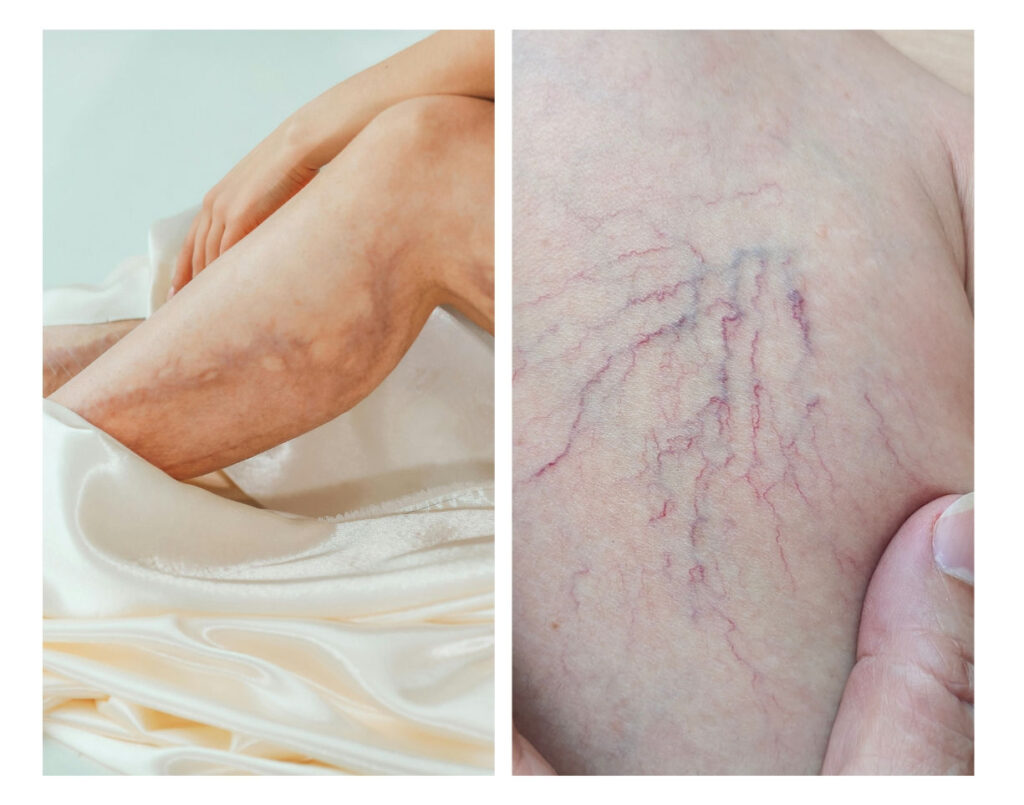
Many people notice veins on their legs that are more visible than usual and wonder whether they are dealing with spider veins or varicose veins. While both types affect the venous system, they differ in appearance, severity, and potential health implications. Understanding the symptoms of spider veins versus varicose veins can help you determine when to seek medical evaluation and find the best vein specialist near me in Houston. Early intervention can prevent progression and improve leg health.
Quick Answer: Spider veins mostly cause visible changes: fine red, blue or purple lines that are flat to the skin, with at most mild itching or burning. Varicose veins cause felt symptoms as well: aching, heaviness, throbbing, swelling, night cramps, restless legs and itchy or darkened skin, typically worse at the end of the day and better with leg elevation. That pattern reflects valve reflux, which a venous duplex ultrasound can confirm. Symptoms like these, even without visible bulging veins, are a reason to see a vein specialist.

Meet your vein specialist
Dr. Syed Raza, MD
Vascular & Interventional Radiology · Founder, Premier Vein & Vascular Center
Fellowship-trained interventional radiologist certified by the American Board of Radiology and the Royal College of Radiologists (UK). Former Chief of Interventional Radiology at UTMB Galveston and Memorial Hermann Memorial City, with 15+ years treating varicose veins, venous reflux and peripheral arterial disease.
1. What Are Spider Veins and Varicose Veins?
Spider veins and varicose veins both occur when the veins in your legs fail to circulate blood efficiently. Spider veins are small, thin, web-like veins visible near the surface of the skin. They are usually red, blue, or purple and are often considered a cosmetic concern.
Varicose veins, on the other hand, are larger, swollen veins that appear twisted and bulging. They often indicate underlying chronic venous insufficiency and may lead to discomfort, swelling, or even skin changes if untreated. Knowing the distinction between the two is essential for seeking the right care.
2. Symptoms of Spider Veins
Spider veins are primarily noticeable for their appearance rather than pain. Common symptoms include:
- Fine, thread-like veins visible on the surface of the skin
- Red, blue, or purple discoloration in web-like or branching patterns
- Mild swelling or itching in some cases
- Cosmetic concern without significant discomfort
While spider veins rarely pose serious health risks, they can signal underlying vein weakness. A consultation with the best vein specialist near me in Houston can determine whether treatment or preventive measures are appropriate.
3. Symptoms of Varicose Veins
Varicose veins often cause both visible changes and physical discomfort. Key symptoms include:
- Large, bulging, or twisted veins that are easily seen under the skin
- Aching, throbbing, or heavy legs, especially after standing for long periods
- Swelling in the calves, ankles, or feet
- Skin discoloration, dryness, or ulcers near the affected veins
- Muscle cramps or restless legs, especially at night
Unlike spider veins, varicose veins can indicate venous reflux or valve failure, which may require medical evaluation and minimally invasive treatment.
4. Spider Veins VS Varicose Veins- Key Differences
Knowing the differences between spider veins and varicose veins can help you decide when to see a vein specialist. Spider veins are small, thin, and close to the skin, while varicose veins are larger, raised, and twisted. In terms of symptoms, spider veins usually cause little or no discomfort, whereas varicose veins often bring aching, heaviness, or swelling in the legs. From a health perspective, spider veins are mostly cosmetic and rarely dangerous, but varicose veins can progress to more serious conditions, such as chronic venous insufficiency or leg ulcers. Because of these risks, spider veins are generally treated for appearance, while varicose veins often need medical attention to prevent complications.
5. When to See a Vein Specialist
It is a good idea to see a vein specialist if you notice pain, swelling, or heaviness in your legs. You should also seek help if you have bulging or twisted veins, skin changes around your legs, leg cramps, or restless legs at night. A family history of vein problems is another reason to consult a doctor. Visiting the best vein specialist near me in Houston ensures you get a proper diagnosis and access to safe, minimally invasive treatments. Early care not only improves how your legs look but also helps prevent more serious problems in the future.
6. Diagnosis and Evaluation
A vein specialist usually starts with a thorough evaluation. This includes reviewing your medical history and discussing your symptoms. They will also perform a physical exam of your legs to check for visible signs of vein disease. Often, a duplex ultrasound is used to look at vein structure and blood flow. This detailed evaluation helps the specialist determine whether spider veins are mostly cosmetic or if varicose veins and underlying vein problems need medical treatment.
7. Treatment Options
Treatment depends on the type and severity of the veins. For spider veins, doctors often use sclerotherapy or laser therapy to close the small, visible veins. For varicose veins, minimally invasive procedures like endovenous laser therapy (EVLT), radiofrequency ablation (RFA), or ultrasound-guided foam sclerotherapy are common.
In addition to these treatments, lifestyle changes—such as wearing compression stockings, exercising regularly, elevating your legs, and maintaining a healthy weight—can help improve vein health. Most of these procedures are done in the doctor’s office and allow patients to return to daily activities quickly.
Symptoms of Spider Veins vs Varicose Veins, Side by Side
The comparison above explains how the two look different. In clinic, what usually tells us more is how they feel. The table below lines up the common symptoms and how often each one points to spider veins, varicose veins or the underlying reflux that drives varicose veins.
| Symptom | Spider veins | Varicose veins | What it suggests |
|---|---|---|---|
| Visible fine red or purple lines | Typical | Often present as well | Dilated skin vessels |
| Mild itching or burning over a cluster | Occasional | Common | Local irritation or reflux nearby |
| Aching, heaviness or tired legs by evening | Uncommon | Very common | Valve reflux and pooling |
| Throbbing over a bulging vein | Rare | Common | Distended, high-pressure vein |
| Ankle swelling with sock marks | Rare | Common | Pressure affecting the tissues |
| Night cramps or restless legs | Rare | Common | Often linked to venous insufficiency |
| Brown staining or eczema near the ankle | No | In advanced cases | Long-standing high vein pressure |
| Bleeding from a vein | Very rare | Possible | Thin-walled vein close to the skin |
| Painful, hard, red cord | No | Possible | Superficial phlebitis (a clot) |
Why Varicose Vein Symptoms Get Worse Through the Day
One feature separates varicose vein symptoms from most other leg complaints: their rhythm. Patients typically wake with comfortable legs, feel fine through the morning, and then notice aching, heaviness and swelling building through the afternoon and evening. Lying down or putting the feet up brings relief within minutes to an hour.
The reason is gravity. When you stand or sit, blood in leaking veins falls back toward the ankle with every heartbeat, and the pressure gradually stretches the vein walls and pushes fluid into the surrounding tissue. Walking helps because each calf contraction pumps blood upward; standing still or sitting for hours makes it worse. Warm weather adds to the effect by relaxing the veins, which is why many Houston patients notice their legs feel worst in summer.
Spider veins on their own do not usually follow this pattern. If your symptoms do, the cause is more likely reflux in larger veins, whether or not they are visible.
Symptoms Often Blamed on Something Else
Some vein symptoms are easy to attribute to aging, a long shift or tired muscles, so patients sometimes live with them for years before connecting them to their veins:
- Night cramps in the calves, often treated with stretching or supplements alone
- Restless legs in the evening, an uncomfortable urge to move that eases with walking
- Itchy, dry or scaly skin on the lower legs, sometimes treated repeatedly as eczema
- Ankle swelling that is blamed on heat, salt or standing
- Heavy, tired legs that make exercise or the end of a workday harder
These symptoms have other possible causes too, which is why an evaluation matters. But when they occur together with visible veins, or improve with leg elevation and compression, venous insufficiency is a likely contributor. Our pages on leg cramping and restless leg syndrome explain the vein connection in more detail.
Keep a simple symptom diary
Before your appointment, jot down for a week when your legs feel worst, what you were doing, whether elevation or compression helped, and whether one leg is worse than the other. Note any swelling marks at bedtime and whether they are gone by morning. This kind of record helps us link your symptoms to the ultrasound findings and is also useful documentation if your insurance plan asks for evidence of symptoms before treatment.
Can You Have Vein Symptoms Without Visible Veins?
Yes. Some people have aching, heaviness and evening swelling but no obvious bulging veins. The refluxing vein may lie deeper under the skin, beneath a layer of fat, or be a main trunk vein that is not visible at all. In others, the only clue is a fan of tiny spider veins around the inner ankle or the arch of the foot, a pattern that often signals high pressure in the veins above.
The reverse is also true. Some people have prominent varicose veins with very few symptoms. Symptoms and appearance do not always match, which is why the decision about treatment is based on both, together with ultrasound findings, rather than on how the legs look alone.
Call 911 or seek emergency care if you notice:
- Sudden swelling, pain and warmth in one calf or thigh
- Chest pain, sudden shortness of breath or coughing up blood
- Bleeding from a varicose or spider vein that does not stop with firm pressure and leg elevation
- A hot, hard, red vein with redness spreading up the leg, or fever
How We Evaluate Your Vein Symptoms
At Premier Vein & Vascular Center, the evaluation is built around connecting your symptoms to what is happening inside the veins.
- Focused history. We ask which symptoms you have, when in the day they peak, what relieves them, and about pregnancies, family history, previous clots and treatments.
- Standing examination. We look at your legs upright, map visible spider, reticular and varicose veins, and check swelling, skin changes and pulses.
- Venous duplex ultrasound. A venous ultrasound in our IAC-accredited vascular lab shows whether valves are leaking, even in veins you cannot see.
- A clear plan. We explain which symptoms are likely due to your veins, which treatments would help them, and what is cosmetic versus medical.
Relieving Symptoms Now and Treating the Cause
Simple measures that help while you wait
- Wear graduated compression stockings during the day, put on in the morning
- Walk regularly and do ankle pumps during long periods of sitting
- Raise your legs above heart level for 15 to 20 minutes in the evening
- Avoid long hot baths, which can make heaviness and swelling worse
- Keep the skin of your lower legs moisturized to reduce itching
Treatment matched to the vein
Spider veins respond well to sclerotherapy, usually over one or more short office sessions. Symptomatic varicose veins are treated at their source, most often by closing the leaking vein with radiofrequency ablation or another minimally invasive method, followed by removal or closure of remaining bulging branches. Most patients notice that aching, heaviness and evening swelling improve within a few weeks of treating the reflux.
Seeing a Vein Specialist in Houston About Your Symptoms
If your legs ache, swell or feel heavy by evening, or you are unsure whether your visible veins are purely cosmetic, an evaluation can give you a clear answer. Patients from Houston, Katy and nearby communities can see Dr. Syed Raza, a fellowship-trained interventional radiologist with more than 15 years of experience treating varicose veins and venous reflux, at our vein clinic in Houston. Same-week appointments are usually available, and most insurance plans, including Medicare, are accepted.
Talk With a Specialist at Premier Vein
Have questions about your symptoms or treatment options? Dr. Syed Raza and the team at Premier Vein & Vascular Center can evaluate your concerns and explain your options clearly. Same-week appointments are usually available, and most insurance plans are accepted.
8. FAQs: Spider Veins vs Varicose Veins
1. Can spider veins turn into varicose veins?
While spider veins are mostly cosmetic, underlying venous insufficiency can develop into varicose veins if untreated.
2. Are varicose veins dangerous?
Varicose veins can lead to chronic venous insufficiency, swelling, ulcers, or blood clots if left untreated.
3. How are spider veins treated?
Spider veins are commonly treated with sclerotherapy or laser therapy, which are minimally invasive and safe.
4. Is treatment painful?
Most non-surgical vein treatments are well-tolerated with minimal discomfort and quick recovery.
5. How do I find the best vein specialist in Houston?
Look for board-certified physicians with experience in minimally invasive vein procedures and positive patient outcomes.
9. Final Thoughts
Knowing the difference between spider veins and varicose veins is essential for maintaining healthy legs. While spider veins are primarily cosmetic, varicose veins may indicate underlying vein disease requiring professional care. Seeking evaluation from the best vein specialist near me in Houston ensures accurate diagnosis, personalized treatment plans, and improved long-term outcomes.
If you notice visible veins, swelling, or discomfort in your legs, Premier Vein offers expert evaluation and modern, minimally invasive treatments to help you achieve healthier, more comfortable legs.
Do spider veins hurt?
Most spider veins cause no pain. Some people notice mild itching, burning or tenderness over a cluster, especially around the ankle. Significant aching, heaviness or swelling usually points to reflux in larger veins rather than to the spider veins themselves.
Why do my legs ache more at night?
Leg aching that builds through the day and peaks in the evening is a typical sign of venous insufficiency, because blood pools in leaking veins while you are upright. Raising the legs and wearing compression during the day often reduce it.
Can varicose veins cause itching?
Yes. Itching over varicose veins or around the ankles is common and comes from inflammation in skin under high vein pressure. Persistent itching with brown discoloration or scaly skin is a sign the condition is affecting the skin.
Do varicose veins cause leg cramps?
Varicose veins and venous insufficiency are a common contributor to night cramps in the calves, although cramps have other causes too. If cramps occur together with visible veins, heaviness or swelling, a vein evaluation is worthwhile.
Why do my veins feel worse in hot weather?
Heat relaxes and widens the veins, which allows more blood to pool in the legs. People with leaking valves often notice more swelling, heaviness and throbbing during hot months.
Should I see a doctor if my varicose veins do not hurt?
Painless varicose veins are not urgent, but they still reflect valve failure and can progress. A check is worthwhile if they are enlarging, if you notice ankle swelling or skin changes, or if a vein has bled or become hard and tender.
Can spider veins be a sign of a bigger vein problem?
Usually not, but clusters of spider veins around the inner ankle or foot, or spider veins that come with aching and swelling, can reflect reflux in deeper veins. An ultrasound is the simplest way to check.
Trusted Health Resources
- Chronic Venous Insufficiency, Society for Vascular Surgery
- Venous Insufficiency, MedlinePlus Medical Encyclopedia (NIH)
- Varicose Veins and Spider Veins, MedlinePlus (NIH)
Disclaimer: This blog is intended for informational purposes only and does not replace professional medical advice, diagnosis, or treatment. Always consult a qualified healthcare provider regarding vein concerns or symptoms.