
Introduction:
Quick Answer: Varicose veins are enlarged, twisted surface veins caused by weak or damaged one-way valves that let blood flow backward and pool in the legs. They are common, especially with family history, pregnancy, age and long hours standing. They can cause aching, heaviness, swelling, cramps and itching, and if untreated for years may lead to skin damage, ulcers or bleeding. A venous duplex ultrasound shows which veins are leaking, and most are now treated in the office with ablation, foam or phlebectomy rather than surgery.
Varicose veins are a common condition that affects millions of people worldwide. While they are often seen as a cosmetic concern, they can also cause discomfort and, in some cases, lead to more serious health issues. In this article, we will delve into the causes, symptoms, and treatment options for varicose veins.
What are Varicose Veins?
Varicose veins are enlarged, twisted veins that typically appear swollen and raised above the surface of the skin. They most commonly occur in the legs and feet, where the veins have to work against gravity to return blood to the heart. Varicose veins can range in size from small, thread-like veins to larger, bulging veins.


Meet your vein specialist
Dr. Syed Raza, MD
Vascular & Interventional Radiology · Founder, Premier Vein & Vascular Center
Fellowship-trained interventional radiologist certified by the American Board of Radiology and the Royal College of Radiologists (UK). Former Chief of Interventional Radiology at UTMB Galveston and Memorial Hermann Memorial City, with 15+ years treating varicose veins, venous reflux and peripheral arterial disease.
Causes of Varicose Veins: Several factors can contribute to the development of varicose veins, including:
- Weak or damaged vein valves: Healthy veins have one-way valves that help keep blood flowing toward the heart. If these valves weaken or become damaged, blood can pool in the veins, causing them to enlarge and become varicose.
- Age: As we age, the valves in our veins may weaken, increasing the risk of varicose veins.
- Gender: Women are more likely to develop varicose veins than men, primarily due to hormonal changes that occur during pregnancy and menopause.
- Pregnancy: Pregnancy can increase the pressure on the veins in the legs, leading to the development of varicose veins.
- Obesity: Excess weight can put added pressure on the veins, increasing the risk of varicose veins.
- Prolonged standing or sitting: Jobs or activities that require long periods of standing or sitting can impede blood flow in the legs, contributing to the development of varicose veins.
Symptoms of Varicose Veins: Varicose veins can cause a range of symptoms, including:
- Swelling in the legs, ankles, or feet.
- Aching or heaviness in the legs, especially after standing or sitting for long periods.
- Cramping or throbbing in the legs.
- Itching or burning sensation around the affected veins.
- Skin discoloration or ulcers near the varicose veins.

Treatment Options: Treatment for varicose veins depends on the severity of the condition and the symptoms experienced. Some common treatment options include:
- Lifestyle changes: Making changes such as exercising regularly, maintaining a healthy weight, elevating the legs when resting, and avoiding prolonged periods of standing or sitting can help alleviate symptoms and prevent varicose veins from worsening.
- Compression stockings: Wearing compression stockings can help improve circulation and reduce swelling and discomfort associated with varicose veins.
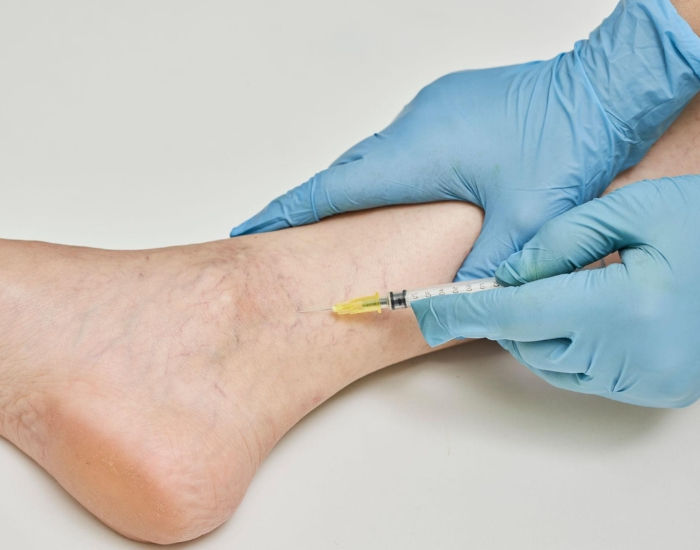
- Sclerotherapy: This minimally invasive procedure involves injecting a solution into the affected veins, causing them to collapse and eventually fade away.
- Endovenous laser treatment (EVLT): EVLT uses laser energy to heat and seal off the affected veins, rerouting blood flow to healthier veins.
- Vein stripping: In more severe cases, surgical procedures such as vein stripping may be necessary to remove the affected veins.
Conclusion: Varicose veins are a common condition that can cause discomfort and affect the quality of life for those affected. While they are often seen as a cosmetic concern, it’s essential to seek treatment if you experience symptoms such as swelling, pain, or skin changes. With various treatment options available, individuals can find relief from varicose veins and improve their overall vascular health. Vein doctors at Premier vein and vascular center can help you overcome the symptoms of Varicose veins. Make an appointment today at Premier vein and vascular center.
How Varicose Veins Develop: The Calf Pump and Valve Failure
Blood in your legs has a long way to travel uphill to reach the heart. Two systems make that possible. The first is the calf muscle pump: each time you take a step, the calf muscles squeeze the deep veins and push blood upward. The second is a series of thin, one-way valves inside the veins that snap shut between pumps so the blood cannot slide back down.
Varicose veins usually start where a valve stops sealing, often at the junction in the groin where the great saphenous vein joins the deep system, or behind the knee where the small saphenous vein joins. Once one valve leaks, the segment below it carries extra pressure. That pressure stretches the next valve, which then fails too, and the problem gradually travels down the leg. The surface branches fed by the leaking vein widen and twist under the load, and that is what you see as a varicose vein.
This explains two things patients often ask us about. First, why the veins look worse at the end of the day: pressure rises the longer you are upright. Second, why they rarely improve on their own: a stretched valve does not regain its shape.
Stages of Varicose Vein Disease
Vein specialists use a standard classification, called CEAP, to describe how far vein disease has progressed. A simplified version helps patients understand where they are and what to watch for.
| Stage | What you see or feel | What it means |
|---|---|---|
| C1 | Spider veins or small reticular veins | Mostly cosmetic; sometimes an early sign of reflux |
| C2 | Visible varicose veins, often with aching or heaviness | Reflux in a surface vein is likely |
| C3 | Ankle and lower-leg swelling | Vein pressure is high enough to push fluid into tissue |
| C4 | Brown staining, eczema, hardened skin above the ankle | Long-standing pressure is damaging the skin |
| C5 | A healed venous ulcer | High risk of the ulcer reopening |
| C6 | An open venous ulcer | Needs combined wound care and vein treatment |
Not everyone moves through every stage, and many people stay at C2 for years. The value of the scale is that it shows when the skin is starting to suffer, which is the point where treatment becomes more urgent.
Complications of Untreated Varicose Veins
Most varicose veins are not dangerous, but over time some people develop problems that are worth knowing about:
- Superficial thrombophlebitis. A clot and inflammation in a surface vein, causing a red, hot, tender cord. It usually settles with treatment, but if it is close to the groin or knee it can extend into a deep vein, so it should be checked with ultrasound.
- Bleeding. Veins near the ankle can become thin-walled. A minor knock or scratch can cause brisk bleeding, sometimes in the shower or during sleep.
- Skin changes. Brown staining, itching, eczema and hardening of the skin above the ankle reflect chronic pressure.
- Venous ulcers. Open wounds, usually near the inner ankle, that heal slowly while reflux persists. Learn more about venous ulcers.
- Deep vein thrombosis. Varicose veins are associated with a somewhat higher risk of DVT, although most people with varicose veins never develop one.
Common Myths About Varicose Veins
A few beliefs keep people from getting help or lead them to worry unnecessarily.
- Only older women get them. Men and younger adults develop varicose veins too, and men often wait longer to seek care.
- They are only cosmetic. Many people with varicose veins have real symptoms that improve after treatment.
- Crossing your legs causes them. There is no good evidence for this; genetics, hormones and long periods of standing or sitting matter far more.
- Treatment means surgery and weeks off work. Most treatments today are office procedures with return to daily activity within a day or two.
- Closing a vein hurts circulation. The leaking vein is already working against you. Closing it lets blood flow through healthier veins and usually improves circulation.
How We Evaluate Varicose Veins at Premier Vein
Varicose veins on the surface are only part of the story. The goal of our evaluation is to find the source.
- Focused history. We ask about your symptoms and how they change during the day, family history, pregnancies, previous clots, medications and any earlier vein treatment.
- Standing examination. We look at the veins, swelling and skin with you standing, and check pulses in your feet to confirm good arterial flow.
- Venous duplex ultrasound. Performed in our IAC-accredited vascular lab, this painless scan follows each vein, shows which valves leak and for how long, and checks the deep veins for clot or obstruction. You can read about what to expect on our venous ultrasound page.
- A clear plan. We explain the findings in plain language, your stage of disease, which treatments fit your veins and whether insurance is likely to require a compression trial first.
Modern Treatment Options Beyond the Basics
Lifestyle measures, compression, sclerotherapy and laser ablation remain important tools. Since vein stripping was the standard, several more options have become routine, and most patients today never need an operating room.
| Option | Typical use | What to expect |
|---|---|---|
| Radiofrequency ablation | Leaking saphenous veins | Catheter through a needle; local anesthesia; walk out |
| Non-thermal ablation | Saphenous veins, especially near nerves | Adhesive or chemical closure; one numbing injection |
| Ultrasound-guided foam sclerotherapy | Deeper or twisting branches, recurrent veins | Injection under ultrasound; no downtime |
| Ambulatory phlebectomy | Large bulging branches | Removal through tiny nicks; no stitches |
In practice, many treatment plans combine them. We usually close the main leaking vein first with radiofrequency ablation or a non-thermal method, wait several weeks to see how much the branches shrink, then treat what remains with ambulatory phlebectomy or foam. This staged approach often means fewer procedures overall.
What Recovery Looks Like After Varicose Vein Treatment
One of the main reasons people put off vein care is fear of a long recovery. With office-based procedures, recovery is usually measured in days rather than weeks.
The first 24 hours
You walk out of the office on your own and are encouraged to take short walks that evening. A compression stocking is usually worn, and most people sleep normally. Some mild aching once the numbing medicine wears off is common and typically responds to walking and, if safe for you, an over-the-counter pain reliever.
The first two weeks
Most patients return to desk work the next day. A tight, pulling sensation along the treated vein is normal, a bit like a pulled muscle, and it peaks around the end of the first week before fading. Bruising and some firm, tender areas along the vein are expected. Strenuous exercise, heavy lifting, hot tubs and long flights are usually postponed for about a week, and a follow-up ultrasound is done to confirm the vein is closed and the deep veins are clear.
The following months
As the closed vein is absorbed, the leg often feels lighter and less swollen, and night cramps and restlessness may ease. Visible branches shrink gradually. Any that remain after several weeks can be treated in a short follow-up session. Skin discoloration from long-standing disease may lighten slowly but does not always disappear completely, which is one more reason not to wait until skin changes appear.
Living With Varicose Veins: Day-to-Day Tips
Whether you are waiting for treatment or recovering from it, a few practical habits make legs more comfortable:
- Put compression stockings on first thing in the morning, before swelling builds
- Take a short walk or do calf raises every hour on long workdays
- Raise your legs on pillows for 20 minutes in the evening
- Keep the skin on your lower legs moisturized to prevent cracking and itching
- Wear comfortable, supportive shoes and avoid very tight waistbands
- Know how to stop a bleeding vein: lie down, raise the leg high and press firmly on the spot
Call 911 or seek emergency care if you have:
- Sudden swelling, pain and warmth in one leg, which may be a deep vein thrombosis
- Chest pain, sudden shortness of breath or coughing up blood
- A varicose vein that keeps bleeding despite firm pressure and leg elevation
- A painful red cord in a vein that is spreading toward the groin, or comes with fever
When to See a Vein Specialist in Houston
If varicose veins ache, swell, itch or are changing the skin around your ankles, or if you simply want to know whether your veins are healthy, it is worth seeing a vein doctor in Houston. Dr. Syed Raza is a fellowship-trained interventional radiologist certified by the American Board of Radiology and the Royal College of Radiologists (UK), with more than 15 years of experience treating varicose veins and venous reflux. Our team serves patients from Houston, Katy and across the region, usually offers same-week appointments and accepts most insurance plans, including Medicare. Call (832) 321-5355 to schedule.
Talk With a Specialist at Premier Vein
Have questions about your symptoms or treatment options? Dr. Syed Raza and the team at Premier Vein & Vascular Center can evaluate your concerns and explain your options clearly. Same-week appointments are usually available, and most insurance plans are accepted.
Frequently Asked Questions
Are varicose veins hereditary?
Family history is one of the strongest risk factors. If one or both parents had varicose veins, your chances are noticeably higher, although lifestyle factors still influence when and how severely they develop.
Can varicose veins go away with exercise?
Exercise improves symptoms by strengthening the calf muscle pump, but it does not repair damaged valves or make existing varicose veins disappear. Treatment is needed to remove or close veins that are already enlarged.
What happens if varicose veins are left untreated?
Some varicose veins stay stable for years, while others gradually cause more swelling, skin discoloration, hardened skin and, in some people, ulcers or bleeding. Regular checks help catch changes early.
Is it safe to close a varicose vein?
Yes. A varicose vein with leaking valves is not helping circulation. When it is closed, blood reroutes through healthier veins, mainly the deep veins, which carry most of the blood from the legs.
What is the difference between varicose veins and spider veins?
Varicose veins are larger, raised and often twisted veins beneath the skin, frequently linked to valve reflux. Spider veins are tiny, flat vessels in the skin that are usually cosmetic but can sometimes signal reflux nearby.
When are varicose veins considered a medical problem?
They are considered medical when they cause symptoms such as aching, swelling, cramps or skin changes and an ultrasound confirms significant reflux. In those cases, most insurance plans, including Medicare, may cover treatment.
ABOUT PREMIER VEIN & VASCULAR CENTER: Premier Vein & Vascular Center, a leading vein clinic in Houston and among the top specialized vein treatment clinics in the USA, has provided expert vein care for over 20 years. The center offers minimally invasive treatments for varicose veins, spider veins, and deep vein thrombosis, led by Dr. Syed Raza, MD, a Board-Certified Vein Specialist and Interventional Radiologist. Dedicated to pain-free, healthier living, the clinic delivers cutting-edge, patient-centered care for optimal results.
Trusted Health Resources
- Chronic Venous Insufficiency, Society for Vascular Surgery
- Venous Insufficiency, MedlinePlus Medical Encyclopedia (NIH)
- Varicose Veins and Spider Veins, MedlinePlus (NIH)