

Meet your vein specialist
Dr. Syed Raza, MD
Vascular & Interventional Radiology · Founder, Premier Vein & Vascular Center
Fellowship-trained interventional radiologist certified by the American Board of Radiology and the Royal College of Radiologists (UK). Former Chief of Interventional Radiology at UTMB Galveston and Memorial Hermann Memorial City, with 15+ years treating varicose veins, venous reflux and peripheral arterial disease.
Are Varicose and Spider Veins Hereditary?
If one or both of your parents have vein conditions, does that mean that you will have the same or similar vein conditions? Which vein disorders are hereditary? Here, we will discuss vein conditions, hereditary predispositions for vein disorders, and what can be done to prevent or treat vein conditions.
Quick Answer: Yes, varicose veins and spider veins are strongly hereditary. Families often share weaker vein walls and valves, so if a parent has vein disease your own risk is higher, and higher still if both parents do. Genes are not the whole story, though. Pregnancy, hormones, age, weight and long hours of standing or sitting decide how early and how severely veins appear. A family history is a reason to watch for symptoms and get an ultrasound early, not a guarantee of vein disease.

Explanation of Varicose Veins and Spider Veins
What are varicose veins? Are they the same thing as spider veins?
Varicose Veins
When a vein is put under stress, it can fail. When the vein fails, it is no longer able to carry blood back to the heart, and the blood pools in the vein. When this pooling occurs, the vein stretches and becomes enlarged, causing it to become varicose. Varicose veins are characterized by swelling in the lower legs, leg cramps, and swollen or twisted veins that are visible and usually discolored under the surface of the skin.
Unfortunately, if left untreated, varicose veins can progress and increase the risk of deep vein thrombosis, or DVT. DVT is a very dangerous blood clot that forms in a deep vein. So, treating varicose veins is essential to maintaining good health.
Spider Veins
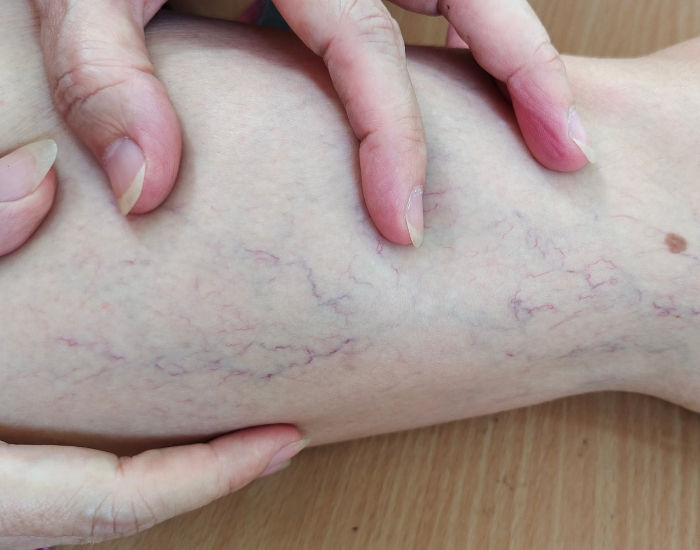
Unlike varicose veins, spider veins (also known as telangiectasias) are thin, visible veins that look like spider webs under the surface of the skin. They are medically harmless, but some choose to have them removed for cosmetic purposes.
Hereditary vs. Lifestyle: What Contributes More?
So, what causes vein conditions? Is there more of a lifestyle component, or is the cause largely hereditary?
Vein conditions are hereditary. In fact, studies show that your risk of developing varicose veins goes up 40% if one of your parents has varicose veins. However, there are other factors as well. Hormonal changes, age, weight, lifestyle, and injury all affect whether an individual will develop varicose veins.
Signs That You May Be Genetically Prone to Varicose and Spider Veins
Vein conditions are caused by an underlying condition called chronic vein insufficiency, or CVI. So, how can you tell if you may be genetically prone to varicose and spider veins? Here are some of the signs.
- One or More Parents have Varicose or Spider Veins
If one parent has varicose or spider veins, the risk is 40%, but if both parents have them, the risk jumps to 90%. - Early Onset
Developing spider or varicose veins in your teens or 20s could mean that you have a predisposition. - Easily Damaged Veins
If your veins bruise or swell as a result of minor injuries, you may have inherited vein weakness. - Visible Veins Not Due to Lifestyle
If your veins appear very visible and unprovoked (without the trauma of prolonged standing, weight gain, pregnancy, or other factors), you may have a genetic leaning toward vein issues. - Family History of CVI
If a family member has suffered from vein conditions, you may be likely to inherit the hereditary vein condition.
Can You Prevent Varicose and Spider Veins If They Run in the Family?
So, you’ve found out that varicose and spider veins run in your family. Don’t lose hope. Many lifestyle modifications can be made to help prevent varicose and spider veins.
- Stay Active
Activities such as swimming, walking, or riding a bike help support vein health. - Elevate Legs When Possible
Raising the legs above the heart for 15 minutes a day helps alleviate the pressure on veins. - Maintain Healthy Weight
Keeping excess weight off will mean putting less pressure on your veins.
- Compression is Your Friend
Wear compression socks when flying or when you have to be on your feet for extended periods of time. - Wear Sensible Shoes
Heels can shorten the muscles of the legs, which puts pressure on the veins. - Enjoy a Vein-Friendly Diet
Eating plenty of fiber and foods low in salt but rich in antioxidants is a great way to take care of your veins. - Limit Alcohol Consumption
Drinking alcohol can cause the veins to constrict, and this increases the risk of the pooling of blood in the veins. - Treat Veins When Problems First Arise
When a problem vein is noted, see a doctor right away. Early treatment is the key to preventing progression.
Treatment Options for Hereditary Varicose and Spider Veins
Although surgery is a viable option for varicose veins, there are innovative treatments that are effective in the alleviation and elimination of varicose veins. Some of these treatments include:
- Endovenous Thermal Ablation
- Ambulatory Phlebectomy
- Sclerotherapy
- Non-Thermal Ablation
- Yoga Therapy for Varicose Veins
Consult your physician for more information.
Is it Possible to Develop Varicose Veins without a Family History?
Varicose veins can develop even if they don’t run in the family. The risk factors listed above, such as a sedentary lifestyle, being overweight or obese, standing for extended lengths of time, drinking alcohol, and eating overly caloric foods, can all be risk factors for vein conditions.
Are there Specific Tests to Determine if I am Genetically Predisposed?
There are no specific tests to determine if you are genetically predisposed to developing vein conditions. If you have a family history and are concerned, consult a physician as soon as possible. Poor vein health can lead to deep vein thrombosis, so it’s important to monitor any changes that occur.
Book a Consultation at Premier Vein and Vascular Center in Houston, TX
If you want to speak to a doctor about your genetic risk of varicose or spider veins, Premier Vein and Vascular Center is the obvious choice. Our doctors are experts in vein treatment, from vein treatment to fibroid treatment to other vascular procedures. We are known for our expertise in vein therapy. For more information, visit our website or schedule a consultation with our team.
How Family History Shapes Your Veins
When we say varicose and spider veins are hereditary, we do not mean there is a single “varicose vein gene.” What families tend to share is the way their veins are built. Vein walls contain collagen and elastic fibers that let them stretch and recoil, and each vein contains thin one-way valves. Inherited differences in the strength of that wall tissue and the structure of the valves can make veins more likely to stretch under pressure.
Once a vein wall starts to widen, the valve leaflets inside it no longer meet properly. Blood leaks backward, pressure rises further down the leg, and the next valve is placed under more strain. This is how a tendency you were born with turns into visible varicose veins over years. Research has identified several genetic regions associated with varicose veins, which supports what clinicians see every day: vein disease clusters in families.
Genes load the dice, but daily life often decides when and how strongly the problem shows. Standing jobs, pregnancies, weight gain and age place the pressure on veins that may already be prone to give way.
Inherited and Acquired Risk Factors Compared
| Factor | Inherited or acquired | How it affects veins | Can it be changed? |
|---|---|---|---|
| Family history of varicose veins | Inherited | Weaker vein walls or valves | No, but early monitoring helps |
| Female sex and hormones | Largely inherited | Hormones relax vein walls | Partly, through choices about hormone therapy |
| Inherited clotting disorders | Inherited | Raise the risk of deep vein clots, which can damage valves | Risk can be managed once known |
| Pregnancy | Acquired | More blood volume and pelvic vein pressure | Compression and activity reduce the impact |
| Prolonged standing or sitting | Acquired | Keeps pressure high in leg veins | Yes, with movement and compression |
| Excess weight | Acquired | Increases abdominal and leg vein pressure | Yes |
| Previous DVT or leg injury | Acquired | Can scar deep veins and valves | Prevention and follow-up help |
Family History and Blood Clots: A Separate but Related Question
Patients sometimes mix up two different family stories: relatives with varicose veins, and relatives who had blood clots. They are worth separating.
There is no routine genetic test that predicts who will develop varicose veins, as the original article notes. Inherited clotting conditions are different. Conditions such as factor V Leiden or the prothrombin gene mutation can be identified with blood tests, and they raise the risk of deep vein thrombosis rather than varicose veins directly. If parents, brothers or sisters have had unexplained clots, especially at a young age, tell your doctor. Testing is not always needed, but knowing the history matters before surgery, pregnancy, long-haul travel or starting estrogen. You can read more about clots on our deep vein thrombosis page.
If Veins Run in Your Family: When to Get Checked
A family history alone does not mean you need testing. But it does mean you should pay attention earlier and not dismiss symptoms as normal. We suggest a vein evaluation if you have a family history and notice:
- Legs that ache, throb or feel heavy by the end of the day
- Ankle swelling that leaves sock marks
- Night cramps or restless legs
- Bulging veins, even small ones, that are getting bigger
- A dense fan of small veins around the inner ankle
- Brown discoloration, itching or dry, scaly skin on the lower legs
- Vein symptoms that started in your teens or twenties, or worsened noticeably with pregnancy
Earlier evaluation usually means smaller, simpler treatment. Catching reflux before skin changes appear avoids the slow progression toward the more serious stages of venous disease.
What to tell your doctor about your family history
- Which relatives had varicose or spider veins, and how severe they were
- Whether any relatives had leg ulcers or vein surgery
- Any family history of blood clots, and at what ages
- Whether vein problems in your family appeared or worsened with pregnancy
Does Treatment Work as Well for Hereditary Varicose Veins?
Yes. Hereditary varicose veins are treated the same way as any other varicose veins, and the treated veins respond just as well. A venous duplex ultrasound shows which veins are refluxing, and the faulty veins are closed or removed so blood reroutes through healthy ones. Common options include endovenous thermal ablation, sclerotherapy and ambulatory phlebectomy, all done in the office under local anesthesia, usually in about an hour, with most patients walking out the same day.
What genetics does influence is the long game. Because the underlying tendency remains, people with a strong family history are more likely to develop new varicose or spider veins in other places over the years. That is not a sign the first treatment failed. It is why we talk about vein health as something to maintain, with periodic check-ups, compression during long periods of standing or travel, and early treatment of new problem veins while they are still small.
Pregnancy when veins run in the family
Women with a family history often notice veins appear or worsen with each pregnancy. Wearing maternity compression stockings from early in pregnancy, if your obstetrician agrees, staying active and raising your legs can reduce symptoms. Many vein treatments are postponed until after pregnancy and breastfeeding, and some veins improve on their own in the months after delivery, so we usually reassess then.
Seek urgent medical care if you notice:
- Sudden swelling, pain, warmth or redness in one leg, which may be a deep vein thrombosis
- Sudden shortness of breath, chest pain or coughing up blood
- Bleeding from a varicose vein that does not stop with firm pressure and leg elevation
- A hard, red, painful lump along a varicose vein, especially with fever
How We Evaluate Patients With a Family History of Vein Disease
- Focused history. We go through your symptoms and your family’s vein and clot history in detail, along with pregnancies, work, activity and medications.
- Examination. We examine both legs standing, looking at the pattern of varicose, reticular and spider veins, swelling and any skin changes.
- Venous duplex ultrasound. Performed in our IAC-accredited vascular lab, this painless scan shows whether the main leg veins have reflux, even before large varicose veins appear.
- A clear plan. We explain whether you need treatment now, preventive measures and monitoring, or cosmetic treatment only, and how often to be rechecked.
Seeing a Vein Specialist in Houston About Hereditary Veins
If varicose or spider veins run in your family and you are starting to notice symptoms or changes, an early assessment is the best way to stay ahead of them. Dr. Syed Raza is a fellowship-trained interventional radiologist certified by the American Board of Radiology and the Royal College of Radiologists (UK), with more than 15 years of experience treating varicose veins and venous reflux. Our vein clinic in Houston offers same-week appointments in most cases, and most insurance plans, including Medicare, are accepted. You can also read more about spider vein treatment or call (832) 321-5355.
Talk With a Specialist at Premier Vein
Have questions about your symptoms or treatment options? Dr. Syed Raza and the team at Premier Vein & Vascular Center can evaluate your concerns and explain your options clearly. Same-week appointments are usually available, and most insurance plans are accepted.
Frequently Asked Questions
Can varicose veins skip a generation?
Vein disease does not follow a simple single-gene pattern, so it can appear to skip generations. A grandparent, aunt or uncle with varicose veins can still be a meaningful part of your family history.
At what age do hereditary varicose veins usually appear?
They can appear at any age, but people with a strong family history often notice veins earlier, sometimes in their teens or twenties. Pregnancy and jobs that involve long standing frequently bring them out sooner.
Are men affected by hereditary varicose veins?
Yes. Women are affected more often, partly due to hormones and pregnancy, but men with a family history commonly develop varicose veins too and are sometimes diagnosed later because they delay seeing a doctor.
If my parents had varicose veins, should I get an ultrasound?
Not necessarily if you have no symptoms. If you notice aching, swelling, bulging veins or skin changes, a venous duplex ultrasound is a sensible next step and can find reflux early.
Will my children inherit my varicose veins?
They may inherit a higher tendency, but it is not certain. Encouraging an active lifestyle, a healthy weight and movement breaks during long periods of sitting or standing can help.
Do hereditary varicose veins come back after treatment?
Treated veins usually stay closed, but new varicose veins can develop elsewhere over time because the inherited tendency remains. Periodic check-ups and early treatment of new veins keep problems small.
ABOUT PREMIER VEIN & VASCULAR CENTER: Premier Vein & Vascular Center, a leading vein clinic in Houston and among the top specialized vein treatment clinics in the USA, has provided expert vein care for over 20 years. The center offers minimally invasive treatments for varicose veins, spider veins, and deep vein thrombosis, led by Dr. Syed Raza, MD, a Board-Certified Vein Specialist and Interventional Radiologist. Dedicated to pain-free, healthier living, the clinic delivers cutting-edge, patient-centered care for optimal results.
Trusted Health Resources
- Chronic Venous Insufficiency, Society for Vascular Surgery
- Venous Insufficiency, MedlinePlus Medical Encyclopedia (NIH)
- Varicose Veins and Spider Veins, MedlinePlus (NIH)