
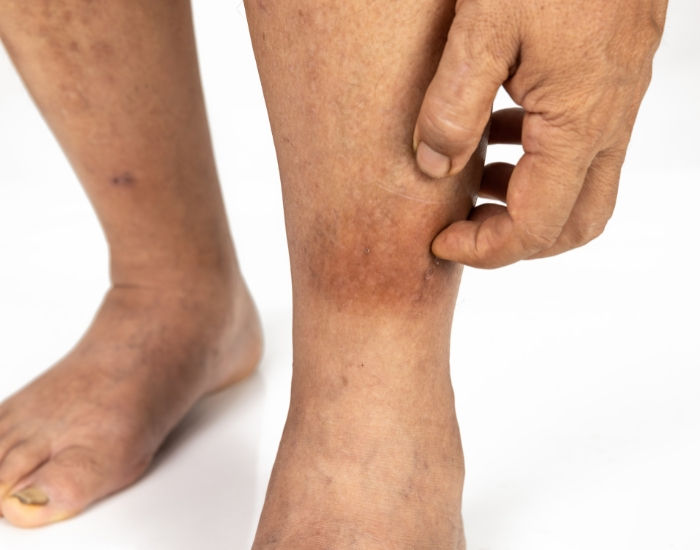
Many people ask, “Why are my legs so itchy?” because persistent leg itching can be frustrating, uncomfortable, and disruptive to daily life. While occasional itchiness may be caused by dry skin or minor irritation, ongoing or intense itching in the legs can signal underlying skin, circulation, or vein-related issues. In some cases, itchy legs may occur without a visible rash, making the cause even harder to identify. Understanding the most common reasons for itchy legs, associated symptoms, and available treatments can help you know when home care is enough and when medical evaluation is important.
Quick Answer: Itchy legs are most often caused by dry skin, irritation from soaps, fabrics or shaving, eczema or insect bites. When itching is concentrated on the lower legs and comes with ankle swelling, visible veins, brown discoloration or heaviness that worsens through the day, poor vein circulation (chronic venous insufficiency) is a common hidden cause. Itching that spreads over the whole body, keeps you awake or comes with other symptoms can also point to conditions such as diabetes, kidney or liver disease, so persistent itching deserves a medical check.

Meet your vein specialist
Dr. Syed Raza, MD
Vascular & Interventional Radiology · Founder, Premier Vein & Vascular Center
Fellowship-trained interventional radiologist, board certified in diagnostic and interventional radiology with a Certificate of Added Qualification (CAQ) in interventional radiology, and a Fellow of the Royal College of Radiologists (UK). Member of SIR and RSNA. Former Chief of Interventional Radiology at UTMB Galveston and Memorial Hermann Memorial City, with 15+ years treating varicose veins, venous reflux and peripheral arterial disease.
1. What Does It Mean When Your Legs Are Itchy?
Itchy legs occur when nerve endings in the skin become irritated, triggering the urge to scratch. This irritation may come from dryness, inflammation, allergic reactions, or circulation problems. While itching is often harmless and temporary, chronic or recurring itchiness may indicate a more complex issue beneath the skin’s surface.
In some individuals, leg itching is linked to poor circulation or vein conditions that affect blood flow. When blood does not move efficiently through the veins, it can cause skin changes, dryness, and inflammation, leading to persistent itching. Understanding the context and accompanying symptoms is key to identifying the underlying cause.
2. Common Reasons Why Legs Feel Itchy
There are many potential answers to the question, “Why are my legs so itchy?” One of the most common causes is dry skin, especially during colder months or in dry indoor environments. When the skin lacks moisture, it becomes irritated and prone to itching.
Circulation-related conditions can also play a significant role. Chronic venous insufficiency occurs when leg veins struggle to return blood to the heart, leading to increased pressure in the lower legs. This pressure can cause inflammation, dryness, and itching. Varicose veins may worsen this effect by further disrupting blood flow. Allergic reactions, contact dermatitis from soaps or fabrics, and skin conditions such as eczema can also trigger itchy legs. In some cases, itching may occur without a visible rash, which is more common with circulation-related causes.
3. Symptoms That May Accompany Itchy Legs
Itchy legs often appear alongside other symptoms that provide clues about the cause. While mild itching may occur on its own, persistent itching is frequently accompanied by noticeable skin or circulation changes.
Common accompanying symptoms include dryness or flaking of the skin, redness or irritation, swelling in the ankles or lower legs, and a feeling of heaviness or fatigue in the legs. Some individuals may notice darkening of the skin near the ankles, thickened skin, or increased itching at night. These symptoms may suggest circulation or vein-related issues rather than simple dryness.
4. How the Cause of Itchy Legs Is Diagnosed
Diagnosing why legs are itchy typically begins with a medical history and physical examination. A healthcare provider may ask about the duration of symptoms, skincare habits, environmental exposures, and whether itching worsens at certain times of day.
If circulation issues are suspected, imaging such as ultrasound may be used to evaluate blood flow and vein function. This helps determine whether venous insufficiency or vein disease is contributing to skin irritation. Identifying the underlying cause allows for targeted treatment rather than temporary symptom relief.
5. Treatment Options for Itchy Legs
Treatment for itchy legs depends on what is causing the irritation. If dry skin is the main problem, moisturizing regularly with fragrance-free lotions can help restore the skin and reduce itching. Avoiding hot showers and harsh soaps also prevents further dryness.
If poor circulation or vein issues cause the itching, treatment focuses on improving blood flow and reducing pressure in the legs. Compression stockings can support veins and reduce swelling, while lifestyle changes like walking regularly, elevating the legs, and maintaining a healthy weight help relieve symptoms. In cases of vein disease, medical treatments may address the root cause and stop the itching from coming back.
Key ways to treat itchy legs:
- Moisturize regularly with fragrance-free lotions
- Avoid hot showers and harsh soaps
- Use compression stockings for better circulation
- Walk or move frequently to improve blood flow
- Elevate legs during rest to reduce pressure
- Maintain a healthy weight
- Seek medical vein treatments if needed
6. When to See a Vein and Vascular Specialist
If you find yourself frequently asking, “Why are my legs so itchy?” and the symptoms persist despite basic skincare measures, it may be time to see a vein and vascular specialist. Ongoing itching accompanied by swelling, skin discoloration, or leg heaviness may indicate circulation problems that require evaluation.
A specialist can assess vein health, identify circulation issues, and recommend appropriate treatment options. Early evaluation may help prevent complications such as skin breakdown or ulcers and improve long-term leg comfort.
7. Tips to Help Prevent Leg Itching
You can take simple steps to prevent or reduce leg itching. Keeping your skin moisturized, especially after bathing, helps fight dryness. Wearing loose, breathable clothing prevents irritation from friction or fabrics. Staying active promotes healthy circulation, while elevating your legs when resting lowers pressure in the veins. Drinking enough water and taking breaks from sitting or standing for long periods can also reduce itching. Small, consistent habits each day can make a big difference in keeping your legs comfortable.
Ways to prevent itchy legs:
- Moisturize skin daily, especially after bathing
- Wear loose, breathable clothing
- Walk or move regularly to improve circulation
- Elevate legs when resting
- Drink plenty of water
- Take breaks from long periods of sitting or standing
Itchy Legs: Matching the Pattern to the Cause
Where the itch is, when it happens and what the skin looks like are the most useful clues. This table summarizes the patterns we see most often.
| Cause | Typical pattern | Helpful clues |
|---|---|---|
| Dry skin (xerosis) | Shins and outer legs, both sides | Fine scaling or cracking; worse after hot showers and in air-conditioned rooms |
| Venous (stasis) dermatitis | Lower leg and inner ankle | Swelling, brown staining, varicose veins; worse in the evening |
| Contact dermatitis | Where a product, fabric or dressing touched the skin | Started after a new soap, lotion, detergent or bandage |
| Folliculitis or razor irritation | Small red bumps at hair follicles | Appears a day or two after shaving or waxing |
| Insect bites | Scattered bumps, often around ankles | Outdoor exposure; very common in warm, humid weather |
| Diabetes or nerve-related itch | Lower legs and feet | Tingling, burning or numbness; sometimes no rash at all |
| Systemic conditions or medicines | Often widespread | Kidney, liver or thyroid disease, or a recently started medication |
Less Obvious Reasons Your Legs Itch
The common causes above explain most cases, but patients often ask us about itching that does not fit a simple pattern.
Itchy legs during or after exercise
When you start walking or running, blood flow to the small vessels in the skin increases sharply. In people who have been less active, that sudden widening of the capillaries can trigger a prickly, itchy feeling in the thighs and calves. It usually settles within 20 to 30 minutes and becomes less noticeable as fitness improves. Hives or swelling of the lips or throat during exercise is different and needs prompt medical attention.
Itching after a shower
Hot water strips natural oils from the skin and widens surface blood vessels, both of which can trigger itching. Shorter, lukewarm showers and moisturizing within a few minutes of drying off help most people. A rare condition causes intense itching after contact with water at any temperature, and persistent cases should be checked by a doctor.
Itching around old injuries or treated areas
Healing skin, scars and areas that were recently treated often itch as nerves regenerate. Vein-treated areas may itch mildly for a short time as the closed veins are broken down. This usually fades within a few weeks.
Medication-related itch
Some blood pressure medicines, pain medicines and other drugs can cause itching without a rash. If the itch began after starting a new medicine, talk to your prescribing doctor rather than stopping it on your own.
Seek urgent medical care if itchy legs come with:
- Hives with swelling of the lips, tongue or throat, or trouble breathing
- Spreading redness, warmth, red streaks or fever
- Sudden swelling, pain and warmth in one leg
- An open wound on the lower leg that is getting larger or draining
- Yellowing of the skin or eyes
How We Evaluate Itchy Legs When Veins May Be Involved
Many causes of itchy legs are best handled by a primary care doctor or dermatologist. When the pattern suggests poor vein circulation, a vein evaluation can find whether reflux is behind the symptoms. At Premier Vein and Vascular Center, the visit includes:
- Focused history. We ask where and when the itching happens, products you use on your skin, medications, how long you stand or sit, prior clots and other conditions such as diabetes or kidney disease.
- Leg and skin examination. With you standing, we check for varicose veins, ankle swelling, brown staining, eczema and hardened skin, and feel the pulses in your feet.
- Venous duplex ultrasound. A painless venous ultrasound in our in-office vascular lab checks for reflux in the leg veins and rules out clots.
- A clear plan. If veins are the cause, we discuss treatment; if not, we explain the findings and suggest the right next step with your primary care doctor or dermatologist.
When Vein Treatment Stops the Itch
When chronic venous insufficiency is driving the itch, moisturizers and creams calm the skin but cannot lower the pressure underneath. Closing the leaking vein does. As the pressure in the lower leg falls, swelling eases and inflammation in the skin settles, and many patients notice the itching improve within weeks.
Options include radiofrequency ablation and other endovenous techniques to seal the main leaking vein, and ultrasound-guided foam sclerotherapy for smaller branches. These are done in the office under local anesthesia, and most patients walk out and return to daily activities within a day or two. Brown staining fades more slowly, often over months, and good skin care remains important.
Getting Itchy Legs Checked in Houston
Houston’s heat, humidity and long hours in air conditioning can be hard on leg skin, and they also make vein symptoms more noticeable. If your legs itch most around the ankles, especially with swelling, darkening skin or visible veins, it is worth having your circulation checked. Dr. Syed Raza, a fellowship-trained interventional radiologist with more than 15 years of experience treating venous disease, sees patients from Houston, Katy and the surrounding area at our Houston vein specialist clinic. Most insurance plans, including Medicare, are accepted, and same-week appointments are usually available.
Talk With a Specialist at Premier Vein
Have questions about your symptoms or treatment options? Dr. Syed Raza and the team at Premier Vein & Vascular Center can evaluate your concerns and explain your options clearly. Same-week appointments are usually available, and most insurance plans are accepted.
8. Frequently Asked Questions
Why are my legs so itchy at night?
Leg itching at night may worsen due to reduced circulation movement, dry skin, or underlying vein conditions.
Can poor circulation cause itchy legs?
Yes, poor circulation and venous insufficiency commonly cause skin irritation and itching in the legs.
Why are my legs itchy without a rash?
Itchy legs without a rash are often linked to circulation problems or dry skin rather than allergies.
Do varicose veins make legs itchy?
Yes, varicose veins can contribute to itching by increasing pressure and inflammation in the legs.
When should itchy legs be checked by a doctor?
If itching is persistent, worsening, or accompanied by swelling or skin changes, medical evaluation is recommended.
9. Final Thoughts
Asking “Why are my legs so itchy?” is common, but persistent itching should not be ignored. While dryness and irritation are frequent causes, ongoing symptoms may signal circulation or vein-related issues. Understanding the underlying cause and seeking timely care can help relieve discomfort and protect long-term leg health.
If you are experiencing ongoing leg itching along with swelling or discomfort, the experienced team at Premier Vein & Vascular Center can help evaluate your symptoms and identify whether vein or circulation issues are contributing factors.
Why do my lower legs itch more than the rest of my body?
The lower legs have fewer oil glands, so they dry out more easily, and they are also where vein pressure is highest. Itching focused around the ankles, especially with swelling or discoloration, often points to vein-related skin changes.
Can diabetes cause itchy legs?
Yes. Diabetes can cause dry skin, poor circulation and nerve changes that all lead to itching, particularly on the lower legs and feet. People with diabetes should check their legs and feet regularly and report any breaks in the skin promptly.
Should I see a dermatologist or a vein doctor for itchy legs?
If the itch is widespread, comes with a rash elsewhere or follows a new product, a dermatologist or primary care doctor is a good first stop. If it is focused on the lower legs with swelling, visible veins or brown staining, a vein evaluation is worthwhile.
Why do my legs itch when I start walking?
Exercise rapidly increases blood flow to the small vessels in the skin, which can create a prickly, itchy feeling, especially in people who are less active. It usually fades within half an hour and lessens as fitness improves.
Can antihistamines help itchy legs?
Antihistamines can help itching caused by allergies, hives or insect bites, and a sedating type may help you sleep. They do little for itching caused by dry skin or vein disease, where moisturizing and treating the cause work better.
Can itchy legs be a sign of a blood clot?
Itching alone is not a typical sign of a blood clot. Sudden swelling, pain, warmth or redness in one leg, however, can signal a deep vein thrombosis and should be checked urgently.
Trusted Health Resources
- Chronic Venous Insufficiency, Society for Vascular Surgery
- Venous Insufficiency, MedlinePlus Medical Encyclopedia (NIH)
- Varicose Veins and Spider Veins, MedlinePlus (NIH)
Medical Disclaimer: This content is for informational purposes only and does not replace professional medical advice, diagnosis, or treatment. Always consult a qualified healthcare provider regarding any medical concerns or symptoms.