
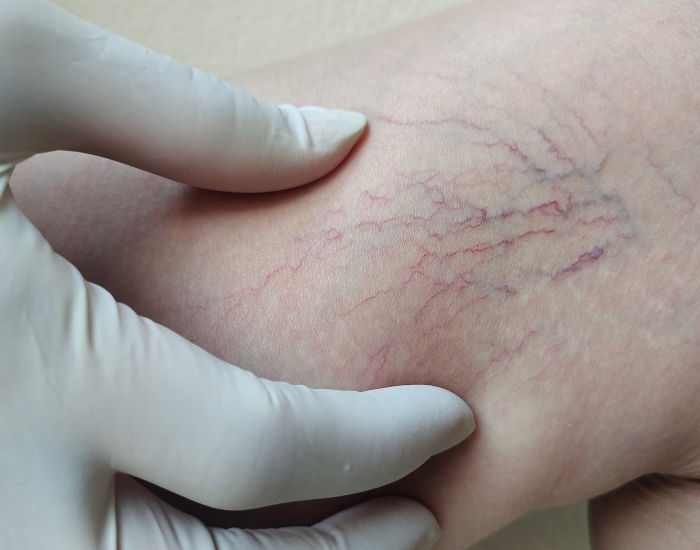
Many people notice their veins becoming more prominent over time and wonder, “Why are my veins so visible?” While visible veins are often harmless, they can sometimes indicate underlying vein or circulation issues that deserve attention. Prominent veins can appear as blue, green, or purple lines on the surface of the skin and are most noticeable on the legs, arms, or hands. Understanding the common causes, potential symptoms, and treatment options can help you determine whether visible veins are normal or require medical care.
Quick Answer: Veins are often visible simply because of fair or thin skin, low body fat, age, warm weather or exercise, and flat visible veins like these are normal. Veins that bulge, twist, ache, itch or cause swelling are different: they usually mean leaking valves and venous insufficiency. New prominent veins on the abdomen, groin, chest or one leg can signal a blocked deep vein and should be checked promptly. A duplex ultrasound tells the difference.

Meet your vein specialist
Dr. Syed Raza, MD
Vascular & Interventional Radiology · Founder, Premier Vein & Vascular Center
Fellowship-trained interventional radiologist certified by the American Board of Radiology and the Royal College of Radiologists (UK). Former Chief of Interventional Radiology at UTMB Galveston and Memorial Hermann Memorial City, with 15+ years treating varicose veins, venous reflux and peripheral arterial disease.
1. What Does It Mean When Veins Are Visible?
Visible veins occur when veins appear closer to the skin’s surface, making them noticeable through the skin. This can be completely normal due to genetics, skin tone, or body composition. For example, people with fair skin or low body fat may see veins more clearly. However, visible veins can also result from vein conditions that affect blood flow, such as varicose veins or venous insufficiency. In these cases, veins may become enlarged, twisted, or more prominent due to increased pressure or weakened vein valves. Recognizing the difference between normal, harmless veins and those linked to vein disease is important for proper care.
2. Common Reasons Why Veins Become More Visible
Several factors can make veins more prominent. Some are natural, while others may indicate underlying health concerns:
- Genetics: Family history often plays a role in vein visibility and vein health.
- Aging: As skin thins and loses elasticity over time, veins become easier to see.
- Low Body Fat: Less fat under the skin makes veins stand out more.
- Exercise: Regular exercise can increase blood flow and temporarily make veins more noticeable.
- Sun Exposure: UV damage can weaken skin and vein walls, increasing visibility.
- Pregnancy: Increased blood volume and pressure on veins can make them more prominent.
- Varicose Veins or Venous Insufficiency: Enlarged or weakened veins can lead to bulging, visible veins that may also cause pain or swelling.
Identifying the reason for visible veins helps determine whether treatment or lifestyle changes are necessary.
3. Symptoms Associated With Prominent Veins
While visible veins are often harmless, they can sometimes come with symptoms that indicate vein disease or circulation problems. People may notice swelling in the legs, ankles, or feet, along with aching, heaviness, or fatigue in the affected areas. Cramping or throbbing sensations may also occur, making the legs feel uncomfortable after standing or walking. In addition, skin changes such as darkening, dryness, or irritation around the veins can appear, sometimes accompanied by itching. When these symptoms occur alongside prominent veins, it is important to seek professional evaluation to prevent complications like skin ulcers or worsening vein health.
4. How Visible Veins Are Diagnosed
Treatment for visible veins depends on whether the veins are purely cosmetic or linked to vein disease. For cosmetic concerns, options include sclerotherapy, where small veins are closed with injections, and laser therapy, which fades superficial veins. Lifestyle changes such as regular exercise, elevating the legs, and maintaining a healthy weight can also improve circulation and reduce vein visibility.
When veins are causing medical issues, treatment focuses on improving vein function. Compression stockings can support the veins and reduce swelling, while minimally invasive procedures like radiofrequency or laser ablation may treat varicose veins. In some cases, medications or ongoing monitoring are needed to address underlying circulatory conditions. Early treatment not only improves appearance but also helps prevent discomfort and potential complications.
5. Treatment Options for Visible Veins
Treatment depends on whether the veins are cosmetic or related to vein disease.
For cosmetic concerns, options may include:
- Sclerotherapy: Injection treatment that closes small, unwanted veins.
- Laser Therapy: Non-invasive procedure to fade superficial veins.
- Lifestyle Changes: Exercise, leg elevation, and maintaining a healthy weight can improve circulation and reduce visibility.
For medical concerns, treatment focuses on improving vein function:
- Compression Stockings: Support veins and reduce swelling.
- Minimally Invasive Vein Procedures: Radiofrequency or laser ablation may treat varicose veins.
- Medication or Monitoring: For underlying circulatory conditions contributing to prominent veins.
Early treatment not only improves appearance but also helps prevent discomfort or complications.
6. When to See a Vein and Vascular Specialist
You should consider seeing a vein and vascular specialist if visible veins are accompanied by pain, heaviness, or fatigue in the legs, or if swelling does not improve with rest. Skin changes such as darkening, sores, or sudden changes in vein appearance or size are also warning signs. A specialist can evaluate your circulation, recommend appropriate treatments, and guide preventive measures to maintain long-term vein health and prevent further problems.
7. Tips to Reduce or Prevent Prominent Veins
While some factors like genetics or age cannot be changed, you can take steps to improve circulation and reduce visible veins.
- Stay Active: Regular walking, cycling, or light exercise helps maintain healthy blood flow.
- Elevate Your Legs: Raise legs above heart level during rest to reduce pressure in veins.
- Wear Compression Stockings: Supports veins and limits swelling.
- Maintain a Healthy Weight: Reduces strain on leg veins.
- Avoid Long Periods of Sitting or Standing: Move regularly to keep blood circulating.
- Protect Skin From Sun Damage: Use sunscreen to maintain skin elasticity and vein health.
Following these habits consistently can support vein health and minimize the visibility of veins over time.
Why Are My Veins So Visible? Normal Veins vs Vein Disease
Not all visible veins are the same. When patients ask us why their veins are so visible, the first thing we do is sort out which type of vein they are seeing, because that largely decides whether it matters medically.
| Type of vein | What it looks like | Usually means | Typical next step |
|---|---|---|---|
| Normal superficial veins | Flat blue or green lines, easier to see on fair or thin skin | Healthy veins showing through the skin | No treatment needed |
| Spider veins | Fine red, purple or blue lines, often in clusters | Small dilated veins near the surface; mostly cosmetic | Sclerotherapy if bothersome |
| Reticular veins | Flat blue-green veins 1 to 3 mm wide, often behind the knee or on the thigh | Mild dilation; sometimes feeding spider veins | Sclerotherapy; ultrasound if symptoms |
| Varicose veins | Raised, twisted, rope-like veins 3 mm or larger | Leaking valves and venous reflux | Venous duplex ultrasound |
| New collateral veins | Newly prominent veins on the abdomen, chest, groin or one thigh | Blood rerouting around a blocked deep vein | Prompt medical evaluation |
A simple rule of thumb: flat veins that are visible because of skin and body type are normal, while veins that bulge, twist, ache or are newly appearing in an unusual place deserve a closer look.
When Visible Veins Suggest a Hidden Problem
Veins are like roads. If a main highway is blocked, traffic spills onto side streets, and those side streets become busy and wide. In the body, a blocked or narrowed deep vein can force blood into small surface veins, which then enlarge and become visible. These are called collateral veins.
Patterns that make us think about this include:
- New prominent veins over the lower abdomen or groin, or across the chest and upper arm
- Visible veins on only one thigh or one side of the body, especially with swelling
- Veins that became noticeable after a deep vein thrombosis, surgery or a long period of immobility
- Visible veins together with persistent swelling of one arm or one leg
These patterns are not common, but they are important, because they point to a problem in the deep veins rather than a cosmetic issue. An ultrasound, and sometimes CT or MRI imaging, can show where the blockage is.
Visible veins in the hands and arms
Prominent veins on the backs of the hands and forearms are very common, particularly with age, thin skin, low body fat, warm weather and after exercise. On their own they are normal and do not signal poor circulation. Arm veins become a concern only when they are painful, hard, red, or appear with swelling of one arm, which can suggest a clot.
How We Evaluate Visible Veins
At Premier Vein & Vascular Center, an evaluation is designed to separate what is cosmetic from what is medical.
- Focused history. We ask when the veins appeared, whether they are changing, and about aching, heaviness, swelling, itching, previous clots, pregnancies, hormones and family history.
- Examination. We look at the type and pattern of the veins with you standing, check for swelling and skin changes, and feel the pulses in your feet.
- The right test. If you have symptoms, bulging veins or an unusual pattern, a venous duplex ultrasound in our IAC-accredited vascular lab shows whether valves are leaking or a deep vein is blocked.
- A clear plan. We tell you plainly whether your visible veins are normal, cosmetic or a sign of vein disease, and what, if anything, needs to be done.
Treating Visible Leg Veins: Matching the Treatment to the Vein
When visible veins are caused by vein disease, the aim is to treat the source, not just the surface. A few principles guide our recommendations:
- Spider and reticular veins respond well to sclerotherapy, usually over two or more short sessions.
- Bulging varicose veins are usually fed by a leaking trunk vein, which can be closed with endovenous ablation through a single needle entry, followed by removal or foam treatment of remaining branches.
- Veins caused by a deep vein blockage should not simply be closed, because they may be important bypass routes. These need a different evaluation and plan.
Most leg vein procedures are done in the office under local anesthesia, take under an hour, and allow you to walk out and return to normal routines within a day or two. You can see how the main options compare on our varicose vein treatment page.
Visible veins in pregnancy
Pregnancy increases blood volume and relaxes vein walls, so veins on the legs, breasts and abdomen often become much more visible. Many fade within a few months after delivery. Compression stockings help leg symptoms during pregnancy, and we usually wait until several months after delivery to decide whether any remaining veins need treatment.
Call 911 or seek emergency care if you notice:
- Sudden swelling, pain, warmth or redness in one leg or arm, which may be a deep vein thrombosis
- Chest pain, sudden shortness of breath or coughing up blood
- A varicose vein that is bleeding and does not stop with firm pressure and elevation
- A red, hot, hard and very painful vein, especially if the redness is spreading
When to See a Vein Doctor in Houston About Visible Veins
If your visible veins are bulging, aching, itching or swelling, if they appeared suddenly in an unusual place, or if they simply bother you and you want to know your options, an evaluation can give you clear answers. Dr. Syed Raza, a fellowship-trained interventional radiologist with more than 15 years of experience treating varicose veins and venous reflux, sees patients from across Houston and Katy. Schedule with our vein doctor in Houston by calling (832) 321-5355; same-week appointments are usually available, and most insurance plans, including Medicare, are accepted for medically necessary care.
Talk With a Specialist at Premier Vein
Have questions about your symptoms or treatment options? Dr. Syed Raza and the team at Premier Vein & Vascular Center can evaluate your concerns and explain your options clearly. Same-week appointments are usually available, and most insurance plans are accepted.
8. Frequently Asked Questions
Why are my veins so visible on my legs?
Visible veins can result from thin skin, low body fat, genetics, or vein conditions such as varicose veins.
Do visible veins indicate a serious problem?
Not always. Many visible veins are harmless, but if they cause pain, swelling, or skin changes, medical evaluation is recommended.
Can exercise make veins more visible?
Yes, increased blood flow during exercise can temporarily make veins more noticeable.
How can I reduce visible veins at home?
Elevate your legs, stay active, wear compression stockings, and maintain a healthy weight to support vein health.
When should I see a doctor for visible veins?
If you experience pain, swelling, heaviness, or skin changes, a vein and vascular specialist should evaluate your veins.
9. Final Thoughts
Visible veins are often a normal part of aging or genetics, but they can also signal underlying vein problems. Understanding why your veins are so visible, monitoring symptoms, and taking preventive steps can help protect vein health and reduce discomfort. When necessary, medical treatments provide both cosmetic and functional relief.
If you are concerned about visible veins or experience discomfort along with prominent veins, the team at Premier Vein & Vascular Center can evaluate your vein health and recommend effective treatment options to improve circulation and comfort.
Do visible veins mean poor circulation?
Not necessarily. Flat veins that show through thin or fair skin are usually healthy. Bulging veins with aching, swelling or skin changes can signal venous insufficiency, which affects how blood returns from the legs.
Why are the veins on my stomach or chest suddenly visible?
New prominent veins on the abdomen or chest can sometimes be collateral veins carrying blood around a blocked deep vein. While there are harmless explanations too, this pattern deserves prompt medical evaluation.
Are visible veins on my hands normal?
Yes, visible hand veins are very common, especially with age, thin skin, low body fat, warm weather or after exercise. They are a concern only if they are painful, hard, red or accompanied by arm swelling.
Why do my veins look blue if blood is red?
Blood in veins is dark red. Veins look blue or green because of the way skin absorbs and reflects different colors of light, so deeper red light is absorbed while bluer light is reflected back to your eye.
Why are my leg veins more visible in summer?
Heat makes veins widen to release body heat, so they fill with more blood and stand out. People with weak vein valves often notice more visible veins, swelling and heaviness in hot weather.
Can visible veins go away on their own?
Veins that become visible with heat, exercise or pregnancy often settle afterward. Varicose and spider veins caused by damaged valves usually do not disappear without treatment.
Trusted Health Resources
- Chronic Venous Insufficiency, Society for Vascular Surgery
- Venous Insufficiency, MedlinePlus Medical Encyclopedia (NIH)
- Varicose Veins and Spider Veins, MedlinePlus (NIH)
Medical Disclaimer: This blog is for informational purposes only and does not replace professional medical advice, diagnosis, or treatment. Always consult a qualified healthcare provider for any medical concerns or symptoms.