
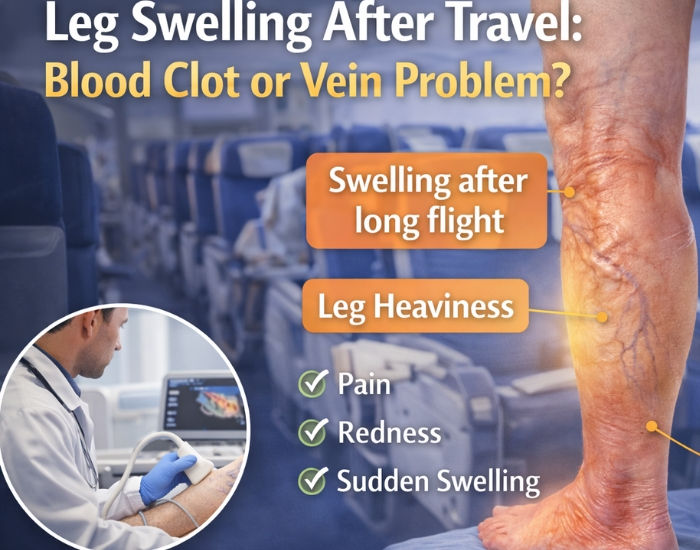
After a long flight, train ride, or car trip, it is common to notice your legs feeling heavy, tight, or even visibly swollen. Shoes may feel snug, socks leave marks around the ankles, and walking becomes uncomfortable. Many travelers dismiss these symptoms as simple fatigue or the result of sitting too long.
Quick Answer: Legs swell after long travel mainly because sitting still switches off the calf muscle pump that pushes blood up from the legs, so gravity lets blood and fluid collect around the ankles. Dry cabin air, salty snacks and too little water add to it. Mild swelling in both legs usually settles within a day or two with walking, elevation and hydration. Swelling that keeps returning can point to vein disease, while painful swelling in one leg, especially with warmth or shortness of breath, needs urgent evaluation for a blood clot.
However, persistent leg swelling after travel can sometimes indicate more than temporary fluid buildup. People often wonder whether it is just normal swelling from sitting, a vein problem, or something more serious like a blood clot. The uncertainty can make travel stressful, especially when symptoms appear gradually or worsen during the journey.
Understanding the causes of leg swelling after travel and knowing the warning signs of serious complications can help travelers stay safe and seek timely care.

Meet your vein specialist
Dr. Syed Raza, MD
Vascular & Interventional Radiology · Founder, Premier Vein & Vascular Center
Fellowship-trained interventional radiologist certified by the American Board of Radiology and the Royal College of Radiologists (UK). Former Chief of Interventional Radiology at UTMB Galveston and Memorial Hermann Memorial City, with 15+ years treating varicose veins, venous reflux and peripheral arterial disease.
Common Causes of Leg Swelling After Travel
Leg swelling after travel can happen for several reasons. Most of these are related to sitting or standing for a long time and changes in how blood flows through the legs. Understanding the causes can help you prevent discomfort and know when to seek medical attention.
1. Fluid Accumulation
When you sit for hours during a flight, train ride, or car trip, blood flow in your legs slows down. Because of gravity, fluid can start to collect in the lower legs and ankles. This leads to swelling, puffiness, and a heavy feeling in the legs. The more time you spend immobile, the more noticeable this swelling can become.
Fortunately, simple measures such as walking during travel, stretching your legs, and elevating them afterward can help reduce fluid buildup and relieve discomfort.
2. Venous Insufficiency
Some people have pre-existing vein problems, like weakened vein valves. These valves normally help blood flow upward toward the heart. When they are not working properly, blood can pool in the veins, causing leg swelling after sitting long time.
Even if the swelling seems mild, it can gradually worsen with repeated long trips or prolonged sitting. People with vein issues may also notice varicose veins, aching, or a feeling of heaviness in their legs, which signals that circulation is not working efficiently.
3. Dehydration and Salt Intake
Travel often changes your routine, including how much you drink and eat. Airplanes, for example, have dry air that can contribute to dehydration. At the same time, airplane meals or snacks may be high in salt.
Both dehydration and high salt intake can worsen swelling. When your body holds onto extra fluid, it can make your legs puffier and heavier. Staying hydrated and limiting salty foods during travel can help reduce these effects.
4. Travel Blood Clots (Deep Vein Thrombosis)
Although less common, prolonged immobility increases the risk of a travel blood clot, also known as deep vein thrombosis (DVT). A clot can partially or completely block blood flow in the leg, causing swelling, pain, or redness.
Because clots can become serious quickly, it is important to recognize the warning signs and act promptly.
Signs to Watch For: Travel Blood Clot Symptoms
Not all swelling is normal. Some swelling after travel is harmless, but a travel blood clot requires urgent attention. Watch for the following signs:
-
Swelling in only one leg, often appearing suddenly
-
Pain, tenderness, or cramping in the calf
-
Warmth or redness in the affected area
-
Skin discoloration
-
Shortness of breath or chest pain (seek emergency care immediately)
If any of these symptoms appear, do not wait. Prompt medical evaluation can detect a blood clot early and prevent serious complications.
How Long Is Swelling Normal?
For most healthy travelers, mild swelling after long flight or car travel is temporary. Typically, it goes away within 24–48 hours after simple measures:
-
Walking and moving the legs
-
Elevating the legs above heart level
-
Staying well hydrated
However, swelling that lasts longer than a couple of days, worsens over time, or comes with pain, warmth, or redness may indicate an underlying vein problem or a blood clot. In such cases, it is important not to ignore the symptoms and to seek professional care.
Preventing Leg Swelling During Travel
Several strategies can help reduce leg swelling after travel:
-
Move Regularly: Walk the aisle or stretch every 1–2 hours on a long flight or drive.
-
Leg Exercises: Flex and extend ankles and knees while sitting to promote blood flow.
-
Compression Stockings: Graduated compression stockings support vein function and reduce pooling.
-
Stay Hydrated: Drink plenty of water and limit alcohol or high-salt foods.
-
Elevate Legs When Possible: Raise legs periodically during travel breaks or in the hotel room.
For individuals with known vein issues, following these steps is especially important.
When to Seek Medical Care
Seek prompt evaluation if leg swelling after travel is accompanied by:
-
Painful, one-sided swelling
-
Warmth, redness, or discoloration
-
Shortness of breath, chest pain, or sudden dizziness
These signs may indicate a travel blood clot or other vascular problem. Even milder, persistent swelling may signal underlying vein disease that warrants professional assessment.
Role of a Vein Specialist
A vein specialist can help determine whether swelling is due to prolonged sitting, underlying vein disease, or more serious complications.
Through a detailed evaluation, which may include a duplex ultrasound, the specialist can:
-
Assess blood flow in the legs
-
Detect blood clots early
-
Identify vein valve issues contributing to chronic swelling
-
Recommend preventive strategies for future travel
-
Offer minimally invasive treatments if vein disease is present
This focused approach provides clarity and reassurance for frequent travelers or anyone experiencing recurrent leg swelling.
Long-Term Considerations
Repeated leg swelling after travel may indicate chronic vein problems. Early intervention can:
-
Reduce discomfort and heaviness in the legs
-
Prevent skin changes, ulcers, or progressive swelling
-
Lower risk of serious clotting events
-
Improve overall leg circulation and mobility
Lifestyle habits such as regular walking, leg exercises, hydration, and wearing compression stockings can support vein health and reduce travel-related swelling.
Why Legs Swell After Long Travel: The Calf Pump at Rest
The key to travel swelling is the calf muscle pump. When you walk, the calf muscles squeeze the deep veins with every step and push blood upward toward the heart. In a cramped seat, that pump is almost switched off. The knees are bent, which can kink the veins behind them, and the seat edge may press on the back of the thighs. Gravity keeps working while the pump does not, so blood and fluid gradually collect around the ankles.
Air travel adds a few extra factors: lower cabin humidity, which makes it easy to drink too little, and long stretches without getting up. Road trips have their own version, as drivers may sit for hours without a break. The result is the familiar picture of tight shoes and sock marks at the end of the journey.
Normal Travel Swelling, Vein Disease or a Blood Clot?
The sections above describe each cause. This side-by-side comparison helps you decide what you are probably dealing with and how quickly to act.
| Feature | Normal travel swelling | Underlying vein disease | Deep vein thrombosis |
|---|---|---|---|
| Legs involved | Both, fairly evenly | Both, sometimes one worse | Usually one leg |
| Pain | Mild tightness | Aching, heaviness | Calf pain or tenderness, often increasing |
| Skin | Normal | Varicose veins, staining near the ankle | Warmth, redness or bluish color |
| Course | Settles within a day or two with walking and elevation | Recurs after every long trip or long workday | Persists or worsens despite elevation |
| What to do | Walk, elevate, hydrate | Schedule a vein evaluation | Seek urgent same-day medical care |
Who Is at Higher Risk of a Travel Blood Clot?
For most healthy travelers, the risk of a clot from a single long trip is low. Health agencies such as the CDC note that the risk rises with trips longer than about four hours and is concentrated in people with other risk factors, including:
- A previous deep vein thrombosis or pulmonary embolism, or a family history of clots
- Recent surgery, hospitalization or leg injury, especially within the past few months
- Active cancer or current cancer treatment
- Estrogen-containing birth control, hormone therapy, pregnancy or the weeks after delivery
- Obesity, older age or limited mobility
- Large varicose veins or known venous disease
If you have one or more of these, talk with your doctor before a long trip. For selected higher-risk travelers, a doctor may recommend specific measures, such as properly fitted compression or, occasionally, a short course of blood-thinning medication. That decision should always be individual and never self-prescribed.
Practical Travel Planning for People With Vein Problems
Beyond the general prevention tips above, a few planning details make a noticeable difference:
- Choose an aisle seat so you can get up without disturbing others
- Keep the space under the seat in front clear so you can stretch and pump your ankles
- Put compression on before you leave home, while your legs are least swollen; below-knee travel stockings of 15 to 20 mmHg suit most people, while those with known vein disease may use their prescribed strength
- Wear loose clothing and comfortable shoes you can slip off and on
- Avoid sleeping pills on long flights unless your doctor advises them, since they keep you still for hours
- Plan driving breaks every one to two hours and walk for a few minutes each stop
- On arrival, take a short walk and then lie down with your legs raised for 15 to 20 minutes
Traveling after a vein procedure
If you have recently had a vein procedure, ask your specialist about travel timing. Many patients are advised to avoid long flights or drives for a short period after treatment and to wear compression and walk regularly when they do travel. We plan procedure dates around major trips whenever possible.
Call 911 or seek emergency care if you notice:
- Sudden shortness of breath, chest pain that worsens with breathing, or coughing up blood
- Swelling, pain and warmth in one leg during or after a trip
- Fainting, a racing heartbeat or severe dizziness
- A leg that becomes pale, cold or numb
How We Evaluate Swelling After Travel
- Focused history. We ask about the trip, when the swelling began, whether one or both legs are affected, and about clot risk factors, medications and prior vein problems.
- Examination. We compare both legs, check for tenderness, warmth, skin changes and varicose veins, and examine the pulses.
- Venous duplex ultrasound. In our IAC-accredited vascular lab, a venous ultrasound checks the deep veins for clot and maps any reflux in the superficial veins.
- A clear plan. If there is a clot, treatment starts promptly and is coordinated with your doctors. If reflux is the cause, we discuss compression and treatment of venous insufficiency so future trips are more comfortable.
Seeing a Vein Specialist in Houston After Travel
Houston is a city of frequent travelers, from business flyers at Bush Intercontinental and Hobby to energy workers on long rotations and families on long road trips across Texas. If your legs swell after every trip, if swelling does not settle within a couple of days, or if you have clot risk factors and a long journey ahead, an evaluation is worthwhile. Dr. Syed Raza is a fellowship-trained interventional radiologist with more than 15 years of experience treating venous reflux, varicose veins and deep vein thrombosis. Our vein clinic in Houston usually offers same-week appointments and accepts most insurance plans, including Medicare.
Talk With a Specialist at Premier Vein
Have questions about your symptoms or treatment options? Dr. Syed Raza and the team at Premier Vein & Vascular Center can evaluate your concerns and explain your options clearly. Same-week appointments are usually available, and most insurance plans are accepted.
Frequently Asked Questions
1. Is leg swelling after travel normal?
Mild swelling from prolonged sitting is common and usually resolves within 1–2 days.
2. How do I tell if swelling is serious?
One-sided swelling with pain, warmth, or redness may indicate a travel blood clot and requires urgent evaluation.
3. Can compression stockings help?
Yes. Graduated compression stockings support blood flow and reduce leg swelling after sitting long time.
4. When should I see a vein specialist?
Persistent swelling, heaviness, or recurrent swelling after travel warrants a professional assessment.
5. What causes swelling after long flight besides clots?
Prolonged immobility, dehydration, high salt intake, and vein valve issues can all contribute to swelling after long flight.
Final Thoughts on Leg Swelling After Travel
Leg swelling after travel is usually a temporary discomfort caused by prolonged immobility. Most cases resolve with movement, hydration, and elevation. However, persistent, painful, or one-sided swelling may indicate a travel blood clot or underlying vein problem.
A vein specialist can evaluate symptoms, identify underlying causes, and provide targeted treatment or preventive strategies. For travelers experiencing frequent or severe leg swelling, professional guidance ensures safety and comfort on future trips.
Addressing swelling early helps protect circulation, reduce discomfort, and prevent complications.
What compression level is best for flying?
For most travelers, below-knee graduated compression socks of about 15 to 20 mmHg are a reasonable choice. People with known vein disease or a history of clots should ask their doctor whether a firmer, professionally fitted stocking is better for them.
Should I take aspirin before a long flight to prevent clots?
Aspirin is not generally recommended as a way to prevent travel-related clots, and it has its own bleeding risks. If you have significant clot risk factors, talk with your doctor before the trip about whether any medication is appropriate for you.
How long after surgery is it safe to fly?
It depends on the type of surgery and your personal clot risk. Recent surgery raises the risk of deep vein thrombosis, so always ask your surgeon before booking long travel, and use compression and regular movement when you do travel.
Can swollen ankles after a flight be a sign of heart problems?
Usually not, as most post-flight swelling is due to sitting still. However, swelling of both legs that does not settle, especially with shortness of breath when lying flat or rapid weight gain, should be checked by your doctor for heart, kidney or other causes.
Is it safe to massage a swollen leg after travel?
Gentle massage is fine for ordinary travel swelling in both legs. Do not massage a leg that is painful, warm, red or swollen on one side only, because that may be a blood clot and needs urgent medical evaluation first.
Does drinking alcohol on a flight make leg swelling worse?
Alcohol can contribute to dehydration and tends to make people sleep and stay still for long periods, both of which can worsen swelling. Limiting alcohol and drinking water regularly is a sensible approach on long trips.
Trusted Health Resources
- Foot, Leg, and Ankle Swelling, MedlinePlus Medical Encyclopedia (NIH)
- Venous Insufficiency, MedlinePlus Medical Encyclopedia (NIH)
Medical Disclaimer:
This content is for educational purposes only and does not replace professional medical advice, diagnosis, or treatment. Always consult a qualified healthcare provider regarding leg swelling after travel or any concerning symptoms.