
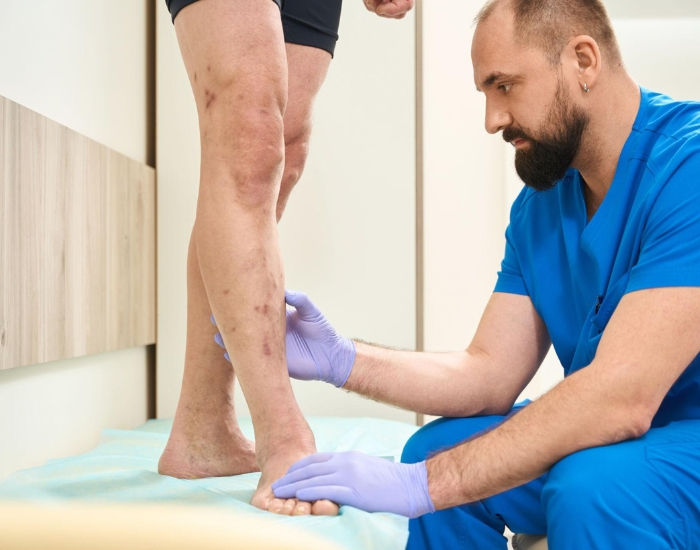
Many people with varicose veins hope that more walking, a pair of compression socks or a few pounds of weight loss will make the bulging veins fade away. It is an understandable hope, and those habits genuinely help how your legs feel. But they do not repair the problem underneath.
In most cases, varicose veins do not go away on their own. The valves inside the vein that allowed blood to flow backward do not heal, so the vein usually stays enlarged and often slowly gets worse over the years. The good news is that symptoms can often be controlled, and when treatment is needed, modern options are minimally invasive.
Quick Answer: No, varicose veins rarely go away without treatment. They form when one-way valves inside the vein fail, and those valves cannot repair themselves. Walking, compression stockings, leg elevation and weight loss can ease aching, heaviness and swelling and may slow progression, but they do not make established varicose veins disappear. The one common exception is pregnancy, when veins that appear may shrink in the months after delivery. If symptoms persist, a duplex ultrasound shows whether minimally invasive treatment makes sense.

Meet your vein specialist
Dr. Syed Raza, MD
Vascular & Interventional Radiology · Founder, Premier Vein & Vascular Center
Fellowship-trained interventional radiologist certified by the American Board of Radiology and the Royal College of Radiologists (UK). Former Chief of Interventional Radiology at UTMB Galveston and Memorial Hermann Memorial City, with 15+ years treating varicose veins, venous reflux and peripheral arterial disease.
Can Varicose Veins Go Away on Their Own?
For almost everyone, the answer is no. Once a vein has stretched and its valves have stopped working, the body does not rebuild them. The vein may look a little less prominent on a cool morning or after a few weeks of compression, but that reflects less blood in it at that moment, not a cure.
Pregnancy is the main exception. Higher blood volume, hormones that relax vein walls and pressure from the uterus can bring out new varicose veins, and some of these improve significantly within a few months after delivery. Veins that are still present a year after pregnancy are unlikely to disappear on their own.
Why Varicose Veins Develop
Leg veins carry blood uphill to the heart. To do this, they rely on small one-way valves and on the calf muscle, which squeezes the veins every time you take a step. When the valves weaken and no longer close tightly, blood falls back down the leg, a problem called reflux. The extra pressure stretches the vein until it becomes twisted and bulging.
The biggest risk factors are family history, age, pregnancy, female sex, excess weight and jobs that involve long hours of standing or sitting. Many people have several of these at once, which is why varicose veins are so common.
Can Damaged Vein Valves Repair Themselves?
No. Vein valves are thin flaps of tissue, and once they have been stretched apart by years of pressure, they do not regrow or tighten again. No supplement, cream, exercise or diet has been shown to restore a failed valve.
That is why treatment focuses on closing or removing the faulty vein rather than trying to fix it. Blood then reroutes naturally through the many healthy veins in the leg, which actually improves circulation.
Does Walking Help Varicose Veins?
Walking is one of the best things you can do for your veins. Each step activates the calf muscle pump, which pushes blood upward and lowers pressure in the lower leg. Many patients notice less aching and swelling on days they walk regularly, and staying active may slow the development of new varicose veins.
What walking cannot do is close a vein that is already refluxing. Think of it as excellent support for your legs, not a cure.
Can Compression Stockings Make Varicose Veins Disappear?
Graduated compression stockings squeeze the leg most at the ankle and gradually less higher up. While you wear them, they narrow the veins, help the valves work better and reduce swelling and heaviness. For many people they are the first step in care, and many insurance plans require a trial of them before covering a procedure.
Once the stockings come off, though, the veins fill again. Compression controls symptoms but does not reverse varicose veins. People with poor arterial circulation, diabetes with nerve damage or fragile skin should check with a doctor before wearing strong compression.
Can Weight Loss Improve Varicose Veins?
Losing excess weight lowers the pressure in the abdominal and leg veins, which can reduce swelling, aching and heaviness and may slow the appearance of new veins. It also makes treatment easier and helps results last. Weight loss does not, however, close veins whose valves have already failed.
Do Home Remedies Actually Work?
Some home measures are genuinely useful for symptoms:
- Raising your legs above heart level for 15 to 20 minutes a few times a day
- Taking short walking breaks during long periods of sitting or standing
- Ankle pumps and calf raises at your desk or during travel
- Avoiding long hot baths, which dilate veins, if they worsen your symptoms
- Moisturizing dry, itchy skin over varicose veins
Other remedies are widely promoted with little evidence behind them. Creams, essential oils, apple cider vinegar and massage do not close refluxing veins. Some supplements, such as horse chestnut seed extract, have shown modest symptom relief in small studies, but they can interact with medications, including blood thinners, so talk with your doctor first.
What Happens If Varicose Veins Are Left Untreated?
Some varicose veins stay mild for many years. Others gradually worsen. Over time, untreated venous insufficiency can lead to:
- More aching, heaviness, cramping and swelling
- Itching and stasis dermatitis, an eczema-like rash on the lower legs
- Brown or purple skin discoloration and hardened skin around the ankles
- Superficial thrombophlebitis, a painful clot in a surface vein
- Bleeding from a thin-walled vein near the skin
- Venous ulcers, slow-healing wounds just above the ankle
Varicose veins are not usually dangerous on their own, but these changes are easier to prevent than to reverse.
When Is Observation Reasonable?
Not every varicose vein needs a procedure. Watching and managing with compression and lifestyle measures is often sensible when the veins cause little or no discomfort, there are no skin changes, and you are comfortable with how your legs look. A baseline ultrasound can still be helpful so that any change later can be compared.
When Should You Consider Professional Treatment?
It is worth seeing a vein specialist when:
- Aching, heaviness, swelling or night cramps affect your work, sleep or activity
- Symptoms continue despite compression and lifestyle changes
- You notice skin discoloration, itching, rash or hardened skin near the ankles
- A varicose vein has bled or become painful, hard and red
- You have a sore on the lower leg that is slow to heal
Sudden swelling and pain in one leg, especially with warmth or redness, may be a deep vein clot and needs same-day medical care. Chest pain or sudden shortness of breath needs a 911 call. Our guide on when to see a vein specialist covers these warning signs in more detail.
Minimally Invasive Treatment Options
Today, varicose vein treatment rarely involves traditional vein stripping. After a venous duplex ultrasound identifies the refluxing veins, options include:
- Radiofrequency ablation, which closes the faulty vein from the inside with controlled heat
- VenaSeal and other non-thermal ablation, which close the vein without heat
- Varithena microfoam and sclerotherapy, which use medication to collapse the vein
- Ambulatory phlebectomy to remove bulging surface veins through tiny punctures
These are done in the office under local anesthesia, usually take under an hour and allow most patients to walk out and return to normal light activity within a day. They do carry risks, such as bruising, tenderness, skin staining and, uncommonly, blood clots, which we discuss before any procedure.
If you live in Houston, Katy or the surrounding area and your varicose veins are not improving with home care, Dr. Syed Raza and our team at Premier Vein & Vascular Center, 19255 Park Row Blvd Ste 201, Houston, TX 77084, can tell you whether treatment would help. Learn more about varicose vein treatment, see how our Houston vein specialist team works, or request an appointment.
Still Experiencing Painful or Bulging Varicose Veins?
Find out whether an evaluation or minimally invasive treatment may be appropriate. Call Premier Vein at (832) 321-5355.
Frequently Asked Questions
Can varicose veins disappear naturally?
Established varicose veins very rarely disappear naturally because the damaged valves inside them do not heal. Veins that appear during pregnancy are the main exception and may shrink in the months after delivery.
Will walking every day cure varicose veins?
Daily walking strengthens the calf muscle pump and can reduce aching and swelling, but it does not close veins with failed valves. It is excellent support for vein health, not a cure.
Can compression socks reverse varicose veins?
No. Compression stockings reduce symptoms and swelling while you wear them, but the veins refill when they come off, and the underlying reflux remains.
Can losing weight eliminate varicose veins?
Weight loss can ease symptoms and lower pressure in the leg veins, but it does not eliminate varicose veins that have already formed.
Are varicose veins permanent?
Without treatment, varicose veins are usually permanent and often slowly progress. Treated veins are closed or removed for good, although new varicose veins can develop over time in other veins.
Can varicose veins get worse with age?
Yes. Vein walls and valves weaken with age, so varicose veins and their symptoms commonly become more noticeable over the years, especially without management.
What happens if I ignore varicose veins?
Some stay mild, but others lead to more pain and swelling, skin discoloration, rash, bleeding, superficial clots or venous ulcers. Regular monitoring is sensible even if you choose not to treat them.
Can I treat varicose veins without surgery?
Yes. Most varicose veins today are treated with minimally invasive office procedures such as radiofrequency ablation, VenaSeal, Varithena or sclerotherapy, done under local anesthesia without traditional surgery.
Do varicose veins always need treatment?
No. Veins that cause no symptoms or skin changes can often be watched and managed with compression and lifestyle measures. Treatment is recommended when symptoms affect your life or complications develop.
When should I see a specialist?
See a vein specialist when symptoms persist despite home care, or when you notice skin changes, bleeding, a painful hard vein or a slow-healing sore. Get same-day care for sudden one-sided leg swelling.
Trusted Health Resources
- Chronic Venous Insufficiency, Society for Vascular Surgery
- Venous Insufficiency, MedlinePlus Medical Encyclopedia (NIH)
- Varicose Veins and Spider Veins, MedlinePlus (NIH)
Medical Disclaimer
This article is for general education and does not replace professional medical advice, diagnosis or treatment. Only a clinical evaluation can determine the cause of your symptoms. If you have sudden or severe symptoms, call 911 or go to the nearest emergency room.