
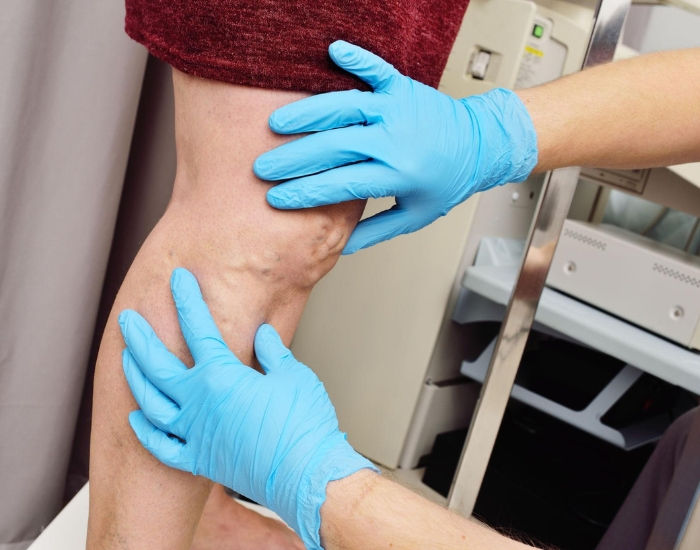
Legs that ache by mid-afternoon, ankles that leave a deep sock mark every evening, or calves that feel heavy after a long shift are easy to put down to a busy day. Often that is all it is. But when the same pain and swelling keep coming back, your veins may be part of the problem, and that is when a vein specialist can help.
You should consider seeing a vein specialist when leg pain, heaviness or swelling returns most days, gets worse as the day goes on and improves when you put your feet up, or when it comes with varicose veins, itching or skin changes around the ankles. Sudden swelling in one leg is different: it needs prompt medical attention the same day.
Quick Answer: See a vein specialist if leg pain, heaviness, cramping or ankle swelling keeps returning, is worse at the end of the day or after standing, eases with leg elevation, or comes with varicose veins, itching, discoloration or a slow-healing sore. These are common signs of chronic venous insufficiency, which a painless duplex ultrasound can confirm or rule out. Sudden one-sided leg swelling, a warm and painful calf, chest pain or shortness of breath need urgent care, not a routine appointment.

Meet your vein specialist
Dr. Syed Raza, MD
Vascular & Interventional Radiology · Founder, Premier Vein & Vascular Center
Fellowship-trained interventional radiologist certified by the American Board of Radiology and the Royal College of Radiologists (UK). Former Chief of Interventional Radiology at UTMB Galveston and Memorial Hermann Memorial City, with 15+ years treating varicose veins, venous reflux and peripheral arterial disease.
When Should You See a Vein Specialist?
A vein specialist evaluates and treats problems with the veins that carry blood back to the heart. The most common reason people come to us is chronic venous insufficiency, a condition in which small one-way valves inside the leg veins stop closing properly. Blood then falls back down the leg and pools, raising pressure in the lower leg. That pressure is what causes the aching, heaviness and swelling so many people live with.
It is reasonable to book an evaluation when:
- Leg pain, heaviness or tiredness happens most days, not just after unusual activity
- Your ankles or lower legs swell by evening and look better in the morning
- You have bulging varicose veins, or spider veins along with symptoms
- The skin around your ankles is itchy, darker, thickened or scaly
- You have had a vein bleed, a painful hard vein or a sore that is slow to heal
- Compression stockings and lifestyle changes have not given you enough relief
Why Leg Pain and Swelling Should Not Always Be Ignored
Venous insufficiency tends to progress slowly. In many people it starts with tired, achy legs, then visible veins, then swelling, and years later skin damage around the ankles and sometimes an open wound called a venous ulcer. Catching the problem early usually means simpler treatment and a better chance of protecting the skin.
Leg pain and swelling also have many causes besides veins, including heart, kidney and thyroid conditions, medications, arthritis, nerve problems and narrowed arteries. A proper evaluation helps make sure the real cause is found instead of guessed.
Seven Symptoms That May Indicate a Vein Problem
- Aching or heaviness that builds during the day, especially after standing or sitting for long periods
- Ankle and lower leg swelling that returns each evening and leaves sock marks
- Visible varicose veins, the twisted, bulging veins usually seen on the calves and inner thighs
- Night cramps or restless legs that interrupt sleep
- Itching, burning or throbbing over or around veins
- Skin changes, such as brown or purple discoloration, a rash or hardened skin near the ankles
- Wounds that heal slowly, usually just above the inner ankle
None of these proves vein disease on its own. They are clues that tell us an ultrasound is worth doing.
Why Legs Feel Heavy or Tired After Standing
When you stand, gravity pulls blood toward your feet. Healthy veins handle this with valves that block backward flow and with the calf muscle, which squeezes the veins and pushes blood upward every time you walk. If the valves leak, blood keeps sliding back down and collects in the lower leg. The extra volume and pressure stretch the vein walls and the surrounding tissue, which feels like heaviness, aching or fatigue.
That is why vein symptoms are often mildest in the morning, worse after a long day on your feet, and better after walking for a while or raising your legs above heart level.
Swollen Ankles and Chronic Venous Insufficiency
Swelling from vein disease usually starts around the ankles and lower calves and is worse in the evening. Pressing a finger into the skin may leave a temporary dent. Over time, fluid and blood products leaking into the tissue can darken the skin and make it firmer.
Both legs can be affected, but venous swelling is often worse on one side. Swelling in both legs that comes with shortness of breath, weight gain or swelling elsewhere in the body may point to the heart, kidneys or liver, and your primary care doctor should be part of that evaluation.
Can You Have Vein Disease Without Visible Varicose Veins?
Yes. The veins that fail first are often deeper under the skin, such as the great saphenous vein running along the inner thigh and calf. Reflux in that vein can cause heaviness, aching and swelling long before any bulging veins appear, and in some people they never appear at all. This is one reason a venous ultrasound is so useful: it looks at the veins you cannot see.
When Leg Swelling Needs Urgent Medical Attention
Some symptoms are not a reason to wait for a routine vein appointment. Seek same-day medical care, or go to an emergency room, if you notice:
- Sudden swelling in one leg, especially with pain, tenderness, warmth or redness in the calf or thigh, which can be a deep vein thrombosis (blood clot)
- Chest pain, sudden shortness of breath, a racing heart or coughing up blood, which can mean a clot has traveled to the lungs. Call 911.
- A red, hot, rapidly spreading area of skin with fever or chills
- A leg or foot that turns cold, pale or numb
- Bleeding from a varicose vein that does not stop after firm pressure and raising the leg
What Happens During a Vein Specialist Consultation?
At Premier Vein & Vascular Center, the first visit is designed to answer one question clearly: are your veins causing your symptoms, and if so, which ones?
- Your history. We ask when your symptoms started, what makes them better or worse, past blood clots, pregnancies, family history, medications and what you have already tried.
- A focused exam. We look at your veins, swelling, skin and ankles and check the pulses in your feet.
- Ultrasound testing. A venous duplex ultrasound maps the veins and measures reflux. If your pulses are weak or your symptoms suggest artery disease, we may also check circulation with an ankle-brachial index.
- A clear explanation. We go over the results with you and explain whether treatment makes sense, what the options are and what your insurance is likely to require.
How Venous Duplex Ultrasound Works
A venous duplex ultrasound combines a picture of the vein with a measurement of blood flow. The sonographer moves a small probe over your leg while you stand or lie tilted, and briefly squeezes your calf. In a healthy vein, blood moves only toward the heart. In a vein with failed valves, the scan shows blood flowing backward, and the length of that backward flow is measured.
The test is painless, uses no needles or radiation and usually takes 30 to 60 minutes. It also checks the deep veins for clots or old scarring, which can change the treatment plan.
Available Treatment Options When Vein Disease Is Confirmed
Treatment is tailored to the ultrasound findings and to what matters most to you. Options include:
- Conservative care: compression stockings, walking, calf exercises, leg elevation and weight management
- Vein ablation: closing the refluxing vein from the inside with heat, as with radiofrequency ablation, or without heat using non-thermal options such as VenaSeal
- Foam treatments: Varithena microfoam or ultrasound-guided foam sclerotherapy
- Ambulatory phlebectomy: removal of bulging surface veins through tiny punctures
Most of these are done in the office under local anesthesia, and most patients walk out and return to normal light activity within a day. You can read more on our varicose vein treatment page, and our guide to the best treatment for painful varicose veins compares the options in more detail.
When to Schedule an Appointment in Houston
If your legs ache, swell or feel heavy most days, or you have varicose veins with skin changes, an evaluation can tell you whether your veins are involved and what can be done. Dr. Syed Raza, a fellowship-trained interventional radiologist, leads our team, and testing is done in our accredited vascular lab.
Premier Vein & Vascular Center is at 19255 Park Row Blvd Ste 201, Houston, TX 77084, serving West Houston, Katy and the surrounding communities. To see a vein specialist in Houston, call (832) 321-5355 or request an appointment online. If you are wondering about cost, see does insurance cover varicose vein treatment.
Leg Pain, Heaviness, or Swelling That Keeps Coming Back?
A vein evaluation can help determine whether venous disease is contributing to your symptoms. Call (832) 321-5355.
Frequently Asked Questions
When should I see a vein specialist for leg swelling?
See a vein specialist when ankle or leg swelling keeps coming back, is worse at the end of the day and improves overnight or with elevation, especially if you also have aching, varicose veins or skin changes. Sudden swelling in one leg needs same-day medical care instead.
What kind of doctor treats leg pain caused by veins?
Vein disease is treated by vein specialists, who may be interventional radiologists, vascular surgeons or other physicians with specialized training in venous disease. At Premier Vein, care is led by Dr. Syed Raza, an interventional radiologist.
Why do my ankles swell every evening?
Evening ankle swelling often happens because gravity pulls fluid into the lower legs during the day, and leaky vein valves make it worse. Heart, kidney or thyroid conditions, certain medications and long periods of sitting can also cause it.
Can venous insufficiency cause pain without visible veins?
Yes. Reflux in deeper veins, such as the great saphenous vein, can cause aching, heaviness and swelling before any varicose veins show on the surface. A duplex ultrasound can find it.
Is one swollen leg more serious than two swollen legs?
New swelling in just one leg is more concerning because it can be a sign of a blood clot and should be checked promptly. Swelling in both legs is more often related to veins, medications or conditions affecting the heart, kidneys or liver.
Can varicose veins cause burning or itching?
Yes. Pressure from pooled blood can irritate the skin and nerves over varicose veins, causing burning, itching or a rash called stasis dermatitis. Burning in both feet with numbness is more likely to be a nerve problem.
How do doctors test for venous reflux?
Doctors use a venous duplex ultrasound, which shows the veins and measures whether blood flows backward after the calf is squeezed. Backward flow lasting longer than about half a second in the superficial veins is generally considered reflux.
Can compression stockings help leg swelling?
Graduated compression stockings often reduce venous swelling and heaviness while you wear them. They manage symptoms but do not repair damaged valves, and people with poor arterial circulation should check with a doctor before using them.
Do I need a referral for a vein specialist?
Many PPO and Medicare plans do not require a referral, while HMO and some Medicare Advantage plans do. Check your plan or ask our office to help verify it.
How do I know whether my leg swelling is from my veins?
Venous swelling is usually worse at night, better in the morning and with elevation, and often comes with aching, varicose veins or skin changes near the ankles. A duplex ultrasound is the test that confirms whether the veins are the cause.
Trusted Health Resources
- Foot, Leg, and Ankle Swelling, MedlinePlus Medical Encyclopedia (NIH)
- Venous Insufficiency, MedlinePlus Medical Encyclopedia (NIH)
Medical Disclaimer
This article is for general education and does not replace professional medical advice, diagnosis or treatment. Only a clinical evaluation can determine the cause of your symptoms. If you have sudden or severe symptoms, call 911 or go to the nearest emergency room.