
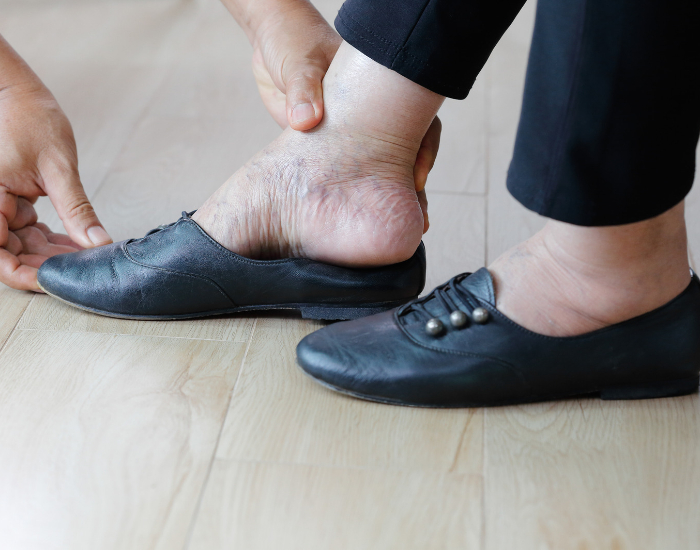
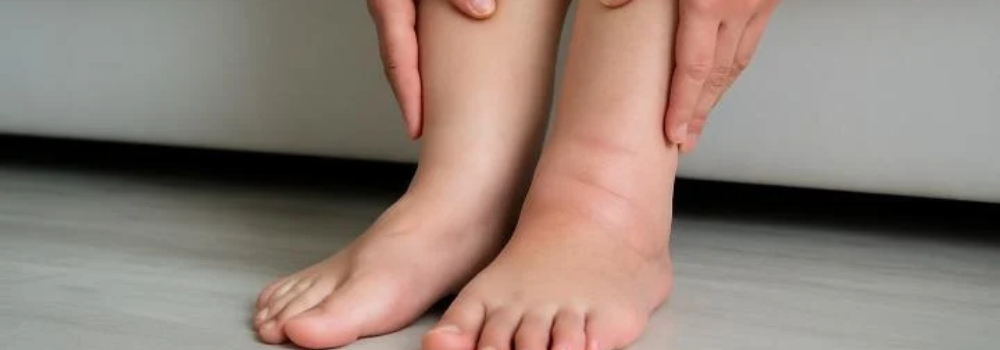
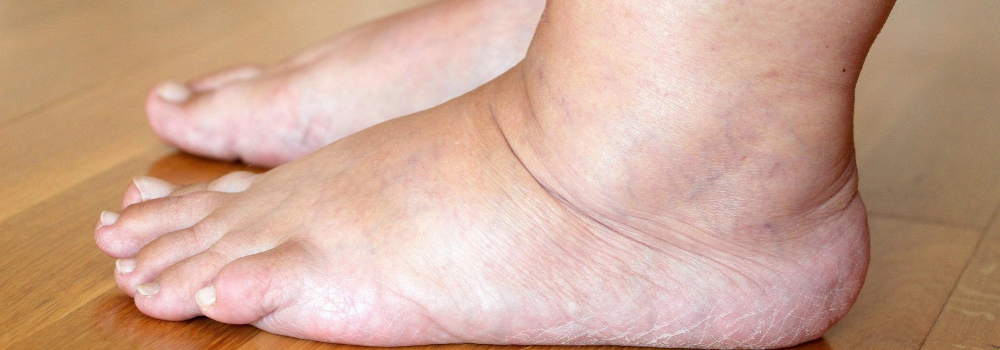
If your ankles look normal in the morning but become puffy, tight, or swollen by late afternoon or evening, you may wonder why the swelling keeps returning. This pattern is common, especially after spending much of the day standing, walking, or sitting. However, recurring evening ankle swelling can sometimes be a sign that blood or fluid is not moving efficiently through the legs.
One important possibility is chronic venous insufficiency, a condition in which the veins have difficulty returning blood from the legs toward the heart. When blood pools in the lower legs during the day, pressure can increase in the veins and fluid can move into surrounding tissues, causing swelling around the ankles and feet.
Quick answer: Swollen ankles at the end of the day can result from prolonged standing or sitting, heat, pregnancy, certain medications, high salt intake, venous insufficiency, or other medical conditions. If the swelling happens regularly, is getting worse, affects only one leg, or occurs with pain, skin changes, shortness of breath, or chest pain, medical evaluation is important.
Table of Contents
- Why Do Ankles Swell More at the End of the Day?
- Common Causes of Evening Ankle Swelling
- Could Venous Insufficiency Be Causing Your Swollen Ankles?
- Why Does Standing All Day Cause Leg Swelling?
- Signs Your Ankle Swelling May Be Vein-Related
- Normal End-of-Day Swelling vs. Swelling That Needs Evaluation
- How Is the Cause of Ankle Swelling Diagnosed?
- How Is Evening Ankle Swelling Treated?
- What Can You Do at Home to Reduce Ankle Swelling?
- When Should You See a Vein Specialist?
- Swollen Ankles at the End of the Day: When to See a Houston Vein Specialist
- Frequently Asked Questions
Why Do Ankles Swell More at the End of the Day?
Gravity plays an important role in lower-leg swelling. While you are upright during the day, your veins must move blood upward from your feet and legs toward your heart. This is more difficult than moving blood through areas of the body closer to the heart.
Your calf muscles and the valves inside your veins help move blood upward. When you walk, your calf muscles contract and help push blood through the veins. The valves then help prevent blood from flowing backward.
If you spend hours standing still or sitting without much leg movement, blood and fluid can accumulate in the lower legs. This can make your ankles appear progressively larger as the day goes on.
For people with chronic venous insufficiency, this effect can be more noticeable. Damaged or weakened vein valves allow blood to flow backward and pool in the legs, increasing pressure within the veins. Swelling around the lower legs and ankles that is worse after prolonged standing or toward the end of the day is a recognized symptom of venous insufficiency.
Important: Evening ankle swelling is not automatically a sign of vein disease. Temporary swelling can occur after a long day on your feet or after sitting for many hours. The key is whether the swelling is persistent, recurrent, worsening, painful, or accompanied by other symptoms.
Common Causes of Evening Ankle Swelling
There are several reasons your ankles may become swollen later in the day. Some are temporary and relatively minor, while others deserve medical evaluation.
1. Standing for Long Periods
Standing for several hours can contribute to swelling because gravity increases pressure in the veins of the lower legs. People who work in jobs that require prolonged standing may notice that their shoes or socks feel tighter by the evening.
This type of swelling may improve after sitting down, moving around, or elevating your legs.
2. Sitting for Long Periods
Long periods of sitting can also contribute to swelling. When your legs remain still, the calf muscles are not contracting regularly to help move blood upward.
Office workers, drivers, travelers, and people who spend much of the day sitting may experience ankle or foot swelling by the evening.
Moving your legs regularly and taking short walking breaks can help encourage circulation.
3. Chronic Venous Insufficiency
Chronic venous insufficiency, or CVI, is one of the more important vein-related causes of recurring lower-leg swelling.
Normally, valves in the leg veins help keep blood moving toward the heart. If those valves become weak or damaged, blood can move backward and pool in the legs. This increases venous pressure and can contribute to edema.
CVI may also cause:
- Swollen ankles and lower legs
- Heavy or tired legs
- Aching or discomfort
- Varicose veins
- Itching or burning
- Skin discoloration
- Leg cramps
- Skin thickening or irritation in more advanced cases
Swelling that repeatedly becomes worse after standing or at the end of the day is particularly worth discussing with a healthcare professional.
Learn more about the basics of chronic venous insufficiency and how venous reflux can affect circulation in the legs.
4. Varicose Veins
Varicose veins are enlarged, twisted veins that commonly develop in the legs. They occur when the veins have difficulty moving blood efficiently back toward the heart.
Some people with varicose veins have no symptoms. Others experience aching, heaviness, swelling, burning, itching, or cramping. Symptoms can become more noticeable after prolonged standing or sitting.
If your ankle swelling occurs alongside visible, bulging veins, it may be useful to have your veins evaluated rather than assuming the swelling is simply from being on your feet all day.
You can learn more about varicose veins and their treatment.
5. Heat
Hot weather can contribute to swelling in the feet and ankles. Heat can cause blood vessels to widen, and some people experience increased fluid accumulation in the lower extremities.
If swelling is noticeably worse during hot weather but improves when you cool down and rest, temperature may be contributing to the problem.
6. Pregnancy
Pregnancy can cause swelling in the feet and ankles, particularly later in pregnancy. Increased fluid volume, hormonal changes, and pressure from the growing uterus can affect circulation in the legs.
Pregnancy can also increase the risk of developing varicose veins.
However, sudden or significant swelling—particularly when accompanied by other concerning symptoms—should be discussed promptly with the pregnancy care team.
Read more about varicose veins and pregnancy.
7. High-Salt Meals
Eating a large amount of sodium can contribute to fluid retention in some people. If your ankles seem noticeably puffier after salty meals, dietary sodium may be part of the explanation.
Reducing excess sodium and maintaining a balanced diet may help, although persistent swelling should not automatically be attributed to diet.
8. Certain Medications
Some medications can contribute to edema. Examples include certain blood pressure medications, nonsteroidal anti-inflammatory drugs, steroids, hormone medications, and some diabetes medications.
If swelling began after starting or changing a medication, speak with your healthcare professional. Do not stop a prescribed medication without medical guidance.
9. Heart, Kidney, or Liver Conditions
Swelling in the legs and ankles can sometimes occur when the body has difficulty regulating fluid. Conditions involving the heart, kidneys, or liver can contribute to edema.
This is especially important when ankle swelling occurs with other symptoms, such as shortness of breath, unusual fatigue, abdominal swelling, changes in urination, or swelling in other areas of the body.
10. Lymphedema or Other Fluid-Drainage Problems
The lymphatic system helps remove excess fluid from tissues. When lymphatic drainage is impaired, swelling can develop in the legs or feet.
Lymphedema may have different characteristics from ordinary end-of-day swelling and requires an appropriate evaluation to determine the cause.
11. Injury or Inflammation
An ankle injury, arthritis, tendon problem, infection, or other inflammatory condition can cause swelling around the ankle.
Unlike simple dependent swelling, inflammation is often associated with pain, tenderness, warmth, redness, or difficulty using the affected area.
12. Deep Vein Thrombosis
Deep vein thrombosis, or DVT, occurs when a blood clot forms in a deep vein. DVT can cause swelling and pain, often affecting one leg.
Sudden swelling in one leg—particularly when accompanied by calf pain, tenderness, warmth, or discoloration—should not be assumed to be ordinary evening swelling.
Learn about recognizing DVT symptoms and when leg swelling requires prompt medical attention.
Could Venous Insufficiency Be Causing Your Swollen Ankles?
If your ankles are relatively normal in the morning but become increasingly swollen as you spend time upright, venous insufficiency is one possible explanation.
With healthy veins, one-way valves help keep blood moving toward the heart. The calf muscles also act as a pump during walking and other leg movements.
When the valves do not close properly, some blood can flow backward. This is called venous reflux. The resulting blood pooling can increase pressure in the lower-leg veins and contribute to swelling.
CVI-related swelling often follows a recognizable pattern:
- Little or no swelling when you first wake up
- Increasing swelling during the day
- More swelling after prolonged standing
- Tighter shoes or socks by evening
- Heaviness or tiredness in the legs
- Improvement after overnight rest or leg elevation
Other symptoms may include varicose veins, aching, itching, burning, nighttime cramps, or skin changes.
If several of these symptoms occur together, a vein evaluation can help determine whether an underlying venous problem is contributing to the swelling.
Why Does Standing All Day Cause Leg Swelling?
Standing itself is not harmful, but remaining upright for long periods places continuous gravitational pressure on the veins in your legs.
When you walk, your calf muscles contract and help push blood upward. When you stand relatively still for hours, this muscle-pump action is reduced.
As a result, blood can remain in the lower legs longer. This can increase pressure in the veins and contribute to fluid moving into surrounding tissues.
People who stand for work—such as healthcare workers, teachers, retail employees, restaurant workers, hairdressers, and factory workers—may notice this pattern particularly often.
Occasional mild swelling after an unusually long day may not indicate a serious problem. But if leg swelling after standing happens almost every day, becomes progressively worse, or occurs with visible veins, skin changes, heaviness, or pain, it deserves further evaluation.
Signs Your Ankle Swelling May Be Vein-Related
Not all ankle swelling comes from a vein problem. However, several features can make a venous cause more likely.
- Swelling develops gradually during the day
- Swelling is worse after prolonged standing
- Both ankles or lower legs are affected
- Swelling improves after sleeping
- Your legs feel heavy or tired
- You have visible varicose veins
- You experience aching, burning, itching, or cramping
- The skin around your lower legs has become darker or reddish-brown
- Socks leave deeper impressions around your ankles
These findings do not prove that you have venous insufficiency, but they can provide useful clues for your healthcare provider.
Normal End-of-Day Swelling vs. Swelling That Needs Evaluation
| Occasional swelling | Swelling that deserves evaluation |
|---|---|
| Occurs after an unusually long day | Happens most days |
| Improves with rest and elevation | Continues or progressively worsens |
| Usually mild | Increasing or significant swelling |
| No major pain or skin changes | Pain, heaviness, itching, or skin changes are present |
| Often affects both ankles | Sudden swelling in one leg is especially concerning |
There is no single pattern that can determine the cause by itself. Persistent or unexplained edema should be assessed in the context of your health history and other symptoms.
How Is the Cause of Ankle Swelling Diagnosed?
A healthcare professional will usually begin by asking when the swelling started, whether it changes during the day, whether one or both legs are affected, and what other symptoms you experience.
Your medical history is also important. Your provider may ask about previous blood clots, varicose veins, surgeries, pregnancy, medications, heart or kidney conditions, activity levels, and recent travel or periods of immobility.
Physical Examination
The legs and ankles may be examined for swelling, skin changes, varicose veins, tenderness, warmth, discoloration, and other abnormalities.
Your provider may also check whether pressing the swollen area leaves a temporary indentation, known as pitting edema.
Venous Ultrasound
If a vein problem is suspected, a duplex ultrasound may be used to evaluate blood flow through the veins and look for problems such as venous reflux or a blood clot.
Learn more about how ultrasound can help diagnose vein problems.
Other Testing
Depending on your symptoms and medical history, additional blood tests, heart evaluation, kidney testing, or other diagnostic studies may be appropriate. The goal is to identify the underlying reason for the swelling rather than simply treating the swelling itself.
How Is Evening Ankle Swelling Treated?
Treatment depends on the cause.
For Swelling Related to Prolonged Standing
Regular movement, leg elevation, and other circulation-supportive measures may help reduce mild swelling associated with prolonged standing or sitting.
For Venous Insufficiency
Treatment may include conservative measures such as exercise, leg elevation, and compression when appropriate. If an underlying vein problem is causing significant symptoms, minimally invasive procedures may be considered.
Learn about conservative treatment options for varicose veins and minimally invasive vein treatments.
For Varicose Veins
If symptomatic varicose veins are contributing to swelling, a vein specialist may recommend treatment based on the affected veins and the results of ultrasound testing.
Possible treatments may include procedures designed to close or remove problematic veins, depending on the individual case.
For Other Medical Causes
If swelling is caused by a medication, heart condition, kidney problem, liver disease, lymphatic disorder, or another medical issue, treatment needs to address that underlying cause.
For example, medications that promote fluid removal may be appropriate for certain conditions, but they should only be used when recommended by a healthcare professional.
Do not assume you need a water pill. Swelling has many possible causes. Taking a diuretic without knowing why your ankles are swollen may not address the underlying problem.
What Can You Do at Home to Reduce Ankle Swelling?
If your swelling is mild and occurs after a long day, several simple measures may help.
Move Regularly
Avoid staying in one position for hours at a time. If you sit for work, stand up and walk periodically. If your job requires standing, change positions and take opportunities to walk when possible.
Elevate Your Legs
When resting, raising your legs can help reduce fluid accumulation in the lower extremities. Elevation is commonly recommended as part of conservative management for edema.
Consider Compression Carefully
Compression stockings may help some people with lower-leg swelling by supporting blood flow and reducing fluid accumulation.
However, compression is not appropriate for everyone. People with certain arterial circulation problems may require evaluation before using compression. Ask your healthcare professional whether compression is appropriate for you and what level is recommended.
Read more about compression socks and varicose veins.
Stay Active
Walking and other appropriate forms of physical activity can help the calf muscles support venous blood flow.
If you have significant leg pain, vascular disease, or another medical condition, ask your healthcare professional which activities are appropriate.
Watch Your Sodium Intake
If you tend to consume large amounts of sodium, reducing excess salt may help decrease fluid retention in some situations. However, persistent ankle swelling should still be evaluated rather than attributed solely to diet.
When Should You See a Vein Specialist?
Consider scheduling an evaluation if your ankles regularly swell by the end of the day, particularly if the swelling has been present for weeks or keeps returning despite simple measures.
You should be especially proactive if you also have:
- Varicose or bulging veins
- Leg heaviness or fatigue
- Aching or burning
- Nighttime leg cramps
- Itching around the veins
- Brown or reddish skin discoloration
- Swelling that is gradually worsening
- A history of DVT or another venous condition
- Skin sores near the ankle
These symptoms can occur with chronic venous disease and may benefit from a vascular evaluation. Untreated venous disease can sometimes contribute to progressive skin changes and venous ulcers.
When Is Ankle Swelling an Emergency?
Not every swollen ankle requires emergency care, but certain symptoms should not be ignored.
Seek urgent medical attention if you develop sudden swelling in one leg, especially with calf pain, tenderness, warmth, or discoloration. These symptoms can occur with DVT.
You should also seek emergency medical care for leg swelling accompanied by:
- Shortness of breath
- Chest pain
- Difficulty breathing
- Coughing up blood
- Fainting or severe weakness
Shortness of breath or chest pain with unexplained leg swelling can indicate a serious cardiovascular or blood-clot-related problem and requires immediate attention.
Swollen Ankles at the End of the Day: When to See a Houston Vein Specialist
If your ankles repeatedly become swollen by the end of the day, especially after standing or walking, it is worth determining why the swelling occurs rather than simply treating the symptom.
At Premier Vein & Vascular Center, our team evaluates patients with symptoms that may be related to venous disease, including leg swelling, heaviness, varicose veins, aching, and other circulation concerns.
A vascular evaluation can help determine whether chronic venous insufficiency, venous reflux, varicose veins, or another vascular condition may be contributing to your symptoms. Depending on your situation, ultrasound imaging may be used to evaluate blood flow and the condition of the veins.
Premier Vein & Vascular Center serves patients throughout the Houston area and offers consultations for a range of venous and vascular conditions.
Ready to find out why your ankles keep swelling? Contact Premier Vein & Vascular Center at (832) 321-5355 or visit our contact page to request a consultation.
Frequently Asked Questions
Why are my ankles swollen at the end of the day but normal in the morning?
Swelling that develops during the day can occur because fluid accumulates in the lower legs while you are standing or sitting upright. Chronic venous insufficiency can make this pattern more noticeable because weakened vein valves allow blood to pool in the legs.
Is it normal for ankles to swell after standing all day?
Mild temporary swelling can occur after prolonged standing. However, swelling that happens regularly, becomes worse over time, or occurs with pain, heaviness, varicose veins, or skin changes should be evaluated to determine the cause.
Can varicose veins cause swollen ankles?
Yes. Varicose veins can occur alongside chronic venous disease, which may cause aching, heaviness, and swelling in the lower legs. Symptoms can become worse after prolonged standing.
How can I reduce swollen ankles at night?
For mild swelling associated with a long day, moving regularly, elevating your legs while resting, staying active, and addressing excess dietary sodium may help. Compression stockings may also be appropriate for some people, but ask a healthcare professional whether compression is safe for you.
Can sitting all day cause swollen ankles?
Yes. Sitting in one position for a long time can contribute to fluid accumulation in the legs and feet. Regular movement can help reduce prolonged pooling of fluid.
Why is one ankle more swollen than the other?
Swelling that is noticeably greater on one side deserves closer attention, particularly if it develops suddenly or is accompanied by pain, warmth, tenderness, or discoloration. A blood clot is one possible cause, although there are other explanations.
Learn more about why one leg may be more swollen than the other.
When should I worry about swollen ankles?
You should seek medical evaluation if the swelling is persistent, unexplained, worsening, or associated with pain or skin changes. Sudden one-sided swelling or swelling accompanied by shortness of breath or chest pain requires urgent medical attention.
Can compression socks help swollen ankles?
Compression garments may help reduce some types of lower-leg edema and support venous circulation. However, they are not appropriate for every person, particularly those with certain arterial circulation problems. Ask a healthcare professional before beginning compression therapy.
Final Thoughts
Swollen ankles at the end of the day are often related to prolonged standing, sitting, heat, or temporary fluid accumulation. But when the pattern happens repeatedly, it can also be a sign of chronic venous insufficiency, venous reflux, varicose veins, or another medical condition.
Pay attention to the pattern. If your ankles are consistently more swollen in the evening, your legs feel heavy or achy, you have visible varicose veins, or you notice skin changes, a vascular evaluation may help identify the underlying cause.
Sudden swelling in one leg, particularly with pain, or swelling accompanied by chest pain or shortness of breath should be treated as an urgent medical concern.
If you are in the Houston area and concerned about recurring ankle or leg swelling, contact Premier Vein & Vascular Center at (832) 321-5355 to discuss your symptoms and evaluation options.
Medical Disclaimer
This article is intended for general educational purposes only and should not be considered medical advice, diagnosis, or treatment. Ankle and leg swelling can have many different causes, and the appropriate evaluation depends on your symptoms, medical history, medications, and other factors. If you have persistent, severe, sudden, or unexplained swelling—or symptoms such as chest pain, shortness of breath, or sudden one-sided leg swelling—seek appropriate medical care promptly.