
Leg Cramps & Circulation
Published September 21, 2026 · Premier Vein & Vascular Center
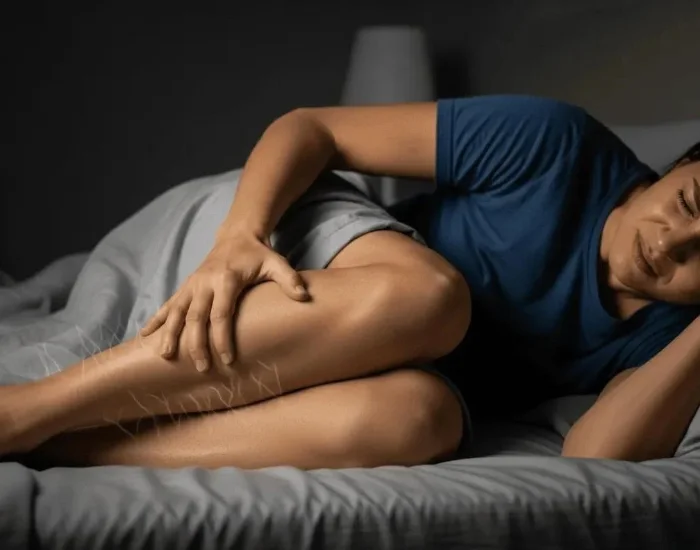
Waking up with a sudden, painful calf or leg cramp can be startling. The muscle may tighten without warning, feel hard to the touch and remain sore even after the cramp releases.
Nighttime leg cramps are common and can happen for many reasons, including muscle fatigue, prolonged sitting or standing, dehydration, medication effects and age-related changes. In some people, recurring leg cramps may also occur alongside circulation problems involving the arteries or veins.
The pattern of your symptoms matters. A brief muscle spasm after an unusually active day is different from recurring cramps accompanied by leg swelling, heaviness, skin changes, pain while walking or other circulation symptoms.
This guide explains the common causes of nighttime leg cramps, when they may indicate a circulation problem, what you can do for relief and when it may be appropriate to see a doctor.
- Same-Week Appointments
- Insurance Accepted
- Minimally Invasive Treatments
- Experienced Vascular Care
Quick Answer: What Causes Leg Cramps at Night?
Nighttime leg cramps are sudden involuntary muscle contractions that commonly affect the calf, foot or thigh. They may occur after muscle overuse, prolonged inactivity, dehydration, pregnancy, certain medications or age-related changes. Recurring cramps can sometimes occur alongside nerve or circulation disorders, so cramps that are frequent, severe or accompanied by swelling, skin changes, weakness or pain while walking deserve medical evaluation.
Table of Contents
- What Are Nighttime Leg Cramps?
- What Causes Leg Cramps at Night?
- Can Poor Circulation Cause Leg Cramps?
- Can Varicose Veins Cause Nighttime Leg Cramps?
- Leg Cramps vs. Blood Clot
- When Should You Worry About Leg Cramps?
- How Are Recurring Leg Cramps Evaluated?
- How Can You Help Relieve a Leg Cramp?
- When Should You See a Leg Cramps Doctor?
- Leg Cramp Evaluation in Houston
- Frequently Asked Questions
What Are Nighttime Leg Cramps?
Nighttime leg cramps, sometimes called nocturnal leg cramps, are sudden involuntary contractions of muscles in the leg. They most commonly affect the calf but can also involve the foot or thigh.
During a cramp, the muscle may become extremely tight or hard and the pain can be intense enough to wake you from sleep.
A typical episode may last from several seconds to several minutes. The affected muscle can remain tender afterward.
Occasional cramps are common. The concern increases when cramps happen frequently, become progressively more severe or occur together with other symptoms.
Common locations:
- Calf
- Foot
- Toes
- Thigh
What Causes Leg Cramps at Night?
There is no single cause of nighttime leg cramps. Several everyday, medication-related, musculoskeletal, neurologic and circulatory factors can contribute.
1. Muscle Fatigue or Overuse
2. Prolonged Sitting or Standing
3. Dehydration
4. Electrolyte or Metabolic Problems
5. Pregnancy
6. Aging
7. Medications
8. Nerve or Musculoskeletal Conditions
9. Circulation Problems
Can Poor Circulation Cause Leg Cramps?
Circulation problems can sometimes contribute to leg discomfort or cramping, but not every nighttime cramp is caused by poor circulation.
Arterial Pattern: Peripheral Artery Disease
Peripheral artery disease can reduce blood flow to the leg muscles. A common pattern is discomfort, aching or cramping that develops predictably during walking or exercise and improves with rest. This pattern is called intermittent claudication.
Venous Pattern: Vein Valve Problems
Venous disease affects circulation differently. When vein valves do not work efficiently, blood may pool in the lower legs. Patients may experience heaviness, swelling, aching, throbbing, visible veins or discomfort that becomes worse after prolonged standing.
If cramps occur together with circulation-related symptoms, vascular evaluation may be appropriate. If your calves cramp mainly with activity, read more about leg pain when walking.
Can Varicose Veins or Venous Insufficiency Cause Leg Cramps at Night?
Some patients with varicose veins or chronic venous insufficiency report nighttime cramping along with other leg symptoms.
Venous insufficiency occurs when veins have difficulty efficiently returning blood from the legs toward the heart. Increased venous pressure may contribute to symptoms such as:
- Leg heaviness
- Aching
- Swelling
- Throbbing
- Burning or itching
- Visible or bulging veins
- Skin discoloration
- Nighttime discomfort or cramping
However, cramps alone do not prove that someone has venous insufficiency.
The possibility becomes more relevant when recurring cramps occur together with swelling, visible varicose veins, heaviness or symptoms that become worse after prolonged standing. Learn how our team approaches leg cramping treatment when a vein condition is involved.
Why Do My Legs Cramp After Standing All Day?
Standing for long periods can fatigue the muscles of the lower legs. Gravity also increases pressure in the leg veins while you are upright.
For many people, the explanation may simply be muscle fatigue.
For others, particularly those who also have swelling, heaviness, bulging veins or aching that increases later in the day, venous circulation may be contributing to the symptoms. See also why feet and ankles swell.
A medical evaluation can help distinguish a simple muscle problem from an underlying circulation disorder.
Leg Cramp or Blood Clot: How Can You Tell the Difference?
| Feature | Typical Muscle Cramp | Symptoms That Need Medical Evaluation |
|---|---|---|
| Onset | Sudden tightening or spasm | New unexplained persistent pain or swelling |
| Muscle | May feel hard during cramp | May have tenderness unrelated to active muscle contraction |
| Swelling | Usually absent | One-sided swelling can be concerning |
| Redness/Warmth | Usually absent | May occur with DVT or inflammation |
| Duration | Often resolves after seconds or minutes | Symptoms may persist or worsen |
A blood clot cannot be diagnosed or ruled out based only on symptoms or an online comparison.
Seek prompt medical evaluation for new unexplained pain or swelling in one leg, particularly when associated with warmth, redness or tenderness. Learn more about the early symptoms of a blood clot in the leg.
Seek emergency medical attention if leg symptoms occur with:
- Sudden shortness of breath
- Chest pain
- Coughing up blood
- Fainting
- Severe difficulty breathing
Call 911 or go to the nearest emergency department.
What Causes Severe Leg Cramps at Night?
Severe cramps can occur even without serious disease, particularly after unusual physical exertion or muscle fatigue.
However, repeated severe nighttime cramps deserve more attention when they:
- Happen frequently
- Affect sleep repeatedly
- Continue despite reasonable self-care
- Are becoming progressively worse
- Occur with weakness or numbness
- Occur with leg swelling
- Are accompanied by skin changes
- Occur with walking-related pain
- Affect only one leg with new swelling or tenderness
The severity of the pain alone does not identify the cause. A clinician may need to consider muscular, neurologic, medication-related, metabolic and vascular explanations.
When Should You Worry About Leg Cramps?
Recurring cramps should be medically evaluated when they are:
- Frequent
- Severe
- Progressively worsening
- Disrupting sleep regularly
- Associated with weakness
- Associated with numbness
- Associated with swelling
- Associated with visible veins and heaviness
- Associated with skin discoloration
- Triggered predictably by walking
- New after a medication change
- Associated with a non-healing wound
Seek Urgent or Emergency Medical Care For:
- Sudden one-sided leg swelling with pain or warmth
- Chest pain
- Sudden shortness of breath
- Coughing up blood
- Fainting
- A suddenly cold, pale, blue, numb or weak leg or foot
Call 911 or go to the nearest emergency department for chest pain, breathing problems, coughing up blood or fainting.
How Are Recurring Leg Cramps Evaluated?
Finding the cause starts with understanding the pattern.
A healthcare professional may ask:
- Where does the cramp occur?
- Does it happen during sleep?
- Does walking trigger it?
- Does standing make symptoms worse?
- Does stretching help?
- Is one leg affected more than the other?
- Is there swelling?
- Are visible veins present?
- Is there numbness or weakness?
- What medications are you taking?
- Have you previously had a blood clot?
- Do you have diabetes or vascular disease?
A physical examination may evaluate:
- Pulses
- Swelling
- Visible veins
- Skin changes
- Muscle tenderness
- Strength
- Sensation
- Other signs of arterial or venous disease
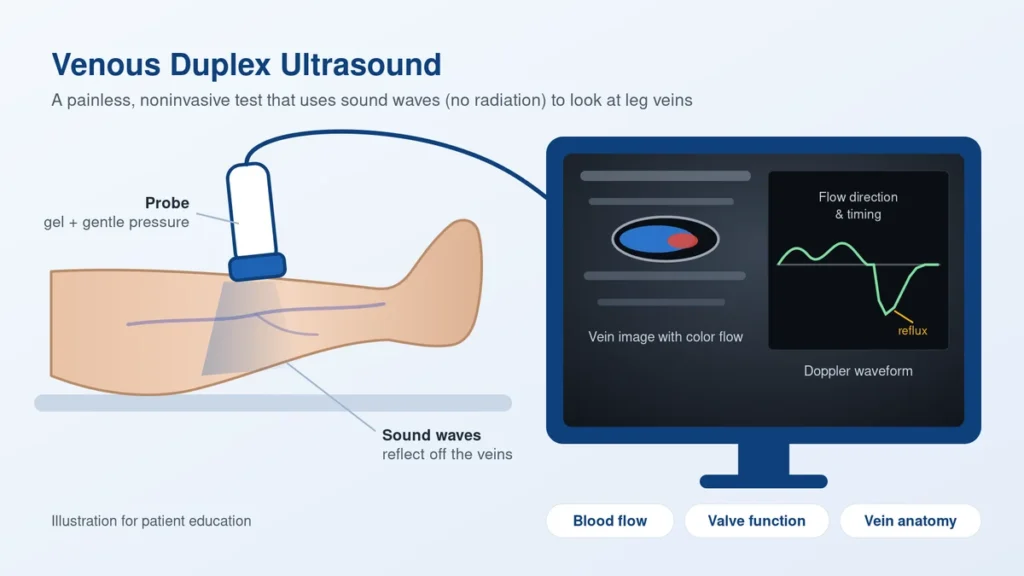
When a vascular cause is suspected, additional testing such as vascular ultrasound or other circulation studies may be appropriate. Not everyone with leg cramps needs an ultrasound; the decision depends on your symptoms and exam.
How Can You Help Relieve a Leg Cramp at Night?
For a typical uncomplicated muscle cramp, gentle measures may help.
1. Gently Stretch the Muscle
2. Walk Carefully
3. Gentle Massage
4. Stay Appropriately Hydrated
5. Review Repeated Symptoms
Talk with a healthcare professional before taking magnesium, potassium or other supplements for cramps.
What Kind of Doctor Should I See for Leg Cramps?
There is no single type of leg cramps doctor. The right doctor depends on the likely cause of the cramps.
A primary care professional may be an appropriate starting point when the cause is unclear.
Depending on symptoms, evaluation may involve:
- Vascular medicine
- Interventional radiology
- Neurology
- Orthopedics
- Physical medicine
- Other relevant specialties
A vascular or vein specialist may be particularly appropriate when cramps occur with:
- Leg swelling
- Visible varicose veins
- Leg heaviness
- Skin discoloration
- Aching after prolonged standing
- Walking-related leg pain
- A history suggesting venous or arterial disease
Recurring Leg Cramps in Houston: When a Vascular Evaluation May Help
If recurring leg cramps are accompanied by leg swelling, heaviness, visible veins, skin changes or other circulation-related symptoms, determining whether a vascular condition is involved can be an important next step.
Premier Vein & Vascular Center evaluates venous and vascular conditions affecting the legs, including varicose veins, chronic venous insufficiency and other circulation problems.
The goal of an evaluation is not to assume that every leg cramp is caused by poor circulation. It is to identify whether vascular disease may be contributing and determine whether additional evaluation or treatment is appropriate.
Premier Vein & Vascular Center
19255 Park Row Dr, Suite 201
Houston, TX 77084
Phone: (832) 321-5355
Hours: Monday to Friday, 8:00 AM to 4:30 PM

Expert Vascular Evaluation at Premier Vein & Vascular Center
Dr. Syed Raza, MD
Vascular & Interventional Radiology
Dr. Syed Raza, MD is a fellowship-trained interventional radiologist certified by the American Board of Radiology, as well as the Royal College of Radiologists in the United Kingdom. He has extensive experience treating vein disease, including varicose veins and venous reflux, and evaluates patients whose leg symptoms may be related to venous or vascular disease.
FAQ
Frequently Asked Questions About Nighttime Leg Cramps
What causes leg cramps at night?
Nighttime leg cramps may occur because of muscle fatigue, prolonged inactivity, age-related changes, pregnancy, medication effects, dehydration or other medical factors. Recurring cramps can also occur with neurologic or circulation problems in some patients, so the pattern and associated symptoms matter.
What causes severe leg cramps at night?
Severe cramps can result from a sudden involuntary contraction of the calf, foot or thigh muscles and may follow overuse or prolonged activity. Severe cramps that happen repeatedly or occur with swelling, weakness, numbness, skin changes or circulation symptoms deserve medical evaluation.
What are the most common reasons for leg cramps?
Common contributors include muscle fatigue, prolonged sitting or standing, age, pregnancy, physical activity and certain medications. Less commonly, neurologic, metabolic or vascular disorders may contribute.
Can dehydration cause nighttime leg cramps?
Dehydration may contribute to muscle symptoms in some situations, particularly after heat exposure or significant fluid loss. However, repeated nighttime cramps should not automatically be attributed to dehydration.
What deficiency causes leg cramps?
Electrolyte abnormalities can sometimes cause muscle cramping, but most recurring nighttime cramps should not be assumed to be caused by a vitamin or mineral deficiency. A healthcare professional can determine whether testing is appropriate.
Can poor circulation cause leg cramps?
Yes, circulation disorders can cause certain patterns of leg discomfort or cramping. Arterial disease often causes symptoms during walking, while venous disease may cause heaviness, swelling, aching and discomfort that worsens after prolonged standing.
Can varicose veins cause leg cramps at night?
Some people with varicose veins or chronic venous insufficiency report nighttime cramping along with swelling, heaviness or aching. Cramps alone, however, do not confirm venous disease.
Can a blood clot feel like a leg cramp?
A blood clot may cause leg pain or tenderness that some people initially interpret as a cramp. New one-sided swelling, warmth, redness or persistent pain should receive prompt medical evaluation because symptoms alone cannot rule out DVT.
How can I stop a leg cramp when it happens?
For a typical muscle cramp, gentle stretching, brief walking when safe and light massage may help the muscle relax. Recurrent or unexplained cramps should be evaluated rather than repeatedly self-treated without identifying the cause.
When should I see a doctor for nighttime leg cramps?
Consider medical evaluation when cramps are frequent, severe, progressively worsening, regularly disrupt sleep or occur with swelling, weakness, numbness, skin changes or walking-related pain.
What type of doctor treats recurring leg cramps?
The appropriate specialist depends on the cause. Primary care may be the starting point, while symptoms suggesting circulation problems may warrant evaluation by a vascular specialist or interventional radiologist.
Where can I see a leg cramps doctor in Houston?
Premier Vein & Vascular Center evaluates patients with leg symptoms that may be related to venous or vascular disease at 19255 Park Row Dr, Suite 201, Houston, TX 77084. A vascular evaluation can help determine whether circulation is contributing to recurring cramps.
Are Recurring Leg Cramps Keeping You Awake?
Occasional muscle cramps are common, but recurring nighttime cramps accompanied by swelling, heaviness, visible veins, skin changes or other circulation symptoms may deserve further evaluation.
Premier Vein & Vascular Center can help determine whether a vascular condition may be contributing to your symptoms.
19255 Park Row Dr, Suite 201
Houston, TX 77084
Related Articles

Learn how to tell whether leg pain with walking is more likely muscular or related to circulation.

Common reasons leg veins become more noticeable and when an evaluation may help.
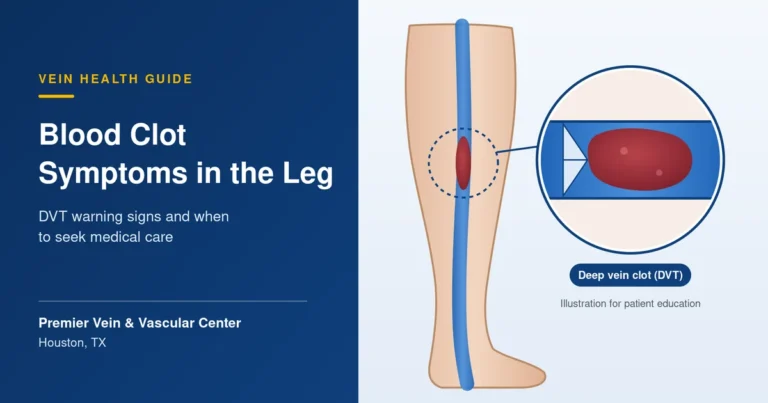
Warning signs of deep vein thrombosis and when leg symptoms need prompt care.
Sources
This article draws on patient education from the following organizations:
- MedlinePlus, U.S. National Library of Medicine: Muscle Cramps
- MedlinePlus: Muscle Spasms (Charley Horse)
- NHS: Leg Cramps
- National Heart, Lung, and Blood Institute (NIH): Peripheral Artery Disease
- MedlinePlus: Venous Insufficiency
- National Heart, Lung, and Blood Institute (NIH): Venous Thromboembolism Symptoms
This article is provided for general educational purposes and is not a substitute for professional medical advice, diagnosis or treatment. Seek prompt medical evaluation for new or worsening symptoms. Call 911 or seek emergency medical care for chest pain, sudden shortness of breath, coughing up blood, fainting or other potentially life-threatening symptoms.