
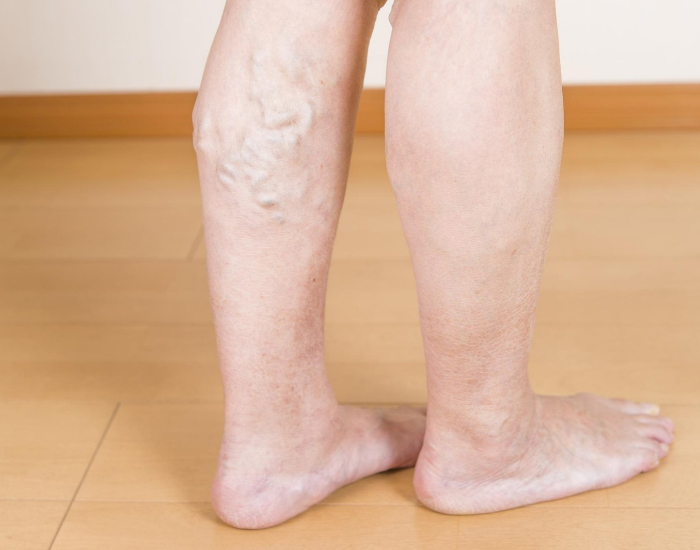
Your legs ache after a long day, feel heavy by evening and seem better after you put your feet up. You may also have a few bulging veins. It is natural to wonder whether those veins are the reason your legs hurt, or whether something else is going on.
Varicose veins can cause leg pain, and the pattern usually gives it away: a dull ache, heaviness or throbbing that builds the longer you stand or sit, eases with walking or leg elevation, and often comes with ankle swelling, itching or night cramps. Pain that starts with walking and stops with rest, sharp shooting pain or burning in both feet points elsewhere. A duplex ultrasound is what confirms it.
Quick Answer: Leg pain is likely related to varicose veins or venous insufficiency when it feels like aching, heaviness, throbbing or tiredness, gets worse through the day or after standing, improves with leg elevation, walking or compression, and comes with swelling, visible veins, itching or skin changes near the ankles. Calf pain that starts with walking and stops with rest suggests poor arterial circulation, and burning or tingling in both feet suggests nerves. A venous duplex ultrasound confirms whether reflux in the veins is the cause.

Meet your vein specialist
Dr. Syed Raza, MD
Vascular & Interventional Radiology · Founder, Premier Vein & Vascular Center
Fellowship-trained interventional radiologist certified by the American Board of Radiology and the Royal College of Radiologists (UK). Former Chief of Interventional Radiology at UTMB Galveston and Memorial Hermann Memorial City, with 15+ years treating varicose veins, venous reflux and peripheral arterial disease.
How Do You Know If Leg Pain Is Caused by Varicose Veins?
There is no single symptom that proves your veins are to blame, but vein-related pain follows a recognizable pattern. It is linked to gravity and time on your feet. Because faulty valves let blood pool in the lower legs, pressure rises as the day goes on and falls when you lie down or raise your legs. Muscle, joint, nerve and artery problems behave differently, which is why your description of the pain is so important.
The pattern points us in the right direction, and a venous duplex ultrasound provides the answer by showing whether blood is flowing backward in your veins.
What Does Varicose Vein Pain Feel Like?
Patients most often describe vein pain as:
- A dull, deep ache in the calves or along a varicose vein
- Heaviness, as if the legs are weighted down
- Throbbing or a full, tight feeling, especially in the evening
- Tenderness directly over a bulging vein
- Restlessness or cramping at night
It is usually more of a nagging discomfort than a sharp pain. Severe, sudden pain is less typical and deserves a prompt medical evaluation.
Why Do Legs Ache After Standing All Day?
When you stand still, your calf muscles are not squeezing the veins, so blood relies entirely on the valves to keep from sliding back down. If those valves leak, pressure in the lower leg veins climbs steadily through the day. The stretched veins and fluid building up in the surrounding tissue create that familiar end-of-day ache and heaviness. Teachers, nurses, retail and hospitality workers and anyone with a standing job often notice it most.
Can Varicose Veins Cause Burning or Throbbing?
Yes. Throbbing over enlarged veins is common, and pressure and inflammation can cause a burning or itching sensation in the skin over varicose veins or around the ankles, sometimes with a rash called stasis dermatitis. Burning that affects both feet evenly, especially with numbness or pins and needles, is more typical of nerve problems such as diabetic neuropathy.
Can Vein Disease Cause Pain Without Visible Varicose Veins?
It can. The main superficial veins, such as the great saphenous vein, sit beneath the skin and fat, and reflux in them can cause aching, heaviness and swelling long before any bulging veins appear. Some people only ever have spider veins or mild ankle swelling despite significant reflux. If your symptoms match the vein pattern, an ultrasound is worthwhile even if your legs look fairly normal.
Leg Pain from Varicose Veins vs Muscle Pain
Muscle pain usually has a clear trigger, such as a new workout, a strain or heavy lifting. It tends to be sore when you press on or use the muscle and improves steadily over days. Vein pain, by contrast, comes back day after day, builds with time on your feet regardless of activity, and improves with elevation rather than rest alone. Muscle cramps can occur with both, but frequent night cramps in someone with swelling and visible veins raise suspicion of venous disease.
Vein Pain vs Nerve Pain
Nerve pain tends to be sharp, shooting, electric, burning or tingling. Sciatica from the lower back often travels from the buttock down the back of the leg and may change with bending or sitting. Peripheral neuropathy usually starts in both feet with numbness, tingling or burning that is often worse at night. Vein pain is duller, related to standing and relieved by raising the legs. It is possible to have both, which is why a careful exam matters.
Vein Pain vs Arterial Circulation Problems
Arteries carry blood to the legs, and veins carry it back. When arteries are narrowed by peripheral arterial disease, pain typically comes on while walking, usually in the calf, and goes away within a few minutes of stopping. This is called claudication. Other clues include cold feet, weak foot pulses, shiny hairless skin and slow-healing sores on the toes.
The key difference is elevation. Venous pain improves when you raise your legs, while arterial pain can get worse with the legs raised and better when they hang down. This matters because compression stockings, helpful for veins, can be harmful when arterial circulation is poor.
Why Leg Elevation Sometimes Relieves Symptoms
Raising your legs above the level of your heart lets gravity help drain pooled blood and fluid out of the lower leg veins. Pressure falls, the veins shrink a little, and the ache and heaviness ease, often within 15 to 30 minutes. If elevation reliably relieves your leg pain, that is a meaningful clue that your veins are involved.
How a Vein Specialist Evaluates Leg Pain
At Premier Vein & Vascular Center, we start by understanding your pain rather than assuming it is from your veins:
- Your story. Where it hurts, what it feels like, when it is worse, what helps, and any history of clots, back problems, diabetes or arthritis
- The exam. We look at the veins, swelling and skin, and check pulses, sensation and the areas of tenderness
- Testing. A venous duplex ultrasound measures reflux and checks for clots. If an arterial cause is possible, we add an ankle-brachial index
- A clear answer. We explain whether your veins are contributing and, if they are not, direct you to the right next step with your primary care doctor or another specialist
When Leg Pain Requires Urgent Medical Attention
Do not wait for a routine appointment if you have:
- Sudden pain and swelling in one leg, especially with warmth, redness or tenderness in the calf or thigh, which can be a deep vein thrombosis
- Chest pain, sudden shortness of breath or coughing up blood. Call 911.
- A leg or foot that suddenly becomes cold, pale, numb or weak
- A red, hot, spreading area of skin with fever
- Heavy bleeding from a varicose vein that does not stop with firm pressure and elevation
A blood clot can feel similar to vein or muscle pain, so new one-sided swelling and pain should always be checked the same day.
Treatment Options for Confirmed Venous Disease
When the ultrasound confirms that reflux is causing your pain, treatment can usually be done in the office:
- Compression, walking and elevation to manage symptoms
- Radiofrequency ablation or VenaSeal to close the refluxing vein
- Varithena or foam sclerotherapy for twisted or branch veins
- Ambulatory phlebectomy for bulging surface veins
Many patients notice less aching and heaviness within weeks of treatment, although results vary. Our guide to the best treatment for painful varicose veins compares these options, and our varicose vein treatment page explains each procedure.
If you live in Houston, Katy or nearby and are not sure what is causing your leg pain, Dr. Syed Raza and our team can help find out. Visit us at 19255 Park Row Blvd Ste 201, Houston, TX 77084, call (832) 321-5355 to see a Houston vein specialist, or request an appointment online. You can also read when to see a vein specialist for leg pain and swelling.
Not Sure What’s Causing Your Leg Pain?
A medical evaluation can help determine whether vein disease is contributing to your symptoms. Call (832) 321-5355.
Frequently Asked Questions
What does varicose vein pain feel like?
Varicose vein pain is usually a dull ache, heaviness, throbbing or fullness in the legs, often with tenderness over the veins. It tends to build through the day and ease with leg elevation.
Can varicose veins cause severe leg pain?
Varicose veins usually cause moderate aching rather than severe pain. Sudden severe pain, especially with swelling, redness or a hard tender vein, may signal a clot or inflammation and needs prompt evaluation.
Why do my legs hurt after standing?
Standing still lets blood pool in the leg veins, and if the valves are weak, pressure builds through the day and causes aching and heaviness. Muscle fatigue, joint problems and flat feet can also contribute.
Can varicose veins cause pain at night?
Yes. Many people with venous insufficiency have aching, restless legs or calf cramps in the evening or at night, after a day of blood pooling in the legs.
Can venous reflux cause leg pain without visible veins?
Yes. Reflux in deeper superficial veins can cause aching and heaviness before any bulging veins appear. A duplex ultrasound can detect it.
Does elevating my legs help vein pain?
Raising your legs above heart level usually relieves vein-related aching and swelling within 15 to 30 minutes. Pain that worsens with elevation may point to an artery problem instead.
How can I tell vein pain from muscle pain?
Muscle pain usually follows a specific strain or workout and improves over days, while vein pain returns daily, builds with time on your feet and eases with elevation.
Can a blood clot feel like varicose vein pain?
Yes. A deep vein clot can cause aching or cramping similar to vein or muscle pain, but it usually comes with new swelling in one leg, warmth or tenderness. It needs same-day medical evaluation.
How does a doctor diagnose venous reflux?
Venous reflux is diagnosed with a duplex ultrasound, which shows the veins and measures how long blood flows backward after the calf is squeezed and released.
When should I see a vein specialist?
See a vein specialist if leg aching, heaviness, swelling or night cramps keep coming back, or if you have varicose veins with skin changes, itching or bleeding. Get same-day care for sudden one-sided swelling.
Trusted Health Resources
- Chronic Venous Insufficiency, Society for Vascular Surgery
- Venous Insufficiency, MedlinePlus Medical Encyclopedia (NIH)
- Varicose Veins and Spider Veins, MedlinePlus (NIH)
Medical Disclaimer
This article is for general education and does not replace professional medical advice, diagnosis or treatment. Only a clinical evaluation can determine the cause of your symptoms. If you have sudden or severe symptoms, call 911 or go to the nearest emergency room.