Frequently Asked Questions
What is endovenous thermal ablation?
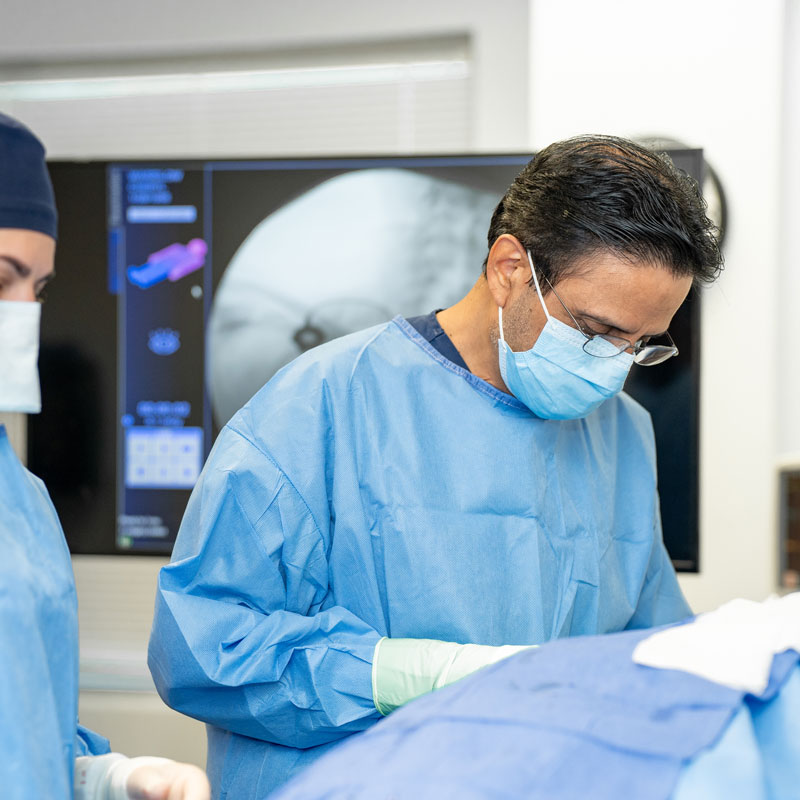
Endovenous thermal ablation is a minimally invasive, catheter-based treatment that uses heat energy — most often radiofrequency, sometimes laser — to close a diseased vein from the inside and redirect blood flow to healthy veins.
Is radiofrequency ablation the same as endovenous thermal ablation?
Radiofrequency ablation (RFA) is the primary type of endovenous thermal ablation used at Premier Vein & Vascular Center. Laser ablation is another thermal technique used in the field — both use heat, just from different energy sources.
How long does the procedure take?
Most endovenous ablation procedures take about 30–45 minutes and are performed on an outpatient basis, right in our office.
Is the procedure painful?
Most patients experience only mild, brief discomfort from the anesthetic injection and catheter placement. The treatment itself is generally well tolerated.
How long is the recovery?
Most patients resume normal activities the same day. We recommend avoiding air travel for 7 days and avoiding excessive sitting or bed rest, since your legs need regular movement to support healthy circulation while you heal.
Will my insurance cover endovenous ablation?
When treatment is medically necessary for diagnosed venous insufficiency, endovenous ablation is commonly covered by insurance. Our team verifies your benefits before treatment.
What’s the difference between thermal and non-thermal ablation?
Thermal ablation uses heat energy and requires local anesthesia along the treated vein. Non-thermal techniques close the vein without heat and without tumescent anesthesia. Learn more about our
non-thermal vein ablation option.
Am I a candidate for endovenous ablation?
Candidacy depends on the severity and duration of your symptoms and how your veins appear on ultrasound. Most patients with confirmed venous insufficiency are good candidates.
Will I need a follow-up appointment?
Yes. We schedule a follow-up ultrasound after treatment to confirm the vein has closed properly and to reassess your vein health.
Where can I learn more about radiofrequency ablation specifically?